
RunPod for AI Model Training and the Alternatives That Win at Scale
RunPod's own documentation is refreshingly serious about training: distributed-training guides, sharding techniques, a multi-node Clusters product, and tuning write-ups for LLM work. That documentation deserves to be read alongside its boundaries — the limits third-party analysts have documented in the cluster product — because the training decision is not whether RunPod can run training workloads (it can) but where the fit ends and a dedicated cluster becomes the correct starting point rather than a later migration.
Quick Answer: Is RunPod Good for AI Model Training?
For single-node fine-tuning, experimentation, and fault-tolerant research runs — yes: per-second Pods, documented training guides, and multi-node Clusters genuinely serve those profiles. The documented boundaries: clusters are not Kubernetes-compatible, clusters on reserved hardware cannot scale in place, and on-demand availability constrains coordinated runs. Three signals mean dedicated clusters instead: fabric dependence (model-parallel runs needing 100+ Gbps per GPU), schedule certainty (contractual checkpoint windows), and estate coordination (multi-team, scheduler-native operations) — the profile of single-tenant training enclaves like OneSource Cloud delivers.
What RunPod Training Actually Looks Like
RunPod documents a real training stack: Pods for single-instance development and training with per-second billing, DeepSpeed-and-ZeRO guides for stretching limited GPUs, LLM training guides with scaling and tuning, and multi-node Clusters for distributed training with in-place expansion on on-demand capacity. For single-node fine-tuning, coursework-scale training, and fault-tolerant experimentation, this stack genuinely serves the workload — the criteria a training team checks first (environment control, framework support, per-second cost) all pass.
| Capability | Documented Form | Training Criteria Check |
|---|---|---|
| Single-node training | Pods with per-second billing | Pass — flexible and inexpensive |
| Limited-GPU scaling | DeepSpeed and ZeRO sharding guides | Pass — documented techniques |
| Multi-node training | Clusters product, in-place expansion on demand | Conditional — see limits |
| Environment control | Container-based Pods | Pass — full environment ownership |
The honest starting point is respect: for a research group fine-tuning seven-billion-parameter models on single nodes, or a team running sharded experiments across a few GPUs, the documented stack is a good fit and the per-second economics reward exactly that irregular usage. The fit question begins at the boundary — where multi-node coordination, contractual schedules, and fabric quality enter the requirements.
The Documented Limits: What the Analysis Shows
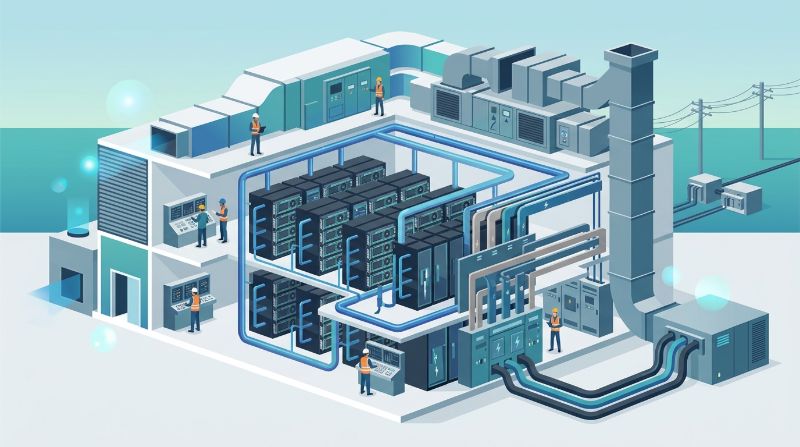
Third-party analysis of RunPod's cluster product documents three boundaries: clusters are not compatible with Kubernetes, so existing k8s-based training stacks do not port; clusters on reserved or contracted hardware cannot scale in place, so growth means recreation; and on-demand availability constrains coordinated multi-node runs at the exact moment large training needs certainty. These are structural boundaries of a marketplace model, not defects — but a training program whose roadmap crosses all three should not start there.
| Documented Limit | What It Means for Training |
|---|---|
| Clusters not Kubernetes-compatible | k8s-native training stacks and operators do not port |
| Reserved clusters cannot scale in place | Growth on contracted capacity means recreation |
| On-demand availability constraints | Coordinated multi-node certainty is best-effort |
Fabric quality is the quiet fourth boundary. RunPod's own multi-GPU training guide states the requirement plainly: roughly 25 Gbps per GPU for data parallelism and 100-plus Gbps for model parallelism. A marketplace cluster provides interconnect capacity as best-effort — a model-parallel run whose throughput depends on that fabric has no contract enforcing it, which is precisely the gap a dedicated fabric closes. In the single-tenant model OneSource Cloud delivers, the RoCE v2 spine-leaf fabric with lossless priority flow control is part of what the contract buys, and NVMe-oF storage tiers contract the checkpoint throughput that long runs depend on.
The Fit Decision: Three Signals That Mean Dedicated Clusters
RunPod fits single-node fine-tuning, experimentation, and fault-tolerant research runs. Three signals mean dedicated training clusters instead: fabric dependence — model-parallel runs needing the 100-plus Gbps per GPU that RunPod's own guides name as the model-parallelism requirement and that marketplace interconnects cannot contract; schedule certainty — training programs where checkpoint windows and run continuity are contractual rather than best-effort; and estate coordination — multi-team, multi-queue training that expects Kubernetes-native or scheduler-native operations. For workloads with any two signals, single-tenant training enclaves — the model OneSource Cloud delivers with dedicated bare-metal clusters, RoCE v2 fabric, and the OnePlus topology-aware scheduler — are the right starting point, not a later migration.
| Signal | The Question | If Yes |
|---|---|---|
| Fabric dependence | Does the run need contracted 100+ Gbps per GPU? | Dedicated fabric required |
| Schedule certainty | Are checkpoint windows contractual? | Contracted capacity required |
| Estate coordination | Do multiple teams share scheduler-native queues? | Scheduler-native platform required |
Count honestly: zero or one signal keeps you well-served by marketplace training. Two or more means the migration question is not if but whether you pay for it mid-program or plan it now — and planned migrations cost less than interrupted ones. The dedicated-cluster profile to evaluate is documented at OneSource Cloud Private AI Infrastructure: single-tenant bare-metal clusters, the OnePlus scheduler binding communication-heavy ranks to the nearest topology, and flat-rate monthly pricing that converts training budgets from metered variance to contracted capacity.
FAQ
Can RunPod Clusters handle large LLM training runs?
Single- and few-node LLM work, yes — RunPod documents cluster products and sharding techniques for exactly that. Large coordinated LLM training is the boundary case: model-parallel runs need the 100-plus Gbps per GPU interconnect that RunPod's own guide names, marketplace clusters do not contract that fabric quality, and schedule certainty for checkpoint windows is best-effort — which is why large programs start on dedicated clusters rather than migrating mid-run.
What does a dedicated training cluster add over marketplace training?
Contracted determinism: single-tenant bare-metal clusters from OneSource Cloud deliver an isolated RoCE v2 lossless fabric for the 100-plus Gbps model-parallelism requirement, NVMe-oF checkpoint throughput, and topology-aware gang scheduling through the OnePlus platform — the properties a training roadmap grows into, priced as a flat monthly rate instead of per-second metering.
Related Articles
Recommended Reading
latest articles
-
Best GPU Cloud Hosting Providers: Why Rankings Differ and How to Build Yours
-
The Four Categories of Cloud Platforms for AI Workloads
-
RunPod Compared: How It Stacks Up Against Other AI Cloud Providers
-
GPU Cloud Computing: Comparing Bare Metal vs Virtualized vs Serverless Providers
-
Lambda Labs Compared with AI Research Compute Companies and What Each Sells
-
How to Evaluate Cloud Workstation Providers for High-Performance Tasks
-
Choosing Among Cloud Deep Learning Platform Types from IaaS to Dedicated Clusters
-
RunPod for AI Model Training and the Alternatives That Win at Scale
-
AI Infrastructure vs General Cloud Providers: Why the Same GPU Prices Differently
-
Lambda Labs Competitors Compared Across the GPU Cloud Provider Landscape