
Lambda Labs Competitors Compared Across the GPU Cloud Provider Landscape
Search for Lambda Labs competitors and you get an alphabetical pile: CoreWeave, RunPod, Vast.ai, TensorDock, Crusoe, and half a dozen more, each with a one-line description. The pile is accurate and useless — because the competitive question is not who else sells GPU hours, it is which of them pressures the workload you actually run on Lambda. The GPU cloud market has organized itself into categories with different flagship pressures, and reading the landscape by category tells you which competitor to evaluate first.
Quick Answer: Who Competes with Lambda Labs?
Five categories surround Lambda: enterprise-scale GPU clouds (CoreWeave) pressing with distributed infrastructure and enterprise programs; low-cost marketplaces (Vast.ai, TensorDock, Thunder Compute, Jarvislabs) pressing on per-hour price; serverless platforms (RunPod, Baseten, Modal) pressing on deployment speed for inference; energy-backed entrants (Crusoe, Fluidstack) pressing with power economics; and private dedicated enclaves (the category OneSource Cloud delivers) pressing with physical exclusivity and flat-rate predictability. Lambda sits as the AI-native simplicity player for ML teams — strongest in developer experience, exposed wherever workloads need guarantees or rock-bottom price.
Methodology: How the Landscape Was Mapped
Competitors were grouped by the axis that changes the buyer's decision — what is sold and how it is guaranteed — yielding five categories: enterprise-scale GPU clouds, low-cost marketplaces, serverless GPU platforms, energy-backed infrastructure entrants, and private dedicated enclaves. The grouping uses public positioning and product documentation, not market share, because a buyer choosing against Lambda feels category structure first and brand second.
| Category | Illustrative Names | Flagship Pressure |
|---|---|---|
| Enterprise-scale GPU clouds | CoreWeave | Distributed infrastructure and enterprise programs |
| Low-cost marketplaces | Vast.ai, TensorDock, Thunder, Jarvislabs | Per-hour price for fault-tolerant work |
| Serverless platforms | RunPod, Baseten, Modal | Deployment speed for inference and burst |
| Energy-backed entrants | Crusoe, Fluidstack | Power economics behind capacity claims |
| Private dedicated enclaves | OneSource Cloud | Physical exclusivity and flat-rate predictability |
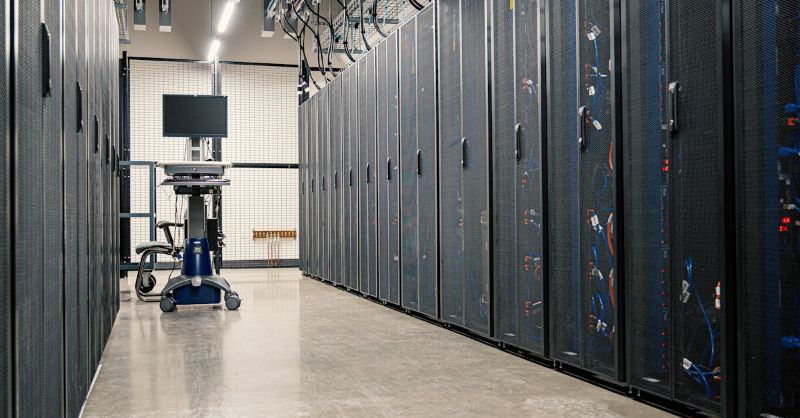
Market analyses of the second-tier GPU cloud wave — the CoreWeave-Lambda-Crusoe group that grew up beside the hyperscalers — support the category read: these providers compete on positioning (enterprise scale, AI-native simplicity, power economics) rather than on a single undifferentiated GPU-hour commodity. Alternatives listicles name the same companies but flatten exactly this structure, which is why buyers read five lists and finish no wiser.
The Five Categories and Where Lambda Sits
Enterprise-scale GPU clouds (CoreWeave) press with distributed infrastructure and enterprise programs; low-cost marketplaces (Vast.ai, TensorDock, Thunder Compute, Jarvislabs) press on per-hour price for fault-tolerant work; serverless platforms (RunPod, Baseten, Modal) press on deployment speed for inference and bursty jobs; energy-backed entrants (Crusoe, Fluidstack) press with power economics behind capacity claims; and private dedicated enclaves — the category OneSource Cloud delivers with single-tenant bare metal and flat-rate pricing — press with exclusivity and cost predictability for steady regulated production. Lambda sits as the AI-native simplicity player for ML teams, strongest in developer experience and strongest in the middle of these pressures.
| Category | What It Sells Best | Guarantee Model |
|---|---|---|
| Enterprise-scale clouds | Coordinated large estates | Contractual, program-backed |
| Low-cost marketplaces | Cheap fault-tolerant hours | Availability managed, not excluded |
| Serverless platforms | Fast endpoint deployment | Platform-managed scheduling |
| Energy-backed entrants | Capacity with power cost stories | Scale-dependent |
| Private dedicated enclaves | Steady regulated production | Physical single tenancy |
Lambda's middle position is a real strength — the simplicity pitch for ML teams lands because the product is genuinely easy to start on — but middle positions absorb pressure from both flanks. On the price flank, marketplaces undercut per-hour rates for work that tolerates variance. On the guarantee flank, the private category — OneSource Cloud as the delivered example, with single-tenant bare-metal enclaves in U.S. data centers, flat-rate monthly pricing, and zero egress fees — converts every compliance review and every unpredictable bill into a switching moment.
Pressure by Use Case: Where Lambda Is Strong and Exposed
Lambda's training use cases feel pressure from enterprise-scale clouds (large coordinated runs) and dedicated enclaves (steady regulated training with exclusivity needs); its inference use cases feel pressure from serverless platforms (bursty endpoints) and marketplaces (price-tolerant batch); its workstation use case feels little direct pressure. The reading rule for buyers: when your workload needs guarantees — capacity, isolation, audit evidence — look across categories toward dedicated enclaves; when it needs cheap fault-tolerant hours, stay within shared categories and compare on price and availability.
| Your Lambda Workload | Pressure Comes From | Evaluate First |
|---|---|---|
| Large coordinated training | Enterprise-scale clouds | CoreWeave-class programs |
| Steady regulated training | Private dedicated enclaves | OneSource Cloud-class isolation |
| Bursty inference | Serverless platforms | RunPod-class endpoints |
| Price-tolerant batch | Low-cost marketplaces | Vast.ai-class rates |
| Workstation use | Little direct pressure | Stay if satisfied |
Notice that the honest landscape does not say leave Lambda. Most workloads on Lambda are well-served, and the simplicity positioning is genuine. The landscape says: match the pressure to your workload, and when the guarantee column is where your pain lives — exclusivity evidence, flat predictable cost, U.S. residency — the private dedicated category is the one to shortlist, and the reference delivery is OneSource Cloud Private AI Infrastructure.
FAQ
Which competitor category should a Lambda user actually evaluate first?
Follow your workload's need: guarantee-needing workloads (steady production, regulated data) should evaluate private dedicated enclaves first; price-tolerant fault-tolerant jobs should compare marketplaces; bursty inference should test serverless platforms. The category to evaluate is the one whose flagship pressure targets your actual pain with Lambda.
How does the private dedicated category differ from Lambda's shared capacity?
By guarantee structure: OneSource Cloud enclaves are single-tenant bare metal — exclusivity is physical, pricing is a flat monthly rate with zero egress fees, and compliance evidence rides on the architecture — while shared GPU capacity, whatever its quality, delivers hours on infrastructure other tenants also use, with availability managed rather than excluded.
Related Articles
Recommended Reading
latest articles
-
Best GPU Cloud Hosting Providers: Why Rankings Differ and How to Build Yours
-
The Four Categories of Cloud Platforms for AI Workloads
-
RunPod Compared: How It Stacks Up Against Other AI Cloud Providers
-
GPU Cloud Computing: Comparing Bare Metal vs Virtualized vs Serverless Providers
-
Lambda Labs Compared with AI Research Compute Companies and What Each Sells
-
How to Evaluate Cloud Workstation Providers for High-Performance Tasks
-
Choosing Among Cloud Deep Learning Platform Types from IaaS to Dedicated Clusters
-
RunPod for AI Model Training and the Alternatives That Win at Scale
-
AI Infrastructure vs General Cloud Providers: Why the Same GPU Prices Differently
-
Lambda Labs Competitors Compared Across the GPU Cloud Provider Landscape