
Model Lifecycle and GPU Cluster Operations Integration
Integrating model lifecycle with GPU cluster operations means connecting each lifecycle phase — training, validation, registration, deployment, serving, monitoring — to the cluster's capacity, scheduling, and monitoring, so transitions between phases are automated rather than manual handoffs that break. For the lifecycle phases, see lifecycle vs daily operations. For the capacity handoff, see model lifecycle capacity handoff.
Integration Points
Training → deployment: when training completes, the validated model artifact transitions automatically to serving infrastructure with reserved capacity — not a manual handoff that waits for someone to notice the training finished. Deployment → serving: the deployment pipeline places the model onto serving GPUs with canary, shadow, or direct rollout, scaled to expected traffic — integrated with the cluster's scheduler. Serving → monitoring: production monitoring feeds back into the lifecycle — when drift or degradation is detected, it triggers retraining, re-entering the lifecycle at the training phase. This closed loop is what keeps models current. Capacity across phases: the cluster's capacity planning must account for all lifecycle phases running concurrently — training using GPUs, serving using GPUs, deployment transitions using GPUs — without starvation. For the capacity planning, see capacity planning for training vs inference.
FAQ
How do I integrate model lifecycle with GPU cluster operations?
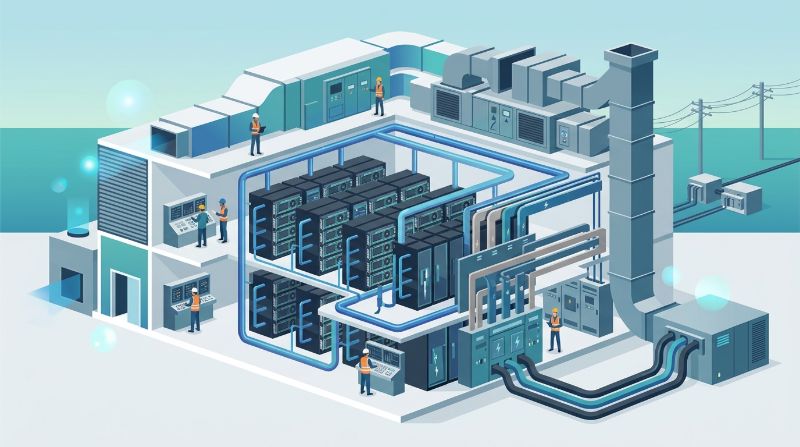
Automate the handoffs between training, deployment, serving, and monitoring so transitions are coordinated rather than manual. Reserve serving capacity before training completes. Close the loop from monitoring back to retraining. See the integration points above.
Summary
Integrate lifecycle and operations at training-deployment, deployment-serving, and serving-monitoring handoffs. For the full framework, see model lifecycle capacity handoff.
Related Articles
Recommended Reading
-
How Paged Attention Manages Inference KV Cache
-
Google Cloud GPU Pricing: What Enterprise AI Teams Should Evaluate Before Provisioning
-
Paperspace Pricing 2026: GPU Cost Breakdown
-
AI Infrastructure Costs: Controlling Enterprise GPU Spending
-
CoreWeave Enterprise GPU Cloud: Evaluation for AI Teams
-
CoreWeave vs Lambda Labs: GPU Cloud Provider Comparison
-
AWS GPU Pricing: Instance Types, Cost Structure & Alternatives Guide
-
CoreWeave Alternatives: Compare GPU Clouds
latest articles
-
GPU Cluster Fabric: Spine-Leaf RoCE Architecture and Latency
-
AI Workload Migration From Public Cloud to Dedicated Hardware
-
GPU Cluster Orchestration: Gang Scheduling for AI Workloads
-
AI Storage Tier Design: Eliminating I/O Wait in Checkpointing
-
GPU Capacity Planning for AI Teams: Sizing Beyond Peak Load
-
AI Infrastructure BAA Audit: Cloud Provider Gaps for Healthcare
-
AI Infrastructure for Fraud Detection: Low-Latency Inference
-
AI Infrastructure Services vs Raw Cloud GPU Rental Cost
-
Fixing Memory Bandwidth Bottlenecks in Low-Utilization LLMs
-
Protecting AI Model IP With Single-Tenant GPU Isolation