
AI Workload Migration From Public Cloud to Dedicated Hardware
As enterprise artificial intelligence initiatives mature from early experimental prototyping to sustained, production-scale foundation model development, the economics of public cloud computing experience a profound inflection point. While hyperscale public cloud platforms provide unmatched elasticity for initial proof-of-concept testing, operating high-utilization GPU clusters around the clock on virtualized cloud instances imposes an unsustainable financial premium. Cloud repatriation—the strategic migration of high-density computational workloads from multi-tenant public clouds to dedicated, single-tenant bare-metal infrastructure—has emerged as a primary priority for Chief Technology Officers and engineering leaders seeking to protect operating margins. However, successfully executing an AI workload migration requires overcoming the formidable barrier of Data Gravity without interrupting active model development roadmaps.
Direct Answer: How Should Enterprise AI Workloads Be Migrated From Public Cloud to Dedicated Hardware?
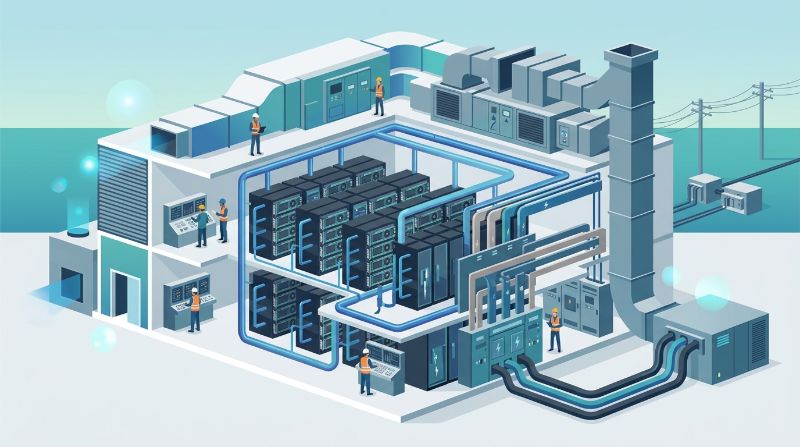
Migrating enterprise AI workloads requires executing a structured four-phase repatriation procedure: containerizing training pipelines to eliminate proprietary cloud service dependencies, pre-seeding petabyte-scale training datasets over dedicated network links using multi-threaded synchronization tools, synchronizing active checkpoint state deltas, and executing an atomic compute cutover. By utilizing dedicated bare-metal infrastructure with zero egress fees, organizations reduce multi-year compute expenditures by 40% to 65%.
Prerequisites: Overcoming Data Gravity and Public Cloud Lock-In
The primary technical and operational obstacle in accelerated cloud repatriation is Data Gravity. Modern foundational model pipelines rely on massive repositories: tokenized pre-training corpora frequently span hundreds of terabytes, raw multi-modal imaging archives exceed petabytes, and distributed training checkpoints generate multiple terabytes of state snapshots daily. Moving these immense data volumes off public cloud object storage (Amazon S3, Google Cloud Storage, or Azure Blob) introduces two severe friction points: transit timeline constraints and punitive cloud data egress fees ($0.08 to $0.12 per GB).
To accurately plan a migration timeline and budget, platform engineering leads must evaluate the closed-form Migration Transit Time equation:
$$T_{\text{migration}} = \frac{\text{Dataset Size (TB)} \times 8 \times 10^{12}}{\text{Available Transit Bandwidth (bps)} \times \text{Efficiency}} + t_{\text{validation}}$$Where \(\text{Efficiency}\) accounts for TCP windowing, network packet headers, and multi-part API latency (typically 75% to 85% in production). For example, transferring a 300 Terabyte training lake over a standard 10 Gbps dedicated interconnect requires approximately 78 hours of continuous, uninterrupted wire-speed streaming. Furthermore, at standard public cloud egress rates of $0.09 per GB, transferring 300 TB generates a single, non-negotiable exit invoice of $27,000. Overcoming public cloud lock-in requires pre-seeding static data while active training continues, and selecting a destination infrastructure partner—such as OneSource Cloud—that enforces a strict zero data egress fee policy.
The following architectural matrix illustrates the trade-offs between public cloud hosting and dedicated bare-metal infrastructure:
| Infrastructure Dimension | Public Cloud AI Platform (AWS / Azure / GCP) | OneSource Cloud Dedicated Bare-Metal |
|---|---|---|
| Compute Pricing Model | Volatile hourly on-demand ($3.50–$4.50/H100 hr) | Predictable flat-rate monthly all-inclusive pricing |
| Ongoing Data Egress Fees | Punitive ($0.08 to $0.12 per GB transferred) | Zero data egress fees (unmetered dedicated transit) |
| Interconnect & Fabric Layer | Virtualized SDN overlay with variable latency | 1:1 non-blocking Spine-Leaf RoCE v2 (sub-microsecond) |
| Storage I/O Performance | Multi-tenant object store or rate-limited block | Dedicated NVMe-oF parallel flash with GPUDirect Storage |
| Hardware Exclusivity | Shared physical host; hypervisor virtualization | 100% Single-tenant physical bare-metal hardware |
Step-by-Step Migration: Phased Data Seeding and Runtime Cutover
To ensure business continuity and eliminate downtime during migration, engineering teams must execute a disciplined four-phase migration protocol:
- Phase 1: Environment Decoupling and Container Parity: Audit the existing software stack to remove proprietary cloud SDK dependencies (such as AWS SageMaker APIs or Azure ML pipelines). Package training and inference code into portable Docker or Singularity container images conforming to Open Container Initiative (OCI) standards.
- Phase 2: Baseline Dataset Pre-Seeding: Deploy multi-threaded data transfer tools—such as optimized Rclone or multi-part parallel transfer scripts—to synchronize static raw datasets and tokenizer files from cloud object storage to target NVMe-oF parallel filesystems. This phase executes entirely in the background without impacting active cloud training runs.
- Phase 3: Incremental State Delta Synchronization: In the 48 hours prior to final cutover, run incremental delta synchronization jobs to capture newly added fine-tuning datasets and validation splits.
- Phase 4: Atomic Checkpoint Cutover: Issue a graceful termination command to the running cloud training job at an epoch boundary, write a final atomic checkpoint to storage, sync the final checkpoint delta (typically requiring under 15 minutes), and launch the distributed job on the dedicated bare-metal cluster using Slurm or Kubernetes.
The following production bash script executes multi-threaded, parallelized dataset transfers from cloud S3 buckets to local NVMe-oF parallel storage utilizing optimized chunking parameters:
// 1. Configure optimized multi-threaded Rclone transfer from S3 to NVMe-oF target
rclone copy cloud-s3:enterprise-ai-dataset /mnt/ai-scratch/dataset   --transfers 32   --checkers 64   --s3-chunk-size 64M   --s3-upload-concurrency 16   --buffer-size 128M   --fast-list   --checksum   --progress   --log-file=/var/log/ai-migration.log
// 2. Verify dataset checksum integrity on the target filesystem
sha256sum /mnt/ai-scratch/dataset/manifest.json
// 3. Resume training on dedicated bare-metal nodes using torchrun
torchrun   --nproc_per_node=8   --nnodes=4   --node_rank=0   --master_addr="10.100.1.10"   --master_port=29500   train.py --resume-from-checkpoint /mnt/ai-scratch/dataset/checkpoints/latest.pt
OneSource Cloud provides white-glove migration engineering to assist enterprise organizations throughout this process, configuring direct network cross-connects, validating container runtime parity, and ensuring seamless cutover to dedicated bare-metal clusters.
Post-Migration Verification, Parity Benchmarking, and Diagnostic Matrix
Following compute cutover, platform engineers must execute rigorous verification benchmarks to confirm computational parity and floating-point determinism before terminating legacy public cloud contracts. Teams must execute a 100-step training verification run on the new bare-metal infrastructure, confirming that training loss curves, gradient norms, and step latencies align perfectly with historical cloud baselines.
The following structured diagnostic matrix provides troubleshooting protocols for common post-migration defects:
| Post-Migration Issue | Operational Impact | Underlying Root Cause | Prescribed Remediation Action |
|---|---|---|---|
| Training Loss Curve Divergence | Model fails to converge; non-deterministic weights | CUDA/cuDNN minor version mismatch or differing NCCL collective algorithms | Enforce identical container images across source and target; lock NCCL environment variables |
| High Initial Data Loading Latency | GPU compute utilization drops to < 20% | Dataloader workers reading small raw files across un-tuned storage mount | Package raw files into WebDataset tar archives; enable GPUDirect Storage on NVMe-oF |
| Inter-Node All-Reduce Timeout | Distributed PyTorch job crashes during epoch 1 | MTU mismatch or RoCE v2 PFC pause frame drop across Spine-Leaf switches | Enforce 9000 Jumbo Frames across all NIC interfaces and verify PFC priority tagging via ethtool |
| IAM Credential Permission Failures | Scripts fail to write final model artifacts | Hard-coded cloud IAM metadata role assumptions in application code | Replace cloud IAM dependencies with standard S3-compatible access keys and local POSIX permissions |
By executing a phased migration plan, enterprise AI organizations successfully break free from public cloud lock-in and secure substantial long-term financial savings. OneSource Cloud provides dedicated single-tenant bare-metal GPU clusters hosted in audited U.S. data centers with zero data egress fees and comprehensive migration engineering support, ensuring an uninterrupted transition to sovereign AI infrastructure.
FAQ
How can an enterprise minimize public cloud egress fees when migrating hundreds of terabytes of training data?
Organizations can minimize egress fees by provisioning temporary high-speed direct interconnects (such as AWS Direct Connect or Azure ExpressRoute), compressing unstructured text datasets using zstd before transfer, or negotiating one-time repatriation fee waivers under European Data Act and cloud exit provisions.
How does OneSource Cloud support enterprises migrating AI workloads off public clouds?
OneSource Cloud delivers comprehensive white-glove migration support. Dedicated systems engineers assist with dataset synchronization, network interconnect configuration, container parity verification, and Slurm/Kubernetes cutover testing, ensuring enterprise workloads transition smoothly to dedicated bare-metal clusters with zero data egress fees.
Related Articles
Recommended Reading
-
How Paged Attention Manages Inference KV Cache
-
Google Cloud GPU Pricing: What Enterprise AI Teams Should Evaluate Before Provisioning
-
Paperspace Pricing 2026: GPU Cost Breakdown
-
AI Infrastructure Costs: Controlling Enterprise GPU Spending
-
CoreWeave Enterprise GPU Cloud: Evaluation for AI Teams
-
CoreWeave vs Lambda Labs: GPU Cloud Provider Comparison
-
AWS GPU Pricing: Instance Types, Cost Structure & Alternatives Guide
-
CoreWeave Alternatives: Compare GPU Clouds
latest articles
-
GPU Cluster Fabric: Spine-Leaf RoCE Architecture and Latency
-
AI Workload Migration From Public Cloud to Dedicated Hardware
-
GPU Cluster Orchestration: Gang Scheduling for AI Workloads
-
AI Storage Tier Design: Eliminating I/O Wait in Checkpointing
-
GPU Capacity Planning for AI Teams: Sizing Beyond Peak Load
-
AI Infrastructure BAA Audit: Cloud Provider Gaps for Healthcare
-
AI Infrastructure for Fraud Detection: Low-Latency Inference
-
AI Infrastructure Services vs Raw Cloud GPU Rental Cost
-
Fixing Memory Bandwidth Bottlenecks in Low-Utilization LLMs
-
Protecting AI Model IP With Single-Tenant GPU Isolation