
AI Infrastructure Lifecycle vs Daily Operations: What Each Covers
AI infrastructure lifecycle is the end-to-end span from procurement through decommission, while daily operations is the recurring work that keeps an existing cluster healthy and productive — and confusing the two is why teams under-invest in one and over-pay consultants for the other. Lifecycle work is project-shaped and infrequent; operations work is continuous and determines whether the cluster actually delivers value.
For enterprise teams, the distinction matters because it changes who owns the work, how it is budgeted, and what skills are required. A team that treats lifecycle as operations burns senior engineers on repetitive tasks. A team that treats operations as lifecycle outsources steady-state work to consultants and loses institutional knowledge. Getting the boundary right is a leadership decision, not a technical one.
This guide separates lifecycle from daily operations by scope, timing, ownership, and failure mode, then maps each to the teams and providers best suited to handle them.
What the AI Infrastructure Lifecycle Covers
The lifecycle is the full arc of an AI cluster from the moment it is specified to the moment it is retired. It is project-shaped: discrete phases with defined start and end points, each producing a deliverable. Lifecycle work is infrequent but high-stakes, because mistakes here are expensive to undo later.
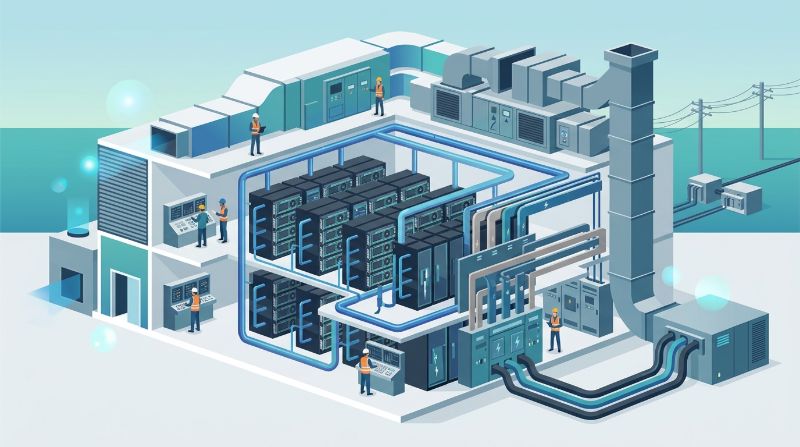
The lifecycle phases are architecture and sizing (deciding what to buy and how much), procurement and lead-time management (ordering hardware and tracking delivery), deployment and commissioning (racking, networking, installing software, and validating the cluster works), capacity and refresh planning (deciding when to add or replace capacity), and decommissioning (securely retiring hardware and data). Each phase has its own acceptance criteria. A cluster that is deployed but not validated, for example, is not really in production; it is a risk waiting to surface during the first real workload.
Because lifecycle work is infrequent, most enterprise teams do not have the in-house muscle to do it well. Sizing a cluster for a model that does not exist yet, negotiating hardware lead times, and validating a multi-node fabric before going live are specialized skills that teams use once every year or two. This is where architecture review and cluster survey engagements add the most value.
What Daily Operations Covers
Daily operations is the recurring work that keeps a deployed cluster healthy, available, and productive. Unlike lifecycle, it has no end date; it runs as long as the cluster exists. The work is continuous, and its quality determines whether the lifecycle investment actually pays off.
Daily operations covers monitoring and alerting (detecting failures, thermal issues, and utilization drops before they cascade), incident response (fixing breaks and restoring service), patching and upgrades (keeping firmware, drivers, and platform software current), performance optimization (tuning workloads so the cluster runs efficiently), capacity management in the small (queueing, scheduling, and quota so teams share the cluster fairly), and lifecycle-adjacent tasks at small scale (adding a node, replacing a failed GPU, rotating a credential). The common thread is that none of this is project work; it is the steady-state cost of owning a cluster.
Daily operations is where most teams underestimate the staffing requirement. A GPU cluster is not a database that runs unattended; it needs skilled coverage to avoid slow degradation into an unreliable, underutilized asset. Teams that under-staff operations discover this when utilization drops, incidents pile up, and researchers cannot get reliable access.
Lifecycle vs Daily Operations Side by Side
| Dimension | Lifecycle | Daily operations |
|---|---|---|
| Shape | Project, discrete phases | Continuous, recurring |
| Frequency | Infrequent (months to years) | Daily, ongoing |
| Typical work | Architect, procure, deploy, validate, refresh, retire | Monitor, respond, patch, optimize, schedule |
| Skills required | Architecture, procurement, validation | SRE, MLOps, performance tuning |
| Failure mode if neglected | Wrong-size cluster, late delivery, validation gaps | Drift, incidents, low utilization, access friction |
| Who usually owns it | Architecture, procurement, specialist partners | Platform engineering, SRE, managed ops provider |
Where the Boundary Gets Blurred
Some work sits on the boundary and gets misassigned. Capacity planning is lifecycle when it decides the next major purchase, but operations when it manages day-to-day queueing and quota. Adding a node is lifecycle if it changes the cluster's architecture, but operations if it is routine expansion. Security patching is operations, but a major firmware refresh tied to a new GPU generation is lifecycle.
The practical test is frequency and reversibility. Work that recurs on a schedule and is reversible is operations. Work that happens rarely, is hard to reverse, and changes the cluster's fundamental shape is lifecycle. When in doubt, assign by frequency: if the team will do it again next month, it belongs in operations and should be staffed for; if it is a once-a-year decision, it belongs in lifecycle and may warrant specialist help.
Who Should Own Each
Lifecycle ownership works best with a small architecture or platform team backed by specialist partners for sizing, procurement, and validation. The in-house team holds the requirements and decisions; specialists bring the experience of doing it many times across customers. This split avoids both the cost of building rare skills in-house and the risk of outsourcing judgment entirely.
Daily operations ownership depends on team size and workload criticality. Large platform teams run operations in-house with dedicated SRE and MLOps coverage. Smaller teams, or teams whose core work is research rather than infrastructure, often outsource operations to a managed provider that supplies 24/7 monitoring, incident response, and optimization as a service. The decision is about focus: teams whose competitive advantage is models, not operations, usually benefit from handing the steady-state work to a provider. Managed AI infrastructure services exist precisely to absorb this operations load so internal teams focus on AI work.
Common Mistakes When the Boundary Is Wrong
Three failure patterns recur when teams confuse lifecycle and operations. First, they treat operations as a one-time setup project, staff it for deployment, then walk away, leaving the cluster to drift until something breaks. Second, they treat lifecycle as routine operations and ask the on-call engineer to size the next cluster purchase, which produces wrong-size decisions because sizing is a rare, specialized skill. Third, they outsource operations without retaining any in-house knowledge, so every issue escalates to the provider and the team cannot diagnose or prioritize anything themselves.
The fix is to name both workstreams explicitly, staff operations for continuity, and bring in specialist help for the infrequent lifecycle phases. Teams that get this right find their clusters run reliably, utilization stays high, and the expensive lifecycle investments actually pay off.
How Lifecycle and Operations Work Together
The two workstreams feed each other. Operations data — utilization trends, incident patterns, bottleneck reports — is the input that makes lifecycle decisions accurate. A team that cannot report how its current cluster is actually used will size the next one by guesswork. Conversely, lifecycle decisions set the constraints operations must live with: a cluster sized too small forces constant queue contention, and a cluster validated poorly saddles operations with chronic instability.
The healthiest pattern is a feedback loop: operations reports drive the next lifecycle decision, and lifecycle decisions are made with operations in the room so the new cluster is operable, not just fast on paper. An orchestration platform that surfaces utilization, queue depth, and incidents together — such as the OnePlus Platform for GPU scheduling and observability — gives both workstreams a shared view of how the cluster is actually performing.
FAQ
What is the difference between AI infrastructure lifecycle and operations?
Lifecycle is the project-shaped arc from architecture and procurement through deployment, validation, refresh, and decommission. Operations is the continuous work that keeps a deployed cluster healthy: monitoring, incident response, patching, optimization, and scheduling. Lifecycle is infrequent and high-stakes; operations is daily and determines whether the cluster delivers value.
Who should own AI infrastructure lifecycle work?
A small in-house architecture or platform team should own the requirements and decisions, backed by specialist partners for sizing, procurement, and validation. This split keeps judgment in-house while bringing experience the team uses infrequently. Fully outsourcing lifecycle judgment is risky because no one knows the team's workloads as well as the team itself.
What does managed AI operations include?
Managed operations typically covers 24/7 monitoring and alerting, incident response, patching and upgrades, performance optimization, and day-to-day capacity management like queueing and quota. It does not usually cover major lifecycle decisions like the next cluster purchase, which remain architecture work. The value is absorbing the steady-state operations load so internal teams focus on AI work.
Is capacity planning lifecycle or operations?
Both, at different scales. Deciding the next major purchase is lifecycle because it is infrequent and hard to reverse. Managing day-to-day queueing, scheduling, and quota is operations because it recurs and is adjustable. The practical test is frequency and reversibility: recurring and reversible work is operations; rare, hard-to-reverse work is lifecycle.
Can one team handle both lifecycle and operations?
For small clusters, sometimes. For production-scale clusters serving multiple teams, rarely. Lifecycle needs rare, specialized skills like sizing and validation, while operations needs continuous coverage like SRE and MLOps. Combining them usually means either lifecycle decisions are made without specialist input, or operations is under-staffed because the team is busy with a deployment. Naming both workstreams and staffing them separately is the safer pattern.
Summary
AI infrastructure lifecycle and daily operations are distinct workstreams that teams often confuse. Lifecycle is the project arc from architecture to decommission, infrequent and high-stakes, best owned by a small in-house team with specialist support. Operations is the continuous work that keeps a deployed cluster healthy, best staffed for continuity in-house or handed to a managed provider. The boundary is blurred for tasks like capacity planning, so decide ownership by frequency and reversibility. Teams that name both workstreams, staff operations for continuity, and feed operations data into lifecycle decisions get clusters that run reliably and pay back their investment.
For teams that want to offload steady-state operations without losing lifecycle control, managed AI infrastructure provides 24/7 coverage while keeping architecture decisions in-house.
Related Articles
Recommended Reading
-
Google Cloud GPU Pricing: What Enterprise AI Teams Should Evaluate Before Provisioning
-
Paperspace Pricing 2026: GPU Cost Breakdown
-
CoreWeave Enterprise GPU Cloud: Evaluation for AI Teams
-
AI Infrastructure Costs: Controlling Enterprise GPU Spending
-
CoreWeave vs Lambda Labs: GPU Cloud Provider Comparison
latest articles
-
Open-Source LLM Deployment: Requirements and Real Cost Breakdown
-
AI Search Assistants Under Data Residency: Architectures and Evidence
-
LLM Inference GPUs Compared: A100, H100, H200, or B200 for Production
-
LLM Deployment Best Practices: An Enterprise Stage-by-Stage Checklist
-
HIPAA Patient Scheduling AI: Controls, Consent, and Evidence
-
Cloud-Agnostic LLM Deployment: Architecture Principles Against Lock-In
-
HIPAA-Compliant AI Tools for Healthcare: Categories and Evaluation
-
Batch vs Real-Time LLM Inference: Cost, Latency, and Fit
-
Model Deployment Strategies Compared: Canary, Blue-Green, Shadow, Rolling
-
GPU Rental vs Owning: Cost, Commitment, and When to Buy