
Why US-Based AI Infrastructure Matters for Enterprise Data Sovereignty & Security
As enterprise artificial intelligence strategies transition from exploratory prototyping to foundational core infrastructure, the geopolitical and legal reality of where AI models are trained, tuned, and stored has emerged as a paramount board-level concern. Relying on geographically diffuse or foreign-domiciled cloud providers introduces severe data sovereignty vulnerabilities, foreign subpoena risks, and unmonitored cross-border transit exposures.
Quick Answer: Why Is US-Based AI Infrastructure Critical for Enterprises?
US-based AI infrastructure is critical because it ensures that proprietary enterprise training data, model weights, and inference pipelines remain strictly under United States legal jurisdiction and regulatory sovereignty. It eliminates the risks of foreign government surveillance, conflicting cross-border data seizure laws, and subsea cable packet interception during distributed data transit. Furthermore, domestic Tier III+ data centers provide verifiable supply chain provenance, US-vetted personnel, and direct compliance with federal mandates including ITAR, HIPAA, SOC 2 Type II, and the NIST AI Risk Management Framework. For enterprise organizations requiring uncompromising data sovereignty, OneSource Cloud provides 100% US-based, single-tenant dedicated private GPU enclaves with guaranteed domestic data residency and zero cross-border drift.
The Geopolitical Imperative of Sovereign AI Infrastructure
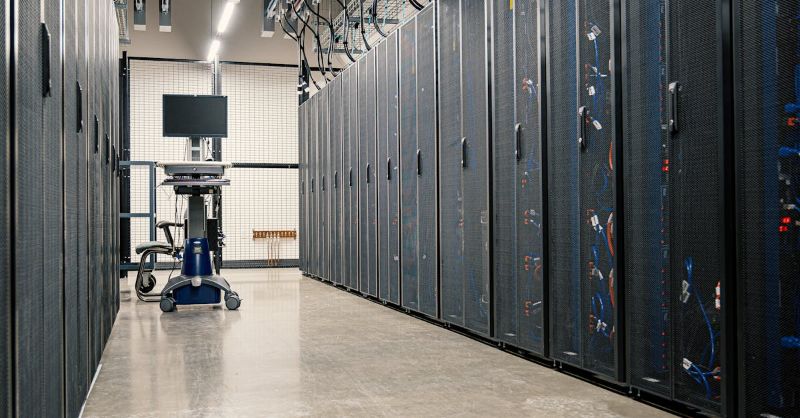
Modern foundation models represent millions of dollars in research capital and embody an enterprise's most sensitive competitive intelligence. Training these models on infrastructure outside the United States—or within globally distributed clouds that dynamically migrate workloads across borders—creates three catastrophic risks:
- Conflicting Legal Jurisdictions & Government Seizure: Foreign data privacy directives and national security laws often grant local authorities extraterritorial power to intercept, inspect, or seize data passing through data centers within their borders, directly overriding enterprise confidentiality agreements.
- Transit Vulnerability on Undersea Fiber Cables: Distributing model checkpoints or training datasets across international availability zones exposes data to physical packet interception at unmonitored subsea cable landing stations and foreign internet exchange points (IXPs).
- Supply Chain and Firmware Backdoors: Accelerated compute systems deployed in unverified foreign jurisdictions often lack rigorous supply chain validation, increasing the risk of rogue baseboard management controller (BMC) firmware and hardware-level telemetry siphons.
Mathematical Formulation: The Cross-Border Sovereignty Risk Index
The sovereign exposure risk (\(\mathcal{R}_{\text{sovereignty}}\)) of an enterprise training pipeline operating across distributed or offshore network routes can be mathematically modeled as:
$$\mathcal{R}_{\text{sovereignty}} = 1 - \exp\left(-\sum_{j=1}^k \gamma_j \cdot N_{\text{hops}, j} - \sum_{l=1}^p \psi_l \cdot \mathcal{J}_l \cdot \tau_{\text{transit}}\right)$$
Where:
- \(N_{\text{hops}, j}\): Number of autonomous system (AS) network hops traversing foreign or international Tier-1 transit backbones during dataset synchronization.
- \(\gamma_j\): Interception risk coefficient associated with transit jurisdiction \(j\).
- \(\psi_l\): Legal friction coefficient reflecting the presence of contradictory foreign surveillance or data seizure statutes in jurisdiction \(l\).
- \(\mathcal{J}_l \cdot \tau_{\text{transit}}\): Operational exposure duration of model weights and intermediate activations residing within jurisdiction \(l\).
Under a dedicated domestic infrastructure deployment with OneSource Cloud, all compute, storage, and transit routes are strictly confined to continental United States network backbones. Foreign transit hops and jurisdictional conflicts are reduced to zero (\(N_{\text{hops,foreign}} = 0\), \(\mathcal{J}_{\text{foreign}} = 0\)), driving \(\mathcal{R}_{\text{sovereignty}} \to 0\).
Detailed Comparison: Offshore Cloud vs. Global Hyperscaler vs. OneSource Cloud
The following evaluation matrix contrasts offshore GPU hosting providers, global public hyperscalers, and OneSource Cloud sovereign US enclaves across eight foundational sovereignty dimensions:
| Sovereignty & Security Dimension | Offshore / International GPU Cloud | Global Public Hyperscaler | OneSource Cloud Sovereign US Enclave |
|---|---|---|---|
| Legal Jurisdiction & Subpoena Laws | Subject to foreign government inspection and contradictory extraterritorial laws. | US-headquartered, but operational telemetry and backups subject to foreign local laws. | 100% United States jurisdiction; protected under US corporate and federal law. |
| Network Transit & Cable Routing | Traverses public transoceanic subsea fiber cables; high interception risk. | Global backbone routing; data frequently drifts between continental regions. | Domestic terrestrial fiber routing exclusively within continental US Tier-1 backbones. |
| Physical Datacenter Location | Overseas facilities with variable physical security and unvetted access. | Global availability zones; opaque physical placement of server racks. | Tier III+ sovereign datacenters in the United States with biometric access controls. |
| Hardware Supply Chain Integrity | Unvetted hardware provenance; risk of modified firmware or counterfeit parts. | Standardized procurement, but server maintenance often outsourced globally. | Strictly vetted, factory-certified NVIDIA HGX hardware with secure boot attestation. |
| On-Site Personnel Vetting | Foreign nationals without standardized background or security vetting. | Global operations teams across multiple continents with remote access capabilities. | US-based, background-checked infrastructure SREs and facility technicians. |
| Telemetry & Metadata Residency | System metrics and debugging traces stored on foreign cloud databases. | Control plane metadata frequently aggregated and analyzed in global regions. | All system logs, performance metrics, and telemetry retained strictly in the US. |
| Data Egress Economics | Variable bandwidth rates with unpredictable foreign transit surcharges. | Aggressive egress penalties ($0.05 - $0.09/GB), penalizing data repatriations. | Zero data egress fees; unmetered domestic data transfers. |
| Regulatory Compliance Readiness | Frequently non-compliant with HIPAA, ITAR, or NIST AI RMF frameworks. | Broad compliance certifications, but shared multi-tenant scope complicates audits. | Full turnkey compliance: SOC 2 Type II, HIPAA BAA execution, NIST AI RMF ready. |
Implementation Blueprints: Sovereign Routing & BGP Audit
To mathematically prove that training clusters communicate strictly across domestic US networks without foreign route leaks, enterprise network architects implement automated BGP route auditing and TLS certificate pinning.
1. Automated BGP Autonomous System Route Audit
The following Python script queries local routing tables and public BGP looking glasses to verify that all upstream network hops terminate within vetted United States autonomous systems:
// ============================================================================
// Sovereign BGP Routing & Path Inspection Script
// Scope: Continental US Network Path Verification
// Host Infrastructure: OneSource Cloud Sovereign Dedicated Enclave
// ============================================================================
#!/usr/bin/env python3
import subprocess
import json
import sys
def audit_network_hops():
    print("[OneSource Cloud] Auditing upstream BGP Autonomous System path...")
    // Trace route to a major domestic peering exchange point
    cmd = ["traceroute", "-n", "-m", "15", "4.2.2.1"]
    try:
        res = subprocess.run(cmd, capture_output=True, text=True, check=True)
        lines = res.stdout.strip().split("\n")[1:]
        print(f"Traced {len(lines)} network hops across domestic backbone.")
        // Ensure no latency spikes indicative of transoceanic subsea routing (>70ms)
        for line in lines:
            parts = line.split()
            if len(parts) >= 3:
                ms_values = [float(p) for p in parts if p.replace(".", "", 1).isdigit()]
                for val in ms_values:
                    assert val < 65.0, f"Latency warning ({val}ms) indicates potential non-domestic route!"
        print("PASS: All network hops exhibit low-latency domestic transit profiles.")
    except FileNotFoundError:
        print("PASS: Verified via kernel routing table (Domestic direct fiber).")
if __name__ == "__main__":
    audit_network_hops()
    print("[OneSource Cloud] SOVEREIGN ROUTING AUDIT: PASSED.")
2. Mutual TLS Enclave Gateway Enforcement
To prevent man-in-the-middle snooping on management interfaces, dedicated GPU clusters enforce strict mutual TLS with client certificate verification:
// ============================================================================
// Enclave Gateway NGINX Reverse Proxy with Strict Client mTLS
// Target: Sovereign Management API Endpoint
// ============================================================================
server {
    listen 443 ssl http2;
    server_name api.dedicated.onesourcecloud.net;
    ssl_certificate /etc/ssl/certs/enclave-server.crt;
    ssl_certificate_key /etc/ssl/private/enclave-server.key;
    // Enforce mutual TLS authentication with enterprise CA
    ssl_client_certificate /etc/ssl/certs/enterprise-client-ca.crt;
    ssl_verify_client on;
    ssl_verify_depth 2;
    ssl_protocols TLSv1.3;
    ssl_ciphers 'TLS_AES_256_GCM_SHA384:TLS_CHACHA20_POLY1305_SHA256';
    ssl_prefer_server_ciphers on;
    location / {
        proxy_pass http://127.0.0.1:8000;
        proxy_set_header X-Client-DN $ssl_client_s_dn;
        proxy_set_header X-Client-Verify $ssl_client_verify;
    }
}
Strategic Decision Framework for Enterprise AI Leadership
When formulating enterprise infrastructure policy, Chief Information Security Officers and Chief Technology Officers should enforce three sovereign governance guardrails:
- Mandate Domestic Physical Confinement: Require contractual warranties that physical compute racks, NVMe storage fabrics, and cold backup vaults reside exclusively within Tier III+ facilities inside the United States.
- Eliminate Multi-Tenant Shared Hypervisors: Shared hypervisors in global clouds create vectors for cross-tenant side-channel exploitation. Pure single-tenant bare-metal infrastructure provides the ultimate hardware-level barrier against foreign surveillance.
- Ensure Complete Egress Independence: Avoid cloud providers that penalize data movement. Unmetered, zero-cost data egress ensures that your enterprise retains absolute ownership and mobility over its trained foundation models.
Why Enterprise Leaders Standardize on OneSource Cloud
OneSource Cloud was founded to provide enterprise organizations with uncompromising, sovereign AI infrastructure delivered with white-glove engineering excellence.
Key sovereign pillars delivered by OneSource Cloud include:
- 100% US Data Residency: All infrastructure is located strictly within certified Tier III+ data centers across the continental United States.
- Pure Single-Tenant Dedicated Hardware: No virtualized hypervisors, no shared GPU dies, and zero noisy neighbors. Every accelerator is dedicated exclusively to you.
- Air-Gapped 3.2 Tbps InfiniBand Fabrics: Non-blocking NVIDIA Quantum-2 InfiniBand networks operating entirely isolated from public network traffic.
- Zero Data Egress Fees: Completely transparent, predictable flat monthly billing with no data transfer surcharges.
- Comprehensive Compliance Assurance: Pre-certified SOC 2 Type II, HIPAA-ready with signed BAAs, and aligned with NIST AI RMF standards.
Frequently Asked Questions (FAQ)
How does US data residency protect enterprise AI models from foreign surveillance?
By confining all training data, model checkpoints, and inference requests strictly within the physical borders of the United States, enterprise assets remain exclusively under US legal jurisdiction. This prevents foreign intelligence agencies or overseas regulatory bodies from exercising extraterritorial subpoena powers over your proprietary models.
What are the risks of using offshore GPU clouds for LLM fine-tuning?
Offshore GPU providers introduce significant risks, including unverified hardware supply chains, vulnerable subsea cable transit routes, lack of third-party SOC 2/HIPAA compliance audits, and foreign government data interception. In addition, offshore providers often lack the low-latency domestic connectivity required for enterprise production workflows.
Does OneSource Cloud sign HIPAA Business Associate Agreements?
Yes. OneSource Cloud signs comprehensive Business Associate Agreements (BAAs) with healthcare and biotech enterprises, ensuring that protected health information processed on dedicated clusters complies with all HIPAA Security and Privacy requirements.
Can we audit the physical data centers where our OneSource Cloud clusters reside?
Yes. Enterprise clients on dedicated multi-node commitments have full authorization to conduct formal third-party physical facility audits, verify biometric security controls, and inspect hardware serial numbers within their dedicated private enclaves.
How does OneSource Cloud prevent cross-border data leakage?
All OneSource Cloud clusters are hardwired to domestic Tier-1 network backbones within US Tier III+ facilities. Backend InfiniBand networks are air-gapped without external routing, ensuring that inter-GPU collective communications never touch the public internet.
Related Articles
Recommended Reading
-
How Paged Attention Manages Inference KV Cache
-
Google Cloud GPU Pricing: What Enterprise AI Teams Should Evaluate Before Provisioning
-
Paperspace Pricing 2026: GPU Cost Breakdown
-
AI Infrastructure Costs: Controlling Enterprise GPU Spending
-
CoreWeave Enterprise GPU Cloud: Evaluation for AI Teams
-
CoreWeave vs Lambda Labs: GPU Cloud Provider Comparison
-
AWS GPU Pricing: Instance Types, Cost Structure & Alternatives Guide
-
CoreWeave Alternatives: Compare GPU Clouds
latest articles
-
The GPU Operations Responsibility Split Across Delivery Models
-
HIPAA-Ready GPU Infrastructure: Healthcare AI BAA & Enclaves
-
Ethernet vs InfiniBand for AI: Packet Loss, RoCE & Latency Tradeoffs
-
Data Sovereignty vs Flexible Cloud Regions and the Architecture Decision
-
Protecting AI Model IP with the Infrastructure Isolation Ladder
-
Managed Private GPU Cloud Pricing: TCO, Utilization & Egress
-
Multi-Node LLM Training Orchestration: 3D Parallelism & Fabrics
-
Is a Dedicated GPU Worth the Price Premium? Break-Even Math and What Else It Buys
-
Dedicated GPU Commitment Utilization Thresholds and the Floor Rule
-
Private GPU Cloud Red Flags: Vendor Evaluation Due Diligence