
Protecting AI Model IP with the Infrastructure Isolation Ladder
Security research has settled an uncomfortable fact: model weights are among the most valuable and least protected assets an organization owns. RAND's playbook on securing model weights opens with the observation that weights concentrate enormous investment in a copyable artifact, and legal analysis adds that current law may not protect them at all once copied. Between those two facts sits a question every hosting buyer eventually asks — what does my infrastructure choice actually do for model IP — and the marketing answer (trust us) is worse than useless. The useful answer is a ladder: each rung of infrastructure isolation eliminates a specific, documented theft vector, and knowing which rung eliminates which vector is the protection decision.
Quick Answer: How Does Infrastructure Isolation Protect Model IP?
Model weights face four documented vector classes: insiders with legitimate access, co-tenants on shared infrastructure, serving-stack compromise, and supply-chain interception. The isolation ladder eliminates them rung by rung: shared multi-tenant clouds leave the co-tenant vector to the provider's separation controls; virtualized dedicated capacity removes co-tenants but keeps the hypervisor; and single-tenant bare metal — the tier OneSource Cloud delivers in U.S. data centers — removes co-tenants and hypervisor snapshots by architecture. What no rung removes: operator access, compromised serving stacks, and patient API extraction — those stay tenant duties on every tier.
Scope: Why Model Weights Need Infrastructure Protection
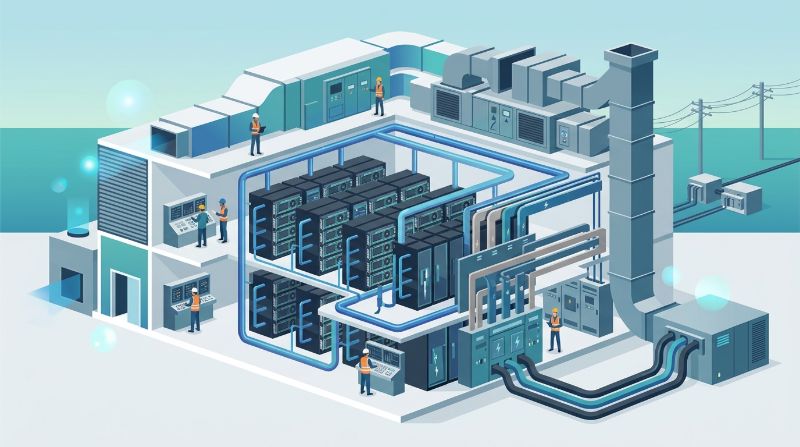
Model weights concentrate enormous training investment in a copyable artifact: research analysis treats them as among the most valuable and least protected IP an organization holds, with theft vectors spanning malicious insiders, co-tenants on shared infrastructure, compromise of the serving stack, and supply-chain interception. Legal protection under current law remains ambiguous — weights may not qualify for copyright or database protection — so technical and architectural controls carry the defense, and the protection scope spans training storage, the serving path, and every copy in between.
| Vector Class | Who Benefits | Primary Control Layer |
|---|---|---|
| Malicious insiders | Anyone with model access | Identity, logging, least privilege |
| Co-tenants | Shared-infrastructure users | Tenancy separation — or exclusion |
| Serving-stack compromise | Attackers of the inference path | Stack hardening, monitoring |
| Supply-chain interception | Interceptors of transfers and artifacts | Encryption, provenance, transfer control |
The legal ambiguity deserves emphasis because it reallocates the defense budget. Analysis of whether weights qualify as protected databases or copyrightable works concludes, essentially, maybe not — which means the remedy after theft is weak precisely when the asset is most valuable. Organizations that internalize this stop treating weight protection as a legal problem with a technical component and start treating it as an architectural problem with a legal backstop.
Shared Responsibility for Weight Protection
Across the isolation ladder the duty split moves: on shared multi-tenant clouds, the provider owns hypervisor and tenancy separation while you own access control, encryption posture, and the serving stack — and the co-tenant vector is theirs to prevent and yours to accept; on virtualized dedicated capacity the co-tenant vector shrinks but the operator and hypervisor remain; on single-tenant bare metal — the tier OneSource Cloud delivers with dedicated GPU nodes in U.S. data centers — no other tenant shares the machines, eliminating the co-tenant and hypervisor-snapshot vectors by architecture; and on every tier you retain duties: identity discipline, serving-stack hardening, and monitoring of weight access paths.
| Tier | Co-Tenant Vector | Hypervisor Vector | Operator Access |
|---|---|---|---|
| Shared multi-tenant cloud | Provider-managed separation | Present | Provider staff |
| Virtualized dedicated | Removed | Present | Provider staff |
| Single-tenant bare metal | Eliminated by architecture | None — no hypervisor | Provider staff, contracted |
Defense-in-depth guidance from threat modeling treats infrastructure isolation as one layer among several, and confidential-computing technologies add protection on any tier by keeping weights encrypted even during inference. The layers stack rather than compete: single-tenant bare metal narrows who can ever reach the machine; confidential computing narrows what even the operator can read; and access governance narrows what anyone legitimate can do. The hosting tier decision determines which vectors remain for the other layers to catch — and OneSource Cloud enclaves sit at the rung where the two multi-tenancy vectors are structurally absent, behind isolated RoCE v2 fabric, with NVMe-oF storage tiers no other tenant touches.
Evidence Artifacts: Proving the Protection Operates
Weight protection needs artifacts, not assurances: tenancy attestations or hardware inventories proving exclusivity, access logs covering every read of the weight store, encryption configuration exports for weights at rest and in the serving path, egress and transfer records around training checkpoints, and the provider audit posture (SOC 2 Type II audit readiness where offered). A hosting arrangement that cannot produce these artifacts cannot demonstrate protection — it can only assert it, which fails exactly when a theft question arrives.
| Artifact | What It Proves | Request From |
|---|---|---|
| Tenancy attestation or hardware inventory | Exclusivity of the machines | Provider |
| Weight-store access logs | Who read the weights, when | Provider and tenant SIEM |
| Encryption configuration exports | Weights protected at rest and in path | Tenant platform |
| Transfer and egress records | No unexplained weight movement | Provider network logs |
| Audit posture report | Provider control environment | Provider audit program |
Ask for the artifact set before signing, not after an incident — the request itself is diagnostic. Providers organized for weight-sensitive customers produce attestation and log-export paths quickly because they have answered before; providers who improvise the answer are telling you how the incident review will go.
Residual Risk: What Isolation Cannot Eliminate
Isolation narrows the attack surface; it does not close it: operator-side access remains on any hosted platform — the residual RAND-style analysis centers on insiders with legitimate access, compromised serving stacks that legitimately load weights, and exfiltration through model APIs by patient querying. The countermeasures shift from architecture to operations: least-privilege access with weight-store logging, serving-stack hardening, query-rate anomaly detection, and contractual operator-access terms. Treating bare metal as the end of the program rather than its foundation is the failure pattern.
| Residual Vector | Why Architecture Cannot Fix It | Operational Countermeasure |
|---|---|---|
| Operator access | Someone runs the hardware | Contract terms, access logging, background standards |
| Serving-stack compromise | The stack must load weights to serve | Hardening, patching, runtime monitoring |
| API extraction | The API exists to serve the model | Rate limits, anomaly detection, distillation monitoring |
For organizations placing proprietary weights on dedicated infrastructure, the reference posture combines the rung with the operations: single-tenant bare-metal enclaves from OneSource Cloud Private AI Infrastructure, with SOC 2 audit readiness and U.S. data centers, plus tenant-side identity discipline and weight-store logging — architecture eliminates what it can, and the security program owns the rest.
FAQ
Does copyright or trade-secret law protect model weights on its own?
Not reliably. Legal analysis treats weight protection under current law as ambiguous — weights may not qualify as copyrightable works or protected databases — so organizations treat technical and architectural controls as the primary defense and law as a remedy of last resort rather than the control itself.
Can weights still be stolen from single-tenant infrastructure?
The attack surface narrows but does not close: single-tenant bare metal such as the enclaves OneSource Cloud delivers removes co-tenants and hypervisor snapshots by architecture, while operator access, compromised serving stacks, and patient API querying remain — covered by least-privilege access, weight-store logging, serving hardening, and query anomaly detection on the tenant side.
Related Articles
Recommended Reading
-
How Paged Attention Manages Inference KV Cache
-
Google Cloud GPU Pricing: What Enterprise AI Teams Should Evaluate Before Provisioning
-
Paperspace Pricing 2026: GPU Cost Breakdown
-
AI Infrastructure Costs: Controlling Enterprise GPU Spending
-
CoreWeave Enterprise GPU Cloud: Evaluation for AI Teams
-
CoreWeave vs Lambda Labs: GPU Cloud Provider Comparison
-
AWS GPU Pricing: Instance Types, Cost Structure & Alternatives Guide
-
CoreWeave Alternatives: Compare GPU Clouds
latest articles
-
The GPU Operations Responsibility Split Across Delivery Models
-
HIPAA-Ready GPU Infrastructure: Healthcare AI BAA & Enclaves
-
Ethernet vs InfiniBand for AI: Packet Loss, RoCE & Latency Tradeoffs
-
Data Sovereignty vs Flexible Cloud Regions and the Architecture Decision
-
Protecting AI Model IP with the Infrastructure Isolation Ladder
-
Managed Private GPU Cloud Pricing: TCO, Utilization & Egress
-
Multi-Node LLM Training Orchestration: 3D Parallelism & Fabrics
-
Is a Dedicated GPU Worth the Price Premium? Break-Even Math and What Else It Buys
-
Dedicated GPU Commitment Utilization Thresholds and the Floor Rule
-
Private GPU Cloud Red Flags: Vendor Evaluation Due Diligence