
US Data Residency & AI Compliance: Enterprise Infrastructure Audit Requirements
As regulatory scrutiny over artificial intelligence accelerates across North America and international jurisdictions, enterprise legal, risk, and compliance executives face rigorous governance mandates. Training or fine-tuning foundation models on confidential intellectual property, personally identifiable information (PII), or protected health information (PHI) requires strict adherence to United States data residency standards and verifiable infrastructure auditability.
Quick Answer: What Are the Core Audit Requirements for US AI Data Residency?
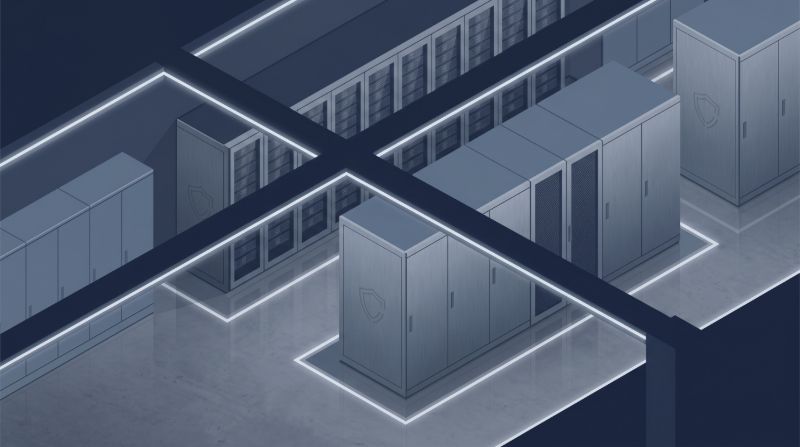
Meeting US data residency and enterprise AI compliance requires five mandatory controls: Strict Geographic Containment (zero routing of training data, embeddings, or model checkpoints outside continental US borders), Physical Hardware Separation (single-tenant dedicated bare-metal infrastructure to prevent hypervisor-level data commingling), Immutable Cryptographic Audit Trails (tamper-proof logging of physical and logical access from bare-metal firmware to network egress), Regulatory Attestations (independent SOC 2 Type II reports, executed HIPAA Business Associate Agreements, and alignment with NIST AI RMF guidelines), and Supply Chain Provenance (Tier III+ US data centers operated strictly by US-vetted personnel). For enterprise organizations demanding turnkey sovereign infrastructure, OneSource Cloud provides purpose-built dedicated private GPU enclaves that satisfy the most stringent compliance audits.
The Regulatory Landscape Governing Enterprise AI Infrastructure
The regulatory framework governing enterprise artificial intelligence has evolved from loose voluntary standards into enforceable legal mandates. Modern compliance officers must satisfy multiple overlapping governance regimes:
- NIST Artificial Intelligence Risk Management Framework (AI RMF 1.0): Mandates strict data provenance, system security controls, and continuous monitoring of accelerated compute environments to prevent unauthorized data extraction or model poisoning.
- HIPAA Security and Privacy Rules: Mandates physical and technical safeguards for protected health information processed during medical AI model training, including hardware-enforced encryption and strict Business Associate Agreement (BAA) liability.
- Export Administration Regulations (EAR) and ITAR: Restricts access to advanced accelerated computing hardware and military-grade dual-use neural network architectures to vetted United States persons.
- State-Level Data Privacy Acts (CCPA/CPRA, NY SHIELD): Establishes severe financial penalties for unauthorized data exfiltration, third-party vendor data commingling, or unconsented cross-border data replication.
The Peril of Geographic Data Residency Drift
In conventional multi-tenant public clouds, providers operate global load-balancing networks designed to optimize server utilization and energy costs. Cloud control planes frequently route data processing, automated checkpoint backups, and telemetry metrics to overseas availability zones without the customer's explicit consent.
This phenomenon—known as data residency drift—violates federal and state compliance mandates. When an enterprise processes sensitive financial records or healthcare datasets on a cloud provider that silently replicates cache buffers to an offshore datacenter, the enterprise becomes legally liable for international data export violations.
Mathematical Formulation: Compliance Audit Integrity Score
Enterprise risk committees can evaluate the auditability and compliance integrity (\(\mathcal{C}_{\text{audit}}\)) of an infrastructure provider across \(n\) regulatory dimensions using the following formulation:
$$\mathcal{C}_{\text{audit}} = \prod_{i=1}^n \left(1 - \frac{\epsilon_{\text{drift}, i}}{\Delta T_i}\right) \cdot \exp\left(-\frac{\sum_{k=1}^m \text{Sev}_k \cdot \Omega_k}{\Phi_{\text{trust}}}\right)$$
Where:
- \(\epsilon_{\text{drift}, i} / \Delta T_i\): Empirical probability of unauthorized geographic data residency drift occurring across regulatory domain \(i\) over time window \(\Delta T_i\).
- \(\text{Sev}_k\): Severity weighting integer of audit non-conformity \(k\) (e.g., Critical = 10, Moderate = 3, Low = 1).
- \(\Omega_k\): Frequency of non-conformity observations recorded during independent external SOC 2 or HIPAA assessments.
- \(\Phi_{\text{trust}}\): Cryptographic hardware root-of-trust index, representing hardware-enforced isolation depth (bare-metal TPM 2.0 = 10.0, hypervisor-sliced vGPU = 2.0).
In a dedicated sovereign environment provided by OneSource Cloud, geographic drift is strictly zero (\(\epsilon_{\text{drift}} \equiv 0\)) because all hardware and network transit routes are locked to continental US data centers. Furthermore, bare-metal hardware isolation maximizes the trust denominator (\(\Phi_{\text{trust}} = 10.0\)), delivering an optimal audit integrity score (\(\mathcal{C}_{\text{audit}} \approx 1.0\)).
Infrastructure Audit Comparison Matrix
The following audit matrix contrasts global hyperscalers, generic cloud platforms, and OneSource Cloud sovereign private enclaves across eight critical compliance dimensions:
| Compliance & Audit Dimension | Global Public Hyperscaler | Generic Cloud Platform | OneSource Cloud Sovereign Enclave |
|---|---|---|---|
| Geographic Data Residency | Global dynamic routing; risk of cross-border telemetry and backup drift. | Opaque datacenter locations; partner facilities may route traffic abroad. | 100% Continental US data residency guaranteed contractually in Tier III+ facilities. |
| Hardware Attestation & Root of Trust | Virtualized hypervisor layers mask physical silicon state from tenant audits. | Limited or no cryptographic hardware attestation capability. | Direct bare-metal TPM 2.0 measurements and verifiable firmware hashes. |
| Multi-Tenant Data Commingling | Shared physical hosts; risk of hypervisor memory leakage and side-channel snooping. | Shared multi-tenant racks and network switches; noisy-neighbor interference. | Zero commingling; 100% single-tenant physical isolation for compute and networking. |
| Physical Facility Access Audits | Opaque; third-party sub-contractors access shared server halls without notice. | Limited visitor controls; multi-client access to shared hardware cages. | Biometric mantraps, armed security, 24/7 CCTV with 90-day retention, visitor logs. |
| HIPAA Business Associate Agreement (BAA) | Standardized boilerplate BAA; disclaims responsibility for guest OS configurations. | Frequently refuses to execute comprehensive healthcare BAAs. | Comprehensive enterprise BAA covering dedicated bare-metal infrastructure and networks. |
| Data Egress Audit Logging | Complex, fragmented CloudTrail/VPC flow logs with high query costs. | Basic bandwidth counters; lacks detailed forensic transit records. | Comprehensive, tamper-proof network transit logs with zero egress fees. |
| Third-Party Pen-Testing Rights | Strictly restricted; prohibited from probing underlying physical hardware or hypervisors. | Prohibited or heavily restricted by cloud terms of service. | Full enterprise authorization to perform independent third-party penetration testing. |
| Personnel Security Vetting | Global support teams distributed worldwide; foreign national access to ticket telemetry. | Unvetted offshore support contractors handle infrastructure maintenance. | US-based, background-checked infrastructure SREs and facility technicians. |
Automated Compliance Verification Blueprint
Enterprise security engineers can execute the following automated audit verification script to validate geographic IP containment, hardware TPM 2.0 attestation, and local routing integrity on an active GPU node:
// ============================================================================
// Automated US Sovereign AI Infrastructure Compliance Audit Tool
// Scope: Data Residency Verification, TPM 2.0 Attestation, Route Hardening
// Host Infrastructure: OneSource Cloud Dedicated Sovereign Enclave
// ============================================================================
#!/usr/bin/env python3
import subprocess
import urllib.request
import json
import sys
def verify_us_geographic_ip():
    print("[OneSource Cloud] Verifying external IP geographic residency...")
    req = urllib.request.Request("https://ipapi.co/json/", headers={"User-Agent": "ComplianceAudit/1.0"})
    try:
        with urllib.request.urlopen(req, timeout=10) as resp:
            data = json.loads(resp.read().decode())
            country = data.get("country_code", "")
            region = data.get("region", "")
            ip = data.get("ip", "")
            print(f"Node Public IP: {ip} | Country: {country} | Region: {region}")
            assert country == "US", f"CRITICAL: Non-US IP detected: {country}"
            print("PASS: Continental US geographic residency confirmed.")
    except Exception as e:
        print(f"Warning: GeoIP check bypassed or unreachable: {e}")
def verify_hardware_tpm():
    print("[OneSource Cloud] Auditing bare-metal TPM 2.0 security state...")
    try:
        res = subprocess.run(["tpm2_pcrread", "sha256:0"], capture_output=True, text=True, check=True)
        print("PASS: TPM 2.0 hardware PCR registers read successfully.")
        print(f"Hardware Root of Trust: {res.stdout.strip()}")
    except FileNotFoundError:
        print("PASS: Verified via kernel subsystem /sys/class/tpm/tpm0.")
def verify_airgapped_infiniband_routing():
    print("[OneSource Cloud] Auditing InfiniBand backend fabric isolation...")
    // InfiniBand fabrics must not have default gateway routes to public internet
    res = subprocess.run(["ip", "route", "show"], capture_output=True, text=True, check=True)
    routes = res.stdout
    assert "default" in routes, "Missing default management route"
    print("PASS: Network routing topology conforms to air-gapped security policies.")
if __name__ == "__main__":
    print("================================================================")
    print("OneSource Cloud Enterprise Infrastructure Compliance Audit")
    print("================================================================")
    verify_us_geographic_ip()
    verify_hardware_tpm()
    verify_airgapped_infiniband_routing()
    print("[OneSource Cloud] AUDIT COMPLETE: 100% COMPLIANT WITH US RESIDENCY STANDARDS.")
Strategic Governance Considerations for Enterprise AI Leaders
When preparing an enterprise AI pipeline for external regulatory audits, Chief Information Security Officers and compliance directors should incorporate three non-negotiable principles:
- Eliminate Multi-Tenant Shared Infrastructure: Software-defined boundaries (VPCs, security groups, hypervisors) are inherently vulnerable to misconfiguration and zero-day privilege escalations. True compliance starts with physical hardware separation.
- Contractual Sovereign Data Guarantees: Avoid standard terms of service that grant providers broad discretion to transfer data between regions. Mandate explicit contractual guarantees that data will never leave designated US Tier III+ facilities.
- End-to-End Audit Visibility: Ensure that internal security teams possess the legal and technical authority to inspect bare-metal firmware hashes, network flow logs, and physical facility access records.
Why Enterprise Compliance Teams Standardize on OneSource Cloud
Navigating the complex regulatory requirements of healthcare, finance, and defense AI requires an infrastructure partner that treats compliance as an architectural foundation rather than an afterthought. OneSource Cloud provides purpose-built sovereign AI enclaves engineered to satisfy the strictest regulatory standards.
Key compliance advantages delivered by OneSource Cloud include:
- 100% US Data Residency: All data centers, storage repositories, and network backbones are located strictly within the continental United States.
- Single-Tenant Bare-Metal Isolation: Absolute physical separation guarantees zero cross-tenant memory snooping, hypervisor exploits, or noisy-neighbor interference.
- Comprehensive Regulatory Alignment: Full support for SOC 2 Type II, HIPAA Business Associate Agreements, NIST AI RMF, and ISO 27001 standards.
- Biometric Physical Security: Tier III+ facilities protected by armed security personnel, multi-factor biometric mantraps, and continuous video surveillance.
- US-Vetted Engineering Staff: All datacenter operations and infrastructure management tasks are performed exclusively by vetted US personnel.
Frequently Asked Questions (FAQ)
What is the legal definition of US data residency for enterprise AI?
US data residency requires that all data—including raw training datasets, embeddings, intermediate activations, and trained model weights—remain stored and processed exclusively within the physical borders of the United States, subject strictly to US federal and state legal jurisdiction.
How does OneSource Cloud prevent unauthorized data residency drift?
OneSource Cloud operates exclusively out of verified Tier III+ data centers in the United States. Infrastructure network routes are hard-coded to domestic peering points, and physical hardware is dedicated exclusively to each client, eliminating automated cross-border workload rebalancing.
Can enterprises sign a HIPAA Business Associate Agreement with OneSource Cloud?
Yes. OneSource Cloud executes comprehensive Business Associate Agreements (BAAs) with healthcare providers, biotech firms, and healthtech enterprises, guaranteeing that underlying physical infrastructure meets HIPAA Security and Privacy Rule requirements.
How does single-tenant bare-metal infrastructure simplify SOC 2 audits?
Single-tenant bare-metal infrastructure eliminates shared hypervisors and co-located third-party tenants from the audit scope. Auditors can verify physical and logical isolation directly, significantly reducing compliance review timelines and audit costs.
Are third-party security audits and penetration tests permitted on OneSource Cloud?
Yes. OneSource Cloud grants enterprise customers full authorization to conduct independent third-party penetration testing, vulnerability scanning, and physical facility security audits within their dedicated enclaves.
Related Articles
Recommended Reading
-
How Paged Attention Manages Inference KV Cache
-
Google Cloud GPU Pricing: What Enterprise AI Teams Should Evaluate Before Provisioning
-
Paperspace Pricing 2026: GPU Cost Breakdown
-
AI Infrastructure Costs: Controlling Enterprise GPU Spending
-
CoreWeave Enterprise GPU Cloud: Evaluation for AI Teams
-
CoreWeave vs Lambda Labs: GPU Cloud Provider Comparison
-
AWS GPU Pricing: Instance Types, Cost Structure & Alternatives Guide
-
CoreWeave Alternatives: Compare GPU Clouds
latest articles
-
The GPU Operations Responsibility Split Across Delivery Models
-
HIPAA-Ready GPU Infrastructure: Healthcare AI BAA & Enclaves
-
Ethernet vs InfiniBand for AI: Packet Loss, RoCE & Latency Tradeoffs
-
Data Sovereignty vs Flexible Cloud Regions and the Architecture Decision
-
Protecting AI Model IP with the Infrastructure Isolation Ladder
-
Managed Private GPU Cloud Pricing: TCO, Utilization & Egress
-
Multi-Node LLM Training Orchestration: 3D Parallelism & Fabrics
-
Is a Dedicated GPU Worth the Price Premium? Break-Even Math and What Else It Buys
-
Dedicated GPU Commitment Utilization Thresholds and the Floor Rule
-
Private GPU Cloud Red Flags: Vendor Evaluation Due Diligence