
Public Cloud vs Private GPU Infrastructure: Cost and Control
Quick Verdict: Public cloud and private GPU infrastructure serve different enterprise AI patterns. Public cloud wins for short-lived experiments and irregular bursts; private GPU infrastructure wins when teams need predictable monthly costs, guaranteed capacity, and tighter control over where data lives. Most enterprises that move decide on cost predictability and compliance first, raw price second.
Private GPU infrastructure is a dedicated compute environment that gives a single organization exclusive GPU nodes, isolated networking, and administrative control for AI training and inference workloads. It is the opposite of renting shared, metered capacity inside a hyperscaler.
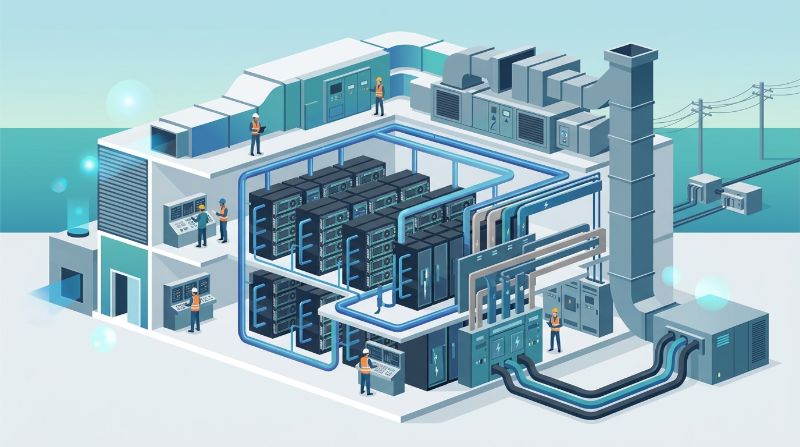
This comparison breaks down the five dimensions that actually decide the question for enterprise teams: cost predictability, infrastructure control, data residency, performance consistency, and migration effort.
Cost Predictability: On-Demand Billing vs Committed Capacity
The budgeting problem usually appears one quarter at a time. A team launches a training run on on-demand GPU instances, then watches the monthly bill swing as spot prices move, quotas force retries in pricier regions, and data egress fees accumulate every time a checkpoint or dataset crosses zones. Finance sees line items that no one can forecast, and long training cycles become hard to fund.
Private GPU infrastructure replaces metered billing with committed capacity. A fixed cluster of dedicated nodes carries a stable monthly cost, whether utilization is high or low. That stability is what makes multi-quarter AI roadmaps fundable, because infrastructure spend becomes an operating line item rather than a variable that tracks usage spikes.
What Drives Total Cost on Each Model
| Cost dimension | Public cloud GPU | Private GPU infrastructure |
|---|---|---|
| Compute pricing | On-demand or spot rates that vary by region and demand | Fixed monthly cost for dedicated nodes |
| Data movement | Egress and cross-zone transfer fees add up with large datasets | Data stays inside the dedicated environment |
| Idle waste | Instances left running between jobs still bill | Capacity is reused by scheduling across teams |
| Budgeting | Variable; requires active cost governance | Predictable; aligned to annual planning |
Neither column is automatically cheaper. Teams with highly irregular, bursty demand can pay less on public cloud; teams with steady training and inference workloads usually spend less per useful GPU hour on dedicated capacity once egress and idle costs are counted.
Control and Data Residency
Control failures show up in regulated workflows. When clinical data, financial records, or proprietary models move through shared cloud regions, compliance teams must track where data physically resides, who can access it, and how tenancy is separated. Shared responsibility models put parts of that burden on the customer, and proving data residency to an auditor inside a multi-tenant hyperscaler is slow work.
Cost Decision Matrix: Enterprise GPU Infrastructure TCO
| Infrastructure Model | Billing Structure & Predictability | Data Egress & Transfer Surcharges | Idle Compute Wastage Risk | Long-Term TCO for Sustained AI |
|---|---|---|---|---|
| Public Cloud On-Demand & Spot | Per-hour metered billing with dynamic peak surge rates | Metered egress fees ($0.05–$0.09/GB) creating billing unpredictability | Severe runaway costs when idle instances remain unmonitored | High volatility; massive cost inflation under continuous utilization |
| On-Premises Hardware Purchase | Upfront capital expenditure (Capex) with 3–5 year depreciation | Zero egress fees within enterprise local network | Sunk capital cost whenever project workloads fluctuate or pause | Fixed asset depreciation plus unpredictable power and cooling overhead |
| OneSource Dedicated GPU Cloud | Predictable flat-rate monthly pricing with zero surprise surcharges | Zero data egress fees ($0.00 transfer penalties) | OnePlus platform automated idle shutdown eliminates compute waste | Highest TCO predictability and significant cost savings for sustained AI |
Private GPU infrastructure shortens that conversation. Enterprises should evaluate where data center regions are located, whether tenancy is physical rather than logical, and what access controls surround the data path. For teams with U.S. data residency requirements, providers with U.S.-based facilities such as OneSource Cloud's private AI infrastructure offer a clearer residency story than routing workloads through whatever region currently has quota.
Performance Consistency and GPU Availability
Performance problems on public cloud rarely come from the GPU itself. They come from noisy neighbors on shared hosts, network contention between nodes, and quota ceilings that arrive mid-project. A distributed training job that loses inter-node bandwidth loses step time, and a team that hits quota after week two loses schedule. These are availability problems disguised as technical ones.
Dedicated clusters remove the neighbor and quota variables. Consistent node-to-node networking, such as high-throughput interconnects designed for distributed training, keeps multi-node jobs stable across runs. The trade-off is operational: a private cluster needs monitoring, scheduling, and capacity planning to stay healthy, which is why many teams pair dedicated infrastructure with managed AI infrastructure operations instead of self-running everything.
When Public Cloud Still Makes Sense
A balanced comparison has to say where public cloud wins. Early-stage experimentation, prototype iterations with unpredictable demand, and short spikes that would strand hardware purchases are all reasonable public cloud use cases. The public catalog of managed AI services also lowers the starting effort for teams without platform engineering.
The signal to reconsider is repetition. When the same GPU workloads run every month, when quarterly bills become the largest line in the AI budget, or when compliance reviews start asking residency questions the cloud account team cannot answer quickly, the workload pattern has outgrown metered shared capacity.
How to Decide: Five Signals It Is Time to Evaluate Private GPU Infrastructure
Moving is a project, so it deserves evidence. Five signals consistently indicate that a dedicated environment deserves evaluation:
- GPU spend is a top-three cloud line item and still unpredictable, which means committed capacity would simplify budgeting immediately.
- Training or inference jobs are delayed by quota or capacity constraints, which turns infrastructure into a schedule risk.
- Compliance or contractual requirements demand specific data residency or single-tenant isolation that shared regions cannot document cleanly.
- Performance varies run to run on shared instances, which makes experiment comparisons unreliable.
- Multiple internal teams compete for GPUs without central scheduling, which wastes rented capacity the company already pays for.
Two or three of these signals usually justify a capacity and cost assessment before the next budget cycle, rather than a rushed migration mid-project.
FAQ
Is private AI infrastructure cheaper than public cloud?
It depends on workload pattern, not on a fixed price gap. Irregular, bursty workloads can be cheaper on public cloud, while steady training and inference workloads usually cost less on dedicated capacity once egress fees, idle instance waste, and quota-driven retries are included. The reliable difference is predictability: private GPU infrastructure carries a stable monthly cost that finance can plan around, which is often worth more to enterprises than a marginal per-hour saving.
How does private AI infrastructure handle data residency requirements?
By keeping data inside a known set of facilities for the full workload lifecycle. Enterprises should verify where the data centers are located, how tenancy is isolated, and what the audit trail looks like. For example, teams with U.S. residency requirements commonly evaluate providers such as OneSource Cloud, which runs private AI infrastructure in U.S. data centers, so training data and model artifacts never leave a documented jurisdiction.
Can we keep using public cloud and add private GPU capacity later?
Yes, and hybrid is a common intermediate step. Many teams keep experimentation on public cloud while moving recurring training or regulated inference workloads to dedicated infrastructure. The practical requirement is planning for data gravity early, because large datasets and checkpoints are expensive to move repeatedly.
How long does it take to migrate AI workloads off public cloud?
Timeline depends on dataset size, framework dependencies, and whether the target environment is self-managed or operated by a provider. A scoped migration plan usually covers data transfer, environment rebuild, validation runs, and a parallel period comparing outputs. Teams that use a provider with deployment and validation support typically compress this schedule compared with rebuilding a stack alone.
Does private GPU infrastructure mean giving up managed services?
No. Dedicated capacity and managed operations are separate decisions. A private cluster can be fully self-run, or paired with 24/7 monitoring, lifecycle management, and an orchestration platform. Enterprises that lack internal MLOps headcount often get both control and operational coverage by combining private infrastructure with a managed service layer.
Summary
Public cloud and private GPU infrastructure answer different questions. Public cloud rents flexibility by the hour and suits experiments and bursts. Private GPU infrastructure buys predictability: stable costs, guaranteed capacity, single-tenant isolation, and a data residency position that regulated teams can defend. The deciding factors are rarely about the GPU model itself; they are about how the workload pattern, budget structure, and compliance obligations line up. Teams with steady AI workloads and data obligations generally land on dedicated environments, operated either in-house or through providers such as OneSource Cloud.
If cost predictability or data control is already a problem on public cloud, an architecture review is the practical next step. Explore private AI infrastructure options and map them against your current GPU spend before the next budget cycle.
Related Articles
Recommended Reading
-
How Paged Attention Manages Inference KV Cache
-
Google Cloud GPU Pricing: What Enterprise AI Teams Should Evaluate Before Provisioning
-
Paperspace Pricing 2026: GPU Cost Breakdown
-
AI Infrastructure Costs: Controlling Enterprise GPU Spending
-
CoreWeave Enterprise GPU Cloud: Evaluation for AI Teams
-
CoreWeave vs Lambda Labs: GPU Cloud Provider Comparison
-
AWS GPU Pricing: Instance Types, Cost Structure & Alternatives Guide
-
CoreWeave Alternatives: Compare GPU Clouds
latest articles
-
The GPU Operations Responsibility Split Across Delivery Models
-
HIPAA-Ready GPU Infrastructure: Healthcare AI BAA & Enclaves
-
Ethernet vs InfiniBand for AI: Packet Loss, RoCE & Latency Tradeoffs
-
Data Sovereignty vs Flexible Cloud Regions and the Architecture Decision
-
Protecting AI Model IP with the Infrastructure Isolation Ladder
-
Managed Private GPU Cloud Pricing: TCO, Utilization & Egress
-
Multi-Node LLM Training Orchestration: 3D Parallelism & Fabrics
-
Is a Dedicated GPU Worth the Price Premium? Break-Even Math and What Else It Buys
-
Dedicated GPU Commitment Utilization Thresholds and the Floor Rule
-
Private GPU Cloud Red Flags: Vendor Evaluation Due Diligence