Private GPU Infrastructure for Fraud Detection and Risk Scoring
Private GPU infrastructure for fraud detection and risk scoring gives financial services teams dedicated compute, controlled data paths, low-latency inference, and more predictable operations for sensitive AI workloads. It is most relevant when transaction data, customer records, model outputs, or risk signals require stronger control than shared cloud GPU environments can provide. OneSource Cloud supports these workloads with private AI infrastructure, managed operations, orchestration, AI storage design, and high-performance networking.
What Private GPU Infrastructure Means for Fraud and Risk AI
Private GPU infrastructure is a dedicated AI compute environment built for workloads that require GPU acceleration, predictable performance, and controlled access. For fraud detection and risk scoring, it typically supports model training, feature generation, real-time inference, batch scoring, anomaly detection, transaction monitoring, and private model evaluation.
The private part matters because financial AI workloads often involve sensitive customer data, transaction histories, behavioral signals, proprietary risk models, and regulated business processes. A private GPU environment can help teams control where data is processed, how workloads are isolated, who can access systems, and how infrastructure is monitored.
Private GPU infrastructure may run on-premises, in colocation, in a private AI cloud, or as a managed dedicated environment.
Why Fraud Detection and Risk Scoring Need Specialized AI Infrastructure
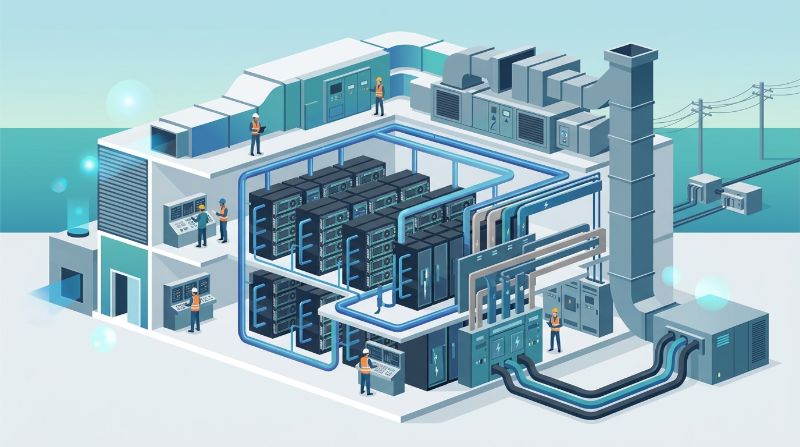
Fraud and risk workloads are different from general AI experimentation. They often sit close to production decision systems, customer-facing workflows, compliance review, and revenue protection.
| Workload Need | Infrastructure Requirement |
|---|---|
| Real-time fraud detection | Low-latency inference and reliable networking |
| Risk scoring | Predictable compute for batch and real-time models |
| Sensitive financial data | Controlled storage, access, and data residency planning |
| Model monitoring | Visibility into performance, drift, utilization, and system health |
| Multi-team development | GPU quota, workload scheduling, and usage reporting |
| Compliance review | Audit visibility, access governance, and clear responsibility model |
| Cost predictability | Dedicated capacity planning for sustained AI workloads |
For these workloads, GPU capacity alone is not enough. The environment must be designed for latency, governance, and operational reliability.
Core Architecture Requirements for Private GPU Fraud Detection
Dedicated GPU Compute for Real-Time and Batch Workloads
Fraud detection and risk scoring may use gradient boosting, deep learning, graph models, embeddings, anomaly detection, or LLM-assisted investigation workflows. Some workloads need real-time inference, while others run batch scoring or periodic retraining.
GPU sizing should account for:
- Inference concurrency
- Latency targets
- Training and retraining frequency
- Feature generation pipelines
- Model size and complexity
- Peak transaction windows
- Batch processing windows
- Multi-team usage patterns
Dedicated GPU capacity can help reduce uncertainty around public cloud GPU quota, shared-resource variability, and unpredictable cost swings.
Low-Latency AI Networking for Financial Decision Systems
Fraud detection often depends on fast movement between transaction systems, feature stores, model endpoints, storage, monitoring tools, and downstream decision engines.
AI Networking Services are important when latency and throughput affect business outcomes. A well-designed network should support predictable data movement, segmentation, redundancy, observability, and secure connectivity between AI systems and financial applications.
Low latency is not only a GPU issue. A fast model can still miss operational targets if storage access, network paths, or application integrations are slow.
Secure AI Storage Architecture for Financial Data
Fraud and risk AI systems rely on structured and unstructured data: transaction histories, customer profiles, device signals, claims, documents, case notes, embeddings, model artifacts, logs, and outputs.
AI Storage Architecture should support controlled data paths, access segmentation, retrieval performance, retention requirements, backup planning, and audit visibility. For RAG or private LLM workflows, prompts, embeddings, retrieved documents, and generated summaries should be included in data governance review.
AI Orchestration for Shared GPU Environments
Financial institutions often have fraud, risk, data science, engineering, compliance analytics, and product teams competing for AI resources.
OnePlus Platform, OneSource Cloud’s AI orchestration platform, supports workload scheduling, GPU quota, developer workspaces, usage visibility, and model workflow coordination for private GPU environments. This helps teams share GPU capacity without losing governance or cost visibility.
Managed AI Infrastructure for Production Operations
Fraud and risk systems cannot be treated like one-time AI experiments. They need monitoring, patching, performance validation, optimization, incident response, and lifecycle planning.
Managed AI Infrastructure helps reduce operational burden when internal teams do not want to own every layer of GPU cluster management. This can be especially valuable for financial organizations where platform, security, and MLOps teams already support multiple production systems.
Data Residency and Compliance Considerations
Financial services AI infrastructure should be designed to support internal risk review, vendor oversight, auditability, and data residency requirements.
Data residency planning should include not only primary datasets but also model inputs, feature stores, embeddings, logs, monitoring data, backups, replicas, and support workflows. For fraud detection and risk scoring, model outputs may also become part of regulated decision processes.
A practical review should ask:
| Area | Questions to Evaluate |
|---|---|
| Data location | Where are transaction data, features, logs, and model outputs stored? |
| Access control | Who can access datasets, models, endpoints, and admin tools? |
| Workload isolation | Are fraud, risk, research, and customer-facing workloads separated? |
| Audit visibility | Are administrative actions and model usage events recorded? |
| Vendor responsibility | Which controls belong to the provider and which belong to the financial institution? |
| Incident response | Who handles infrastructure alerts, failures, and security events? |
| Change management | How are model, system, and infrastructure changes reviewed? |
Private AI infrastructure can support regulated AI workloads, but compliance depends on the broader governance process, policies, contracts, and operational controls.
Public Cloud vs Private GPU Infrastructure for Fraud and Risk
Public cloud platforms such as AWS, Azure, and Google Cloud can be strong options for experimentation, managed services, and flexible AI development. GPU cloud providers such as CoreWeave, Lambda Labs, Paperspace, and similar platforms can help teams access GPU capacity quickly.
Private GPU infrastructure becomes more relevant when fraud and risk workloads require dedicated capacity, lower latency control, data residency planning, custom storage and networking, or managed operations.
| Evaluation Area | Public Cloud or GPU Cloud | Private GPU Infrastructure |
|---|---|---|
| GPU availability | Flexible, but quota and availability may vary | Dedicated capacity planned around financial workloads |
| Latency control | Depends on region, service path, and architecture | Can be designed around specific transaction workflows |
| Data residency | Depends on configuration and services used | Designed around controlled data placement |
| Cost predictability | Can vary with usage and service mix | Clearer for sustained fraud and risk workloads |
| Compliance support | Possible with proper governance | Designed to support regulated workload requirements |
| Operations | Shared between provider and internal teams | Can be managed, self-managed, or jointly operated |
| Orchestration | Requires additional platform design | Can include scheduling, quota, and usage visibility |
A hybrid model is often practical. Public cloud can support experimentation and burst workloads, while private GPU infrastructure supports sustained inference, sensitive data workflows, and production risk systems.
Cost Drivers for Private GPU Fraud Detection Infrastructure
Private GPU infrastructure should be evaluated by total cost of operation, not only GPU acquisition or rental price.
Major cost drivers include GPU capacity, utilization, low-latency networking, storage throughput, data retention, monitoring, security controls, platform engineering, compliance review, managed service scope, and lifecycle management.
Financial teams should compare:
- Current cloud GPU usage and idle time
- Baseline versus burst fraud and risk workloads
- Inference latency requirements
- Storage growth and data movement patterns
- Internal MLOps and platform staffing
- Compliance and audit support needs
- Downtime or delayed decision impact
- Capacity planning and hardware refresh cycles
Private GPU infrastructure is strongest when fraud detection and risk scoring workloads are sustained, sensitive, and important enough to justify dedicated capacity and managed operations.
How to Plan a Private GPU Environment for Fraud Detection
1. Classify Fraud and Risk Workloads
Separate real-time fraud detection, batch risk scoring, model training, feature generation, case investigation, private LLM workflows, and experimentation. Each has different performance and governance needs.
2. Map the Full Data Path
Document where transaction data, customer records, features, prompts, embeddings, logs, outputs, and backups move. Include monitoring and support access paths.
3. Define Latency and Reliability Targets
Set practical targets for real-time inference, batch windows, failover, alerting, and operational response. These targets shape compute, storage, and networking decisions.
4. Design Storage, Networking, and GPUs Together
Avoid sizing GPUs without reviewing data throughput and network latency. Fraud detection performance depends on the complete pipeline.
5. Add Orchestration and Usage Governance
Shared GPU clusters need workload scheduling, quotas, workspace controls, and usage reporting to avoid resource conflicts and cost blind spots.
6. Choose the Operations Model
Decide whether the cluster will be self-managed, provider-managed, or jointly operated. Clarify responsibilities for monitoring, patching, performance tuning, incident response, and lifecycle planning.
7. Run an Architecture Review Before Scaling
An Architecture Review or AI Cluster Survey can identify cost drivers, data residency risks, latency bottlenecks, and operational responsibilities before the environment becomes production-critical.
Where OneSource Cloud Fits
OneSource Cloud supports financial services and fintech teams that need private, dedicated, managed, and U.S.-based AI infrastructure for fraud detection, risk scoring, private LLMs, and regulated AI workloads.
Its Financial Services & FinTech solution supports industry-specific infrastructure planning. Private AI Infrastructure provides dedicated GPU environments and controlled data placement. Managed AI Infrastructure supports monitoring, optimization, capacity planning, performance validation, and lifecycle management. AI Networking Services support low-latency financial AI pipelines. AI Storage Architecture supports controlled data paths for transaction data, risk features, embeddings, logs, and model artifacts. OnePlus Platform supports orchestration, GPU quota, usage visibility, and model workflows.
For teams evaluating private GPU infrastructure, OneSource Cloud can help clarify the right deployment model through an Architecture Review or AI Cluster Survey.
5. FAQ
What is private GPU infrastructure for fraud detection?
Private GPU infrastructure for fraud detection is a dedicated AI compute environment used to train, deploy, and operate fraud models with controlled data paths, predictable GPU capacity, low-latency inference, monitoring, and access governance.
Why do fraud detection and risk scoring need GPUs?
Some fraud and risk workloads use models or pipelines that benefit from GPU acceleration, including deep learning, graph analytics, embeddings, anomaly detection, private LLM workflows, and high-throughput batch scoring. GPU needs depend on model type, latency targets, and workload volume.
Is public cloud acceptable for fraud detection AI?
Public cloud can support fraud detection AI when configured with proper security, governance, monitoring, and compliance controls. Private GPU infrastructure may be preferred when teams need dedicated capacity, data residency control, low-latency architecture, or managed operations.
How should financial teams compare AWS, Azure, GCP, and private GPU infrastructure?
Compare them by GPU availability, latency control, data residency, cost predictability, storage design, networking, compliance support, operational ownership, and workload orchestration. Public cloud may fit experimentation, while private infrastructure may fit sustained and sensitive production workloads.
How do CoreWeave, Lambda Labs, or Paperspace compare with private GPU infrastructure?
GPU cloud providers can support rapid GPU access and AI development. Private GPU infrastructure is usually evaluated when financial teams need dedicated environments, controlled data placement, custom networking, regulated workload support, and managed lifecycle operations.
What are the main cost drivers for fraud detection AI infrastructure?
Key cost drivers include GPU capacity, utilization, storage throughput, data movement, low-latency networking, monitoring, security controls, compliance review, platform engineering, managed services, and lifecycle management.
Does private GPU infrastructure help with data residency?
Private GPU infrastructure can help financial teams design clearer data residency and controlled data paths by using dedicated environments and defined hosting locations. Teams still need governance, contracts, policies, and operational controls around the infrastructure.
Do financial services teams need managed AI infrastructure?
Managed AI infrastructure is useful when teams do not want to fully own GPU cluster operations, monitoring, patching, performance tuning, incident response, optimization, and lifecycle planning. It can reduce operational burden when paired with the right governance model.
6. Conclusion
Fraud detection and risk scoring workloads require more than access to GPUs. Financial services teams need low-latency networking, secure storage, data residency planning, workload orchestration, audit visibility, monitoring, and reliable operations.
Public cloud and GPU cloud providers remain useful for experimentation and flexible access. Private GPU infrastructure becomes more important when fraud and risk workloads are sustained, sensitive, latency-dependent, or tied to regulated production systems.
OneSource Cloud helps financial services and fintech teams evaluate, design, deploy, and manage private AI infrastructure so they can support fraud detection and risk scoring with stronger control, predictable operations, and a clearer path from pilot to production.
Related Articles
Recommended Reading
-
Paperspace Pricing 2026: GPU Cost Breakdown
-
AWS GPU Pricing: Instance Types, Cost Structure & Alternatives Guide
-
AI Networking Explained: Why GPU Clusters Need RDMA, InfiniBand, and Lossless Fabric
-
AI Infrastructure Monitoring: Metrics Every Enterprise Team Should Track
-
GPU-as-a-Service vs Bare Metal GPU Infrastructure: Which One Fits Enterprise AI
-
GPU Cluster Management for Enterprise AI: A Practical Guide
-
Google Cloud GPU Pricing: What Enterprise AI Teams Should Evaluate Before Provisioning
-
AI Infrastructure for Financial Services: Data Residency, Compliance, and Low Latency
-
Low Latency Model Serving: Architecture, Infrastructure & Optimization Guide
-
Cloud Cost Optimization in 2026: From Tactical Fixes to Continuous Systems
Popular Articles
-
Paperspace Pricing 2026: GPU Cost Breakdown
-
AWS GPU Pricing: Instance Types, Cost Structure & Alternatives Guide
-
AI Networking Explained: Why GPU Clusters Need RDMA, InfiniBand, and Lossless Fabric
-
AI Infrastructure Monitoring: Metrics Every Enterprise Team Should Track
-
GPU-as-a-Service vs Bare Metal GPU Infrastructure: Which One Fits Enterprise AI
-
GPU Cluster Management for Enterprise AI: A Practical Guide
-
Google Cloud GPU Pricing: What Enterprise AI Teams Should Evaluate Before Provisioning
-
AI Infrastructure for Financial Services: Data Residency, Compliance, and Low Latency
-
Low Latency Model Serving: Architecture, Infrastructure & Optimization Guide
-
Cloud Cost Optimization in 2026: From Tactical Fixes to Continuous Systems
latest articles
-
RunPod Alternatives for Enterprise AI Infrastructure Needs
-
Finance LLM Deployment: Infrastructure and Data Control
-
US Compliant AI Cloud: What Regulated Enterprises Should Evaluate
-
Dallas AI Hosting: Data Center Advantages for Enterprise GPU
-
Cost to Train LLM: What Drives Enterprise Training Expenses
-
AWS SageMaker Costs: Key Drivers and Enterprise Alternatives
-
Enterprise LLM Deployment: Private vs Cloud Infrastructure
-
AI Workload Orchestration for Enterprise GPU Environments
-
GPU Hosting for Enterprise AI: Provider Selection Factors
-
GPU Dedicated Server: Key Evaluation Factors for AI