
RunPod Alternatives for Enterprise AI Infrastructure Needs
RunPod alternatives become relevant when enterprise AI teams outgrow the on-demand, container-based GPU rental model that RunPod is designed around. RunPod serves individual developers, researchers, and small teams well with its accessible pricing and self-service deployment. However, organizations running production AI workloads at scale — with requirements for dedicated infrastructure, compliance controls, managed operations, data residency, and multi-team orchestration — often need capabilities that extend beyond what RunPod's platform provides. This article examines the evaluation criteria that drive enterprises to look beyond RunPod, compares alternative GPU infrastructure approaches across dimensions that matter for production AI, and identifies which provider types align with different organizational requirements.
What RunPod Offers and Where Enterprise Needs Diverge
RunPod provides on-demand GPU cloud rental with hourly pricing, container-based deployment, and support for a range of GPU types. Its platform includes a community cloud (aggregating contributed GPU capacity from global sources) and a secure cloud tier with data center-grade infrastructure. RunPod's strengths include low entry barriers, flexible GPU selection, and straightforward deployment for containerized AI workloads.
For many individual developers, academic researchers, and small teams running experiments or short-term projects, RunPod's model is well-suited. The platform delivers accessible GPU compute without long-term commitments.
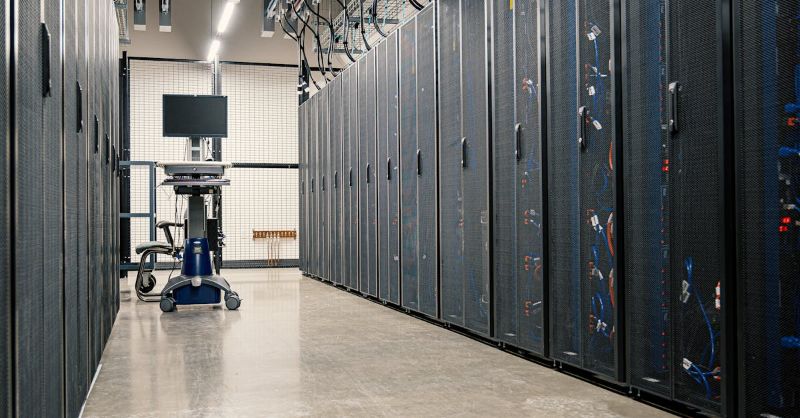
However, several enterprise requirements fall outside RunPod's core design.
Dedicated infrastructure is not a standard RunPod offering. Enterprise AI teams that need exclusive, non-shared GPU hardware — for performance isolation, compliance, or data control — typically require providers that specialize in dedicated or private infrastructure.
Managed operations are limited. RunPod's self-service model places infrastructure management responsibility on the customer. Enterprises without dedicated infrastructure engineering teams — or teams that prefer to focus engineering effort on AI development rather than GPU cluster operations — need providers that offer 24/7 monitoring, maintenance, performance optimization, and lifecycle management.
Compliance and data residency controls are not central to RunPod's platform. Organizations in regulated industries — healthcare, financial services, government-adjacent sectors — require infrastructure with documented data residency, hardware-level isolation, audit logging, and access controls that compliance frameworks demand.
Multi-team orchestration is not a native capability. RunPod provides GPU access for individual users or workloads, but enterprises with multiple AI teams need workload scheduling, GPU quota management, multi-tenant isolation, and developer workspace provisioning that orchestration platforms provide.
Key Evaluation Criteria for RunPod Alternatives
Enterprises evaluating alternatives to RunPod should assess providers across dimensions that affect production AI operations.
Infrastructure Control and Isolation
The level of infrastructure control determines what an organization can configure, optimize, and govern. Dedicated GPU servers — where hardware is assigned exclusively to one organization — provide full control over GPU interconnect topology, BIOS settings, networking configuration, and NUMA awareness. This level of control affects distributed training performance and compliance posture in ways that shared, container-based environments cannot match.
Providers that offer private or dedicated infrastructure — such as OneSource Cloud's Private AI Infrastructure — give enterprises hardware-level isolation with configurable environments designed for production AI workloads.
Operational Support and Managed Services
The operational model defines who handles day-to-day infrastructure management. Self-service platforms like RunPod require the customer to manage monitoring, maintenance, firmware updates, performance tuning, and incident response. Managed infrastructure providers handle these operations as part of their service, reducing the engineering burden on the customer's AI team.
For enterprises with sustained GPU workloads, managed operations ensure that infrastructure remains stable, performant, and optimized over time — capabilities that become increasingly important as GPU environments scale beyond a few servers. OneSource Cloud's Managed AI Infrastructure service provides 24/7 operations, continuous monitoring, performance validation, and lifecycle management on customer-dedicated GPU environments.
Compliance and Data Governance
Regulated industries require infrastructure that supports compliance frameworks — HIPAA for healthcare, SOC 2 for enterprise security, GLBA for financial services, and state privacy laws. Compliance involves hardware isolation, US data residency, audit logging, access controls, and documented operational processes.
Providers that design their infrastructure for regulated workloads — with US-based data centers, dedicated hardware, and compliance-aware operational practices — serve compliance-sensitive enterprises that shared cloud GPU platforms do not target.
Orchestration and Multi-Team Management
Enterprises with multiple AI teams need more than GPU access — they need workload scheduling, resource allocation, developer workspace provisioning, and usage visibility across the organization. AI orchestration platforms provide this management layer on top of GPU infrastructure.
The OnePlus Platform (OneSource Cloud's AI orchestration platform, not related to the smartphone brand) offers multi-tenant GPU management, workload scheduling, Jupyter and Kubeflow integration, GPU quota management, and utilization analytics — capabilities that enable enterprises to translate dedicated GPU hardware into a productive multi-team AI development environment.
Cost Predictability for Sustained Workloads
RunPod's hourly pricing model suits intermittent or burst workloads. For sustained AI workloads running at high utilization over weeks, months, or years, hourly charges accumulate to higher total costs than dedicated infrastructure with fixed or contracted pricing. Enterprises with predictable, sustained GPU demand often find that dedicated infrastructure delivers lower total cost with greater budget predictability.
Comparing RunPod Alternatives by Provider Type
The GPU infrastructure market includes several provider types, each suited to different enterprise profiles.
GPU Cloud Specialists (CoreWeave, Lambda Labs, RunPod)
GPU cloud specialists provide on-demand GPU access with various pricing models. CoreWeave focuses on large-scale GPU clusters with enterprise-tier networking, making it suitable for organizations running significant distributed training workloads. Lambda Labs offers GPU cloud instances with developer-friendly tooling. RunPod provides accessible container-based GPU rental.
These providers share a common characteristic: they operate primarily on shared infrastructure models where GPU capacity is allocated on demand from a shared pool. This model provides flexibility but limits infrastructure control, hardware isolation, and compliance capabilities compared to dedicated infrastructure providers.
Public Cloud Providers (AWS, Azure, Google Cloud)
Public clouds offer GPU instances within their broader cloud ecosystems, with the advantage of integrated services (storage, networking, ML platforms, databases) and global data center presence. However, public cloud GPU instances carry premiums over dedicated infrastructure, operate in shared multi-tenant environments, and can face GPU availability constraints during high-demand periods.
For enterprises already invested in a public cloud ecosystem, public cloud GPUs provide integration convenience. For organizations prioritizing infrastructure control, cost predictability, or compliance isolation, dedicated alternatives may be more suitable.
Dedicated and Private AI Infrastructure Providers
Providers like OneSource Cloud focus on dedicated, non-shared GPU infrastructure with managed operations, US data center options, and AI orchestration capabilities. These providers serve enterprises that need infrastructure control, compliance support, and operational partnership rather than self-service GPU rental.
The trade-off is flexibility versus control: dedicated infrastructure providers typically operate on contracted or reserved capacity models rather than pure on-demand, which suits organizations with sustained, predictable GPU requirements but may not suit teams with highly variable demand.
| Dimension | RunPod | GPU Cloud Specialists | Public Cloud | Dedicated / Private AI Providers |
|---|---|---|---|---|
| Infrastructure model | Shared, container-based | Shared GPU instances | Shared GPU instances | Dedicated, exclusive hardware |
| Operational model | Self-service | Self-service | Managed platform | Managed operations available |
| Compliance support | Limited | Varies by provider | Broad certifications | Designed for regulated workloads |
| Data residency | Multiple regions | Varies | Global regions | US-based data center options |
| Orchestration | None (container deployment) | Limited | Cloud-native ML tools | AI orchestration platforms |
| Cost model | Hourly on-demand | Hourly or reserved | Hourly with savings plans | Fixed or contracted pricing |
| Best for | Individual developers, experiments | ML teams needing GPU access | Organizations in cloud ecosystems | Enterprises with sustained, regulated AI workloads |
When Enterprises Should Consider Alternatives to RunPod
Several scenarios indicate that an enterprise has outgrown RunPod's model and should evaluate alternatives.
Production AI workloads with sustained utilization are the primary signal. When GPU workloads run consistently at high utilization — production inference serving, continuous training pipelines, multi-team development environments — the hourly cost model of on-demand GPU rental becomes structurally more expensive than dedicated infrastructure over the same period.
Regulated industry requirements are a second signal. Healthcare organizations processing PHI, financial institutions handling transaction data, and government-adjacent contractors working with sensitive datasets need infrastructure with compliance controls that shared GPU rental platforms are not designed to provide.
Multi-team environments represent a third signal. When multiple AI teams share GPU resources, organizations need orchestration capabilities — workload scheduling, GPU quotas, access controls, usage analytics — that go beyond individual GPU access.
Infrastructure stability and performance consistency are a fourth signal. Production AI applications that require predictable performance without the variance that shared environments can introduce need dedicated hardware where GPU throughput, network latency, and storage I/O are not affected by other tenants' workloads.
Operational partnership is a fifth signal. Enterprises that lack dedicated infrastructure engineering teams — or that prefer to direct engineering effort toward AI development rather than cluster operations — need providers that offer managed services including monitoring, maintenance, optimization, and incident response.
Frequently Asked Questions
Why do enterprises look for RunPod alternatives?
Enterprises look beyond RunPod when their requirements exceed what on-demand, container-based GPU rental provides. Common drivers include the need for dedicated infrastructure, compliance controls for regulated industries, managed operational services, multi-team orchestration capabilities, US data residency guarantees, and cost predictability for sustained workloads. RunPod remains well-suited for individual developers, researchers, and small teams running experiments or short-term projects.
How does RunPod compare to CoreWeave and Lambda Labs?
All three are GPU cloud specialists providing on-demand GPU access. CoreWeave focuses on large-scale GPU clusters with enterprise networking, suited for significant distributed training. Lambda Labs offers developer-friendly GPU cloud instances. RunPod provides accessible container-based GPU rental with community and secure cloud tiers. They share a common limitation for enterprise needs: primarily shared infrastructure models without dedicated hardware options, managed operations, or compliance-focused design.
What should regulated enterprises look for in a RunPod alternative?
Regulated enterprises should evaluate alternatives that offer dedicated infrastructure with hardware-level isolation, US data residency, audit logging capabilities, access controls, and operational processes aligned with compliance frameworks like HIPAA, SOC 2, or GLBA. Providers that design their infrastructure for regulated workloads — rather than offering general-purpose GPU rental — provide a stronger foundation for compliance-sensitive AI deployments.
Is dedicated GPU infrastructure more cost-effective than RunPod for sustained workloads?
For GPU workloads running at sustained high utilization over weeks or months, dedicated infrastructure with fixed or contracted pricing typically delivers lower total cost than hourly on-demand rental. The break-even point varies by GPU type, utilization rate, and workload duration. Enterprises should model their expected GPU usage over 12 to 36 months and compare total costs across both approaches.
How does OneSource Cloud compare as a RunPod alternative?
OneSource Cloud provides dedicated GPU infrastructure with managed operations, US-based data center options, AI orchestration through the OnePlus Platform, and compliance-focused design for regulated industries. Unlike RunPod's shared, self-service model, OneSource Cloud offers exclusive hardware, 24/7 operational support, multi-team GPU management, and predictable pricing — designed for enterprises running sustained, production AI workloads that require infrastructure control and compliance support.
Summary
RunPod serves individual developers and small teams well with accessible, on-demand GPU rental. However, enterprises running production AI workloads at scale — with requirements for dedicated infrastructure, managed operations, compliance controls, multi-team orchestration, and cost predictability — often need capabilities beyond RunPod's platform design. The right alternative depends on the organization's specific requirements: GPU cloud specialists suit teams needing scalable on-demand access, public clouds suit organizations invested in cloud ecosystems, and dedicated infrastructure providers like OneSource Cloud suit enterprises with sustained, regulated AI workloads that demand infrastructure control, operational partnership, and compliance support. Evaluating alternatives across infrastructure control, operational model, compliance capabilities, and cost structure helps organizations identify the provider type that aligns with their production AI requirements.
Related Articles
Recommended Reading
-
Google Cloud GPU Pricing: What Enterprise AI Teams Should Evaluate Before Provisioning
-
Paperspace Pricing 2026: GPU Cost Breakdown
-
CoreWeave Enterprise GPU Cloud: Evaluation for AI Teams
-
AI Infrastructure Costs: Controlling Enterprise GPU Spending
-
CoreWeave vs Lambda Labs: GPU Cloud Provider Comparison
latest articles
-
Open-Source LLM Deployment: Requirements and Real Cost Breakdown
-
AI Search Assistants Under Data Residency: Architectures and Evidence
-
LLM Inference GPUs Compared: A100, H100, H200, or B200 for Production
-
LLM Deployment Best Practices: An Enterprise Stage-by-Stage Checklist
-
HIPAA Patient Scheduling AI: Controls, Consent, and Evidence
-
Cloud-Agnostic LLM Deployment: Architecture Principles Against Lock-In
-
HIPAA-Compliant AI Tools for Healthcare: Categories and Evaluation
-
Batch vs Real-Time LLM Inference: Cost, Latency, and Fit
-
Model Deployment Strategies Compared: Canary, Blue-Green, Shadow, Rolling
-
GPU Rental vs Owning: Cost, Commitment, and When to Buy