
Dallas AI Hosting: Data Center Advantages for Enterprise GPU
Dallas has emerged as one of the most strategically important U.S. markets for AI hosting infrastructure, offering robust data center capacity, extensive fiber connectivity, abundant power supply, and a business-friendly regulatory environment. For organizations deploying GPU-intensive AI workloads, the Dallas-Fort Worth metroplex provides geographic, technical, and compliance advantages that are increasingly difficult to replicate in saturated data center markets. This article examines why Dallas is a compelling location for AI hosting and how enterprises should evaluate hosting providers with Dallas data center presence.
Why Dallas Is a Strategic Location for AI Hosting
The Dallas-Fort Worth region has developed into a major data center hub through a convergence of infrastructure advantages that directly support AI hosting requirements.
Fiber Connectivity and Network Density
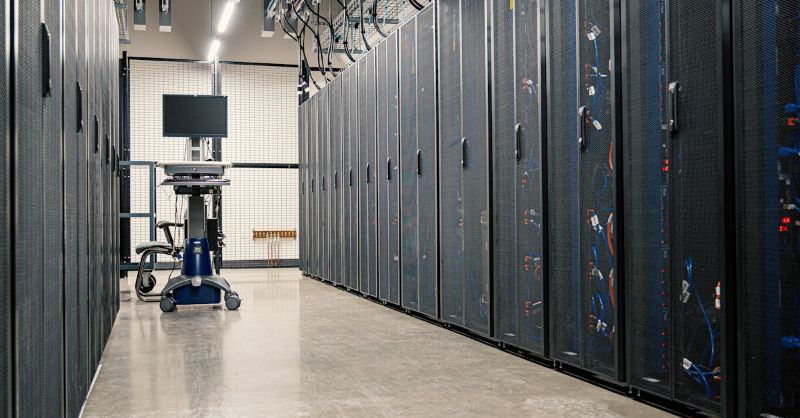
Dallas sits at the intersection of multiple long-haul and regional fiber networks, providing low-latency connectivity to major U.S. technology markets. The metroplex is served by dense fiber infrastructure from multiple carriers, enabling high-bandwidth, redundant network paths between Dallas data centers and enterprise locations across the central and southern United States.
For AI workloads that depend on low-latency data transfer — distributed training across sites, real-time inference serving, and data pipeline synchronization — Dallas's central geographic position and fiber density reduce network latency compared to coastal data center locations for many U.S.-based users.
Power Infrastructure and Energy Availability
Texas operates its own independent power grid through ERCOT (Electric Reliability Council of Texas), which provides access to abundant and diverse energy sources including natural gas, wind, and solar. This energy diversity supports data center operations with competitive power pricing and supply resilience.
AI hosting environments — particularly GPU-dense deployments — consume significantly more power per rack than traditional server hosting. A single 8-GPU server can draw 6 to 10 kilowatts, and multi-server AI clusters require facilities designed for high-density power delivery. Dallas-area data centers increasingly offer the power density, redundant feeds, and precision cooling infrastructure needed to sustain GPU workloads reliably.
Business and Regulatory Environment
Texas maintains a business-friendly regulatory framework with no state income tax, streamlined permitting processes, and established incentives for technology infrastructure investment. For enterprises evaluating where to host AI infrastructure, the regulatory environment affects both operational cost and deployment speed.
The Dallas-Fort Worth technology ecosystem — including a growing concentration of enterprise headquarters, research institutions, and technology companies — also creates a local talent pool and business network that supports AI infrastructure operations and partnerships.
AI Hosting Infrastructure Requirements in Dallas Data Centers
Hosting AI workloads in Dallas requires data center infrastructure designed for the specific demands of GPU compute environments.
High-Density Power and Cooling
GPU servers generate significantly more heat than traditional CPU servers. Dallas data centers serving AI hosting needs must support high power density per rack — typically 10 to 30 kilowatts or more for GPU-dense deployments — with precision cooling systems that maintain thermal stability under sustained compute loads.
In a climate where summer temperatures regularly exceed 100°F, cooling infrastructure design is particularly important. Facilities with advanced cooling architectures — including hot aisle containment, liquid cooling readiness, and redundant cooling systems — provide the thermal headroom that GPU workloads require year-round.
GPU-Ready Networking
AI hosting environments need networking infrastructure that supports both external connectivity (between the data center and enterprise networks or cloud providers) and internal connectivity (between GPU servers within a cluster). For multi-node GPU clusters, InfiniBand fabric with RDMA support enables the low-latency inter-node communication that distributed training demands.
Dallas data centers with carrier-neutral network access and multiple fiber entry points provide the connectivity redundancy and bandwidth options that enterprise AI hosting requires. The region's established fiber infrastructure — including connections to major internet exchange points — supports both high-throughput data transfer and low-latency access to users and services across the central United States.
Physical Security and Access Controls
Enterprise AI workloads often process sensitive data, and the physical security of the hosting environment is a compliance requirement. Dallas data centers serving AI hosting should provide multi-layer physical security — including perimeter controls, biometric access, 24/7 monitoring, and documented access logs — that support the audit and governance requirements of regulated industries.
Data Residency and Compliance Advantages of Dallas AI Hosting
For enterprises in regulated industries, the physical location of AI hosting infrastructure directly affects compliance posture.
U.S. Data Residency
Dallas data centers provide documented U.S. data residency for organizations that must keep their AI workloads and training data within U.S. borders. This is relevant for healthcare organizations subject to HIPAA, financial institutions governed by federal and state regulations, government-adjacent contractors with data handling requirements, and any enterprise operating under data processing agreements that specify U.S. data residency.
Healthcare AI Infrastructure
Healthcare organizations in the Dallas-Fort Worth region and across Texas — including major hospital systems, research institutions, and health technology companies — can host AI workloads on local infrastructure that supports HIPAA-ready environments. Dallas AI hosting on dedicated GPU servers with appropriate access controls, audit logging, and data isolation provides the infrastructure foundation for compliant clinical AI applications.
Financial Services AI Infrastructure
Dallas is a significant financial services hub, home to banking operations, insurance companies, and fintech organizations. These enterprises process sensitive financial data through AI models for fraud detection, risk assessment, and compliance analysis. Hosting AI workloads in Dallas data centers on dedicated infrastructure supports the data governance and residency requirements that financial regulators expect.
It is important to note that infrastructure location and design provide the foundation for compliance — physical security, data residency, hardware isolation — but compliance itself requires organizational policies, access management, encryption, and governance processes layered on top of that foundation.
Evaluating Dallas AI Hosting Providers
Enterprises considering AI hosting in Dallas should evaluate providers across dimensions that affect workload performance, operational stability, and long-term scalability.
GPU Infrastructure Capabilities
The hosting provider should offer GPU configurations suited to AI workloads — including NVIDIA H100, H200, and A100 servers in single-node and multi-node configurations. For distributed training, providers that support InfiniBand networking and high-density power delivery enable more effective multi-GPU cluster deployments.
Facility Quality and Power Density
Not all data centers can sustain GPU-dense deployments. Enterprises should verify that the provider's Dallas facilities support the power density, cooling capacity, and network infrastructure that AI workloads require. Facilities designed for traditional server hosting may lack the per-rack power delivery or cooling efficiency needed for sustained GPU compute.
Operational Services
AI hosting requires ongoing monitoring, maintenance, performance optimization, and capacity management. Providers that offer managed AI infrastructure services — including 24/7 operations, proactive maintenance, and performance validation — reduce the operational burden on the enterprise's engineering team. OneSource Cloud's Managed AI Infrastructure service provides these capabilities on customer-dedicated GPU hosting environments, including U.S.-based data center options in the Dallas region.
Platform and Orchestration
For multi-team AI environments, the hosting provider should offer or support AI orchestration platforms that manage GPU scheduling, multi-tenant access, developer workspaces, and workload visibility. The OnePlus Platform (OneSource Cloud's AI orchestration platform, not related to the smartphone brand) provides these capabilities, enabling enterprises to manage GPU resources efficiently across teams while hosting infrastructure in Dallas data centers.
Scalability and Expansion
AI workload requirements grow over time. Enterprises should evaluate whether the hosting provider can accommodate additional GPU servers, expanded clusters, and upgraded networking within the Dallas facility without requiring disruptive migrations. Providers with planned capacity expansion and flexible infrastructure options support long-term AI hosting relationships.
Support and Engagement Model
The provider's support model affects deployment success. Providers that offer architecture review, deployment planning, and ongoing technical engagement — rather than only ticket-based support — tend to deliver better outcomes for complex AI infrastructure deployments.
Dallas AI Hosting vs Other U.S. Markets
Dallas competes with several other U.S. data center markets for AI hosting, each with different characteristics.
Compared to Northern Virginia — the largest U.S. data center market — Dallas offers competitive power pricing, lower facility density congestion, and central U.S. geographic positioning that reduces latency to southern and midwestern users. Northern Virginia's market saturation has driven up power costs and limited expansion capacity in some areas.
Compared to Silicon Valley — a major technology hub — Dallas provides significantly lower operating costs, more available land for facility expansion, and competitive fiber connectivity. Silicon Valley's cost structure makes GPU-dense hosting economically challenging for many enterprises.
Compared to other Texas markets such as Houston or Austin — Dallas offers the strongest combination of fiber network density, data center capacity, enterprise business ecosystem, and central connectivity. The Dallas-Fort Worth metroplex's established data center corridor provides mature infrastructure with room for continued growth.
Each market has strengths for specific use cases, but for enterprises prioritizing GPU hosting capability, U.S. data residency, competitive cost structure, and central connectivity, Dallas provides a balanced combination that supports a wide range of AI hosting requirements.
OneSource Cloud's Private AI Infrastructure leverages Dallas-area data centers as part of its U.S.-based hosting footprint, providing dedicated GPU servers with the Richardson, Texas trust signal that enterprises in the region — and across the country — can rely on for AI workload hosting.
Frequently Asked Questions
Why is Dallas a good location for AI hosting?
Dallas offers strong fiber network connectivity at the intersection of major long-haul routes, abundant power supply through Texas's independent ERCOT grid, competitive energy pricing, a business-friendly regulatory environment, and a growing technology ecosystem. These factors combine to support GPU-dense AI hosting with lower operating costs and central U.S. connectivity compared to more saturated data center markets.
Can Dallas data centers support GPU-dense AI workloads?
Yes, but not all Dallas data centers are designed for GPU-density compute. AI hosting requires facilities with high per-rack power delivery (10-30+ kW), precision cooling for sustained GPU workloads, and networking infrastructure that supports InfiniBand and high-bandwidth connectivity. Enterprises should verify that a provider's Dallas facility is specifically designed for GPU workloads, not just traditional server hosting.
How does Dallas AI hosting support data residency and compliance?
Dallas data centers provide documented U.S. data residency, which supports compliance requirements for HIPAA-ready healthcare AI, financial services governance, government-adjacent data handling, and data processing agreements that specify U.S. data location. Dedicated GPU hosting with physical access controls and audit capabilities provides the infrastructure foundation for compliant AI environments.
What should enterprises look for in a Dallas AI hosting provider?
Key evaluation criteria include GPU infrastructure capabilities (NVIDIA H100/H200/A100 configurations), facility power density and cooling design, managed operational services, AI orchestration platform support, scalability for future growth, and an engagement model that includes architecture review and ongoing technical support — not just ticket-based help desk.
How does Dallas AI hosting cost compare to other U.S. markets?
Dallas typically offers competitive power pricing through Texas's diverse energy supply, lower facility costs than Northern Virginia or Silicon Valley, and no state income tax. Total hosting cost depends on GPU configuration, power consumption, networking requirements, and operational services, but Dallas's cost structure generally supports more economical GPU-dense hosting than coastal data center markets.
Does OneSource Cloud offer AI hosting in Dallas?
OneSource Cloud provides Private AI Infrastructure with U.S.-based data center options, including presence in the Dallas-Richardson, Texas region. The offering includes dedicated GPU servers, managed operations, high-performance AI networking, and the OnePlus Platform for workload orchestration — designed for enterprises that need U.S. data residency, infrastructure control, and operational support for AI workloads.
Summary
Dallas has established itself as a strategic U.S. market for AI hosting through its combination of fiber connectivity, power infrastructure, business-friendly environment, and central geographic positioning. For enterprises deploying GPU-intensive AI workloads — from model training and inference serving to multi-team development environments — Dallas data centers provide the technical foundation for high-performance, compliant, and cost-competitive AI hosting. Successful deployments require providers whose facilities are specifically designed for GPU-density compute, with managed operational support and orchestration capabilities that help enterprises translate Dallas infrastructure advantages into productive AI environments.
Related Articles
Recommended Reading
-
Google Cloud GPU Pricing: What Enterprise AI Teams Should Evaluate Before Provisioning
-
Paperspace Pricing 2026: GPU Cost Breakdown
-
CoreWeave Enterprise GPU Cloud: Evaluation for AI Teams
-
AI Infrastructure Costs: Controlling Enterprise GPU Spending
-
CoreWeave vs Lambda Labs: GPU Cloud Provider Comparison
latest articles
-
Open-Source LLM Deployment: Requirements and Real Cost Breakdown
-
AI Search Assistants Under Data Residency: Architectures and Evidence
-
LLM Inference GPUs Compared: A100, H100, H200, or B200 for Production
-
LLM Deployment Best Practices: An Enterprise Stage-by-Stage Checklist
-
HIPAA Patient Scheduling AI: Controls, Consent, and Evidence
-
Cloud-Agnostic LLM Deployment: Architecture Principles Against Lock-In
-
HIPAA-Compliant AI Tools for Healthcare: Categories and Evaluation
-
Batch vs Real-Time LLM Inference: Cost, Latency, and Fit
-
Model Deployment Strategies Compared: Canary, Blue-Green, Shadow, Rolling
-
GPU Rental vs Owning: Cost, Commitment, and When to Buy