
Managed Private AI Infrastructure Provider: Operations and Isolation to Verify
Managed private AI infrastructure is a dedicated compute environment where a provider assumes operational responsibility for GPU clusters, networking, storage, and lifecycle management while delivering exclusive resource isolation for enterprise AI workloads. Unlike public cloud shared GPU instances, managed private infrastructure gives teams control over data placement and performance predictability without the burden of day-to-day operations. For CTOs, VPs of Engineering, and AI infrastructure leaders, the evaluation decision centers on two dimensions: what operations the provider actually handles and what isolation guarantees exist for compute, storage, and network paths.
Enterprises choose managed private AI infrastructure when internal MLOps capacity is constrained, when data residency and security requirements demand dedicated hardware, or when public cloud GPU costs and quota volatility interfere with training pipeline reliability. The selection process requires verifying both the provider's operational scope and their isolation architecture. This article outlines what to evaluate in operations and isolation, how to assess provider claims, and which questions separate capable partners from generalist cloud providers.
Operational Scope: What the Provider Actually Manages
Managed AI infrastructure means different things to different providers. Some vendors provision hardware and hand over administrative access, while others handle monitoring, patching, capacity planning, and failure recovery. Before evaluating isolation guarantees, clarify what "managed" includes and what responsibilities remain with your team.
Core operations to verify include GPU cluster provisioning and configuration, storage and network setup, ongoing monitoring and alerting, security patching and updates, performance tuning, failure remediation, and capacity planning. Some providers also handle higher-level orchestration such as workload scheduling, quota management, and multi-tenant platform operations. Understanding this operational divide determines whether your team needs dedicated MLOps headcount or can rely on the provider for day-to-day cluster health.
Day-to-Day Operations
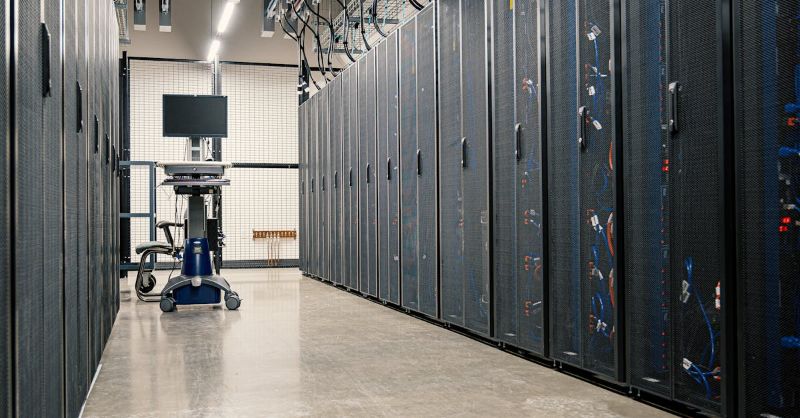
GPU clusters require continuous monitoring for thermal anomalies, memory pressure, GPU utilization drops, and node health issues. A managed provider should deliver 24/7 monitoring with automated alerting and response playbooks. When a node fails or a training job stalls, the provider's operations team should triage, remediate, and document the incident without requiring your engineers to log in and debug. This operational ownership extends to storage performance, network throughput, and inter-GPU communication — all factors that affect training stability and inference latency.
Lifecycle Management
Hardware lifecycles involve driver updates, firmware patches, OS upgrades, and eventual hardware refresh. A managed provider handles these maintenance windows with minimal disruption to running workloads. Verify their patching cadence, how they test updates before rollout, and whether they offer rollback mechanisms. Unmanaged infrastructure leaves these tasks to your team, which can divert engineering capacity from model development to operations.
Capacity Planning and Scaling
AI workloads are bursty — training runs consume all available GPUs, while inference demand may scale unpredictably. A managed provider should offer capacity planning guidance, lead time estimates for cluster expansion, and transparent pricing for additional nodes. Some providers support auto-scaling for inference deployments, while others focus on fixed-size training clusters. Understand their scaling model and whether it aligns with your roadmap.
Isolation Guarantees: What to Verify
Isolation is the core differentiator between private AI infrastructure and shared public cloud GPU instances. When evaluating providers, verify isolation across four layers: compute, storage, network, and operational access. Each layer affects security, performance predictability, and compliance posture.
Compute Isolation
Compute isolation means your GPU cluster runs on dedicated hardware with no other tenant sharing the same physical GPUs, CPUs, or motherboard. This differs from public cloud instances where multiple virtual machines share the same GPU via MIG or time-slicing. Verify whether the provider offers single-tenant hardware or logical isolation through virtualization. Single-tenant hardware eliminates noisy neighbor problems and provides predictable performance for long-running training jobs.
Storage Isolation
Training datasets, model checkpoints, and inference data require dedicated storage with clear access boundaries. Managed providers should offer isolated file systems or object storage buckets with encryption at rest and in transit. Verify whether storage is physically isolated or logically separated through tenant IDs. For regulated workloads, understand how the provider implements data retention, deletion, and access logging. Storage isolation also affects performance — dedicated storage eliminates I/O contention from other tenants' workloads.
Network Isolation
Network isolation spans intra-cluster communication and external connectivity. For distributed training, GPU-to-GPU communication should traverse a dedicated network fabric with RDMA support, isolated from other tenants' traffic. External connectivity should use VPCs, private endpoints, or dedicated interconnects. Verify whether the provider offers virtual private cloud deployment, dedicated firewalls, and private DNS. Network isolation is critical for HIPAA-ready environments where PHI data must not traverse shared network paths.
Operational Access Isolation
Even with dedicated hardware, operational access from provider staff can introduce risk. Verify how the provider's operations team accesses your infrastructure — whether through bastion hosts with audit logging, just-in-time access grants, or zero-trust architectures. Understand who can view your data, under what circumstances, and what audit trails exist. This is particularly important for regulated industries where access logging is a compliance requirement.
Provider Evaluation Framework
When comparing managed private AI infrastructure providers, use a structured evaluation framework rather than relying on marketing claims. The following comparison highlights key dimensions to assess:
| Evaluation Dimension | What to Verify | Red Flags |
|---|---|---|
| Operational Scope | 24/7 monitoring, patching, failure remediation, capacity planning | "Self-managed" requires your team for all operations |
| Compute Isolation | Single-tenant hardware with dedicated GPUs | Shared GPU instances or logical isolation only |
| Storage Isolation | Dedicated storage with encryption and access controls | Shared object storage without tenant separation |
| Network Isolation | VPC deployment, dedicated interconnects, RDMA fabric | Public endpoints only, no private connectivity |
| Operational Access | Audit-logged access, just-in-time grants | Unmonitored admin access to your environment |
| Compliance Support | HIPAA-ready posture, SOC 2 reports, data residency options | No compliance documentation or audit reports |
| Performance SLAs | GPU availability, network throughput, storage I/O commitments | No SLA or vague "best effort" commitments |
| Support Model | Dedicated support engineer, response time guarantees | Email-only support with undefined response times |
Request Proof, Not Claims
Many providers claim HIPAA-ready infrastructure, but fewer can produce Business Associate Agreements, audit reports, or security documentation. Ask for evidence: architecture diagrams showing isolation boundaries, audit logs demonstrating access controls, and customer references running similar workloads. For regulated industries, verify whether the provider undergoes third-party audits and whether they can sign the agreements your compliance team requires.
Test Before Committing
Proof-of-concept deployments reveal operational gaps that slide decks obscure. Run a representative workload — a distributed training job or an inference deployment — and monitor how the provider handles failures, scaling, and performance issues. Test their response time when you open support tickets. Verify monitoring dashboards and alert delivery. A POC also validates whether their isolation architecture meets your performance and security requirements before signing a long-term contract.
Managed vs Self-Managed Private AI Infrastructure
Some teams consider building private AI infrastructure in-house using on-prem GPUs or colocation facilities. This self-managed approach offers maximum control but shifts the full operational burden to your team. When evaluating whether to use a managed provider, consider the following tradeoffs:
| Dimension | Managed Private AI Infrastructure | Self-Managed Private AI Infrastructure |
|---|---|---|
| Operational Burden | Provider handles monitoring, patching, failures | Your team manages all operations |
| Time to Production | Days to weeks for cluster deployment | Months for hardware procurement and setup |
| Scalability | Provider handles capacity planning and expansion | Your team procures and provisions additional hardware |
| Expertise Required | Focus on model development and MLOps workflows | Need deep expertise in GPU clusters, networking, storage |
| Cost Structure | Predictable monthly OpEx with included operations | High upfront CapEx plus ongoing operations headcount |
| Performance Risk | Provider owns performance validation and tuning | Your team debugs and resolves performance issues |
Questions to Ask Providers
During sales conversations and technical evaluations, ask specific questions that reveal the provider's operational and isolation posture:
- What operations are included in your managed service? Clarify whether monitoring, patching, and failure remediation are included or require additional contracts.
- How is my compute environment isolated from other tenants? Verify single-tenant hardware vs. logical isolation.
- What storage isolation guarantees do you offer? Ask about dedicated storage, encryption, and access controls.
- How do your operations staff access my environment? Require details on audit logging and access controls.
- What SLAs do you offer for GPU availability and performance? Avoid vague commitments and request specific metrics.
- What compliance documentation can you provide? For regulated workloads, require audit reports and agreements.
- How do you handle capacity planning and scaling? Understand lead times and expansion processes.
FAQ
What is the difference between managed and unmanaged private AI infrastructure?
Managed private AI infrastructure includes day-to-day operations such as monitoring, patching, failure remediation, and capacity planning handled by the provider. Unmanaged infrastructure gives your team administrative access to dedicated hardware but requires your engineers to handle all operational tasks. Managed services reduce MLOps overhead but may limit customization, while unmanaged infrastructure offers full control at the cost of increased operational burden.
How do I verify a provider's isolation guarantees?
Request architecture diagrams showing isolation boundaries for compute, storage, and network layers. Ask for evidence of single-tenant hardware deployment, dedicated storage configurations, and VPC or private network deployment. For regulated workloads, require audit reports, Business Associate Agreements, and documentation of access controls. A proof-of-concept deployment can validate whether the isolation architecture meets your performance and security requirements.
What operations should a managed AI infrastructure provider handle?
Core operations include 24/7 monitoring, security patching, failure remediation, performance tuning, and capacity planning. Some providers also handle higher-level orchestration such as workload scheduling and quota management. Clarify the operational boundary before committing — some providers only provision hardware and hand over admin access, while others offer comprehensive lifecycle management including upgrades, scaling, and support.
Is managed private AI infrastructure HIPAA-ready?
Some managed private AI infrastructure providers offer HIPAA-ready postures, but this requires verification beyond marketing claims. Look for providers that sign Business Associate Agreements, undergo third-party audits, and demonstrate clear access controls and audit logging. HIPAA readiness also depends on your team's workflows and governance — the provider's infrastructure is one component of a broader compliance posture. Verify whether the provider can support your specific compliance requirements rather than assuming HIPAA readiness.
How does managed private AI infrastructure compare to public cloud GPU instances?
Managed private AI infrastructure offers dedicated hardware with predictable performance and no noisy neighbor problems, while public cloud GPU instances are typically shared and subject to quota variability and spot pricing. Private infrastructure provides stronger isolation for regulated data and workloads, while public clouds offer easier elasticity and pay-per-use pricing. Managed private providers also include operational support, reducing MLoPS overhead compared to self-managed public cloud deployments.
What should I look for in an SLA for managed AI infrastructure?
Look for specific commitments on GPU availability, network throughput, storage I/O performance, and support response times. Avoid vague "best effort" language and request concrete metrics with credit provisions for SLA violations. Understand what constitutes a maintenance window versus unplanned downtime. For training-critical workloads, verify whether the SLA covers end-to-end job completion or just infrastructure uptime.
Summary
Selecting a managed private AI infrastructure provider requires verifying both operational scope and isolation guarantees. Clarify what operations the provider handles, from monitoring and patching to failure remediation and capacity planning. Validate isolation across compute, storage, network, and operational access layers. Use proof-of-concept deployments and documented evidence rather than relying on marketing claims. The right provider reduces MLOps overhead while delivering the security, performance, and compliance posture your AI workloads require.
Next step: Explore OneSource Cloud's managed AI infrastructure solutions and how they handle operations and isolation for enterprise workloads →
Related Articles
Recommended Reading
-
Google Cloud GPU Pricing: What Enterprise AI Teams Should Evaluate Before Provisioning
-
Paperspace Pricing 2026: GPU Cost Breakdown
-
CoreWeave Enterprise GPU Cloud: Evaluation for AI Teams
-
AI Infrastructure Costs: Controlling Enterprise GPU Spending
-
CoreWeave vs Lambda Labs: GPU Cloud Provider Comparison
latest articles
-
Open-Source LLM Deployment: Requirements and Real Cost Breakdown
-
AI Search Assistants Under Data Residency: Architectures and Evidence
-
LLM Inference GPUs Compared: A100, H100, H200, or B200 for Production
-
LLM Deployment Best Practices: An Enterprise Stage-by-Stage Checklist
-
HIPAA Patient Scheduling AI: Controls, Consent, and Evidence
-
Cloud-Agnostic LLM Deployment: Architecture Principles Against Lock-In
-
HIPAA-Compliant AI Tools for Healthcare: Categories and Evaluation
-
Batch vs Real-Time LLM Inference: Cost, Latency, and Fit
-
Model Deployment Strategies Compared: Canary, Blue-Green, Shadow, Rolling
-
GPU Rental vs Owning: Cost, Commitment, and When to Buy