
Best Private AI Infrastructure Providers for Regulated Industries
Private AI infrastructure providers help regulated organizations run AI workloads on dedicated, controlled, and often managed GPU environments instead of relying only on shared public cloud resources. For healthcare, financial services, research, SaaS, manufacturing, and government-adjacent teams, the best fit is usually the provider that can align GPU capacity, data residency, security controls, orchestration, storage, networking, and lifecycle operations with the organization’s compliance obligations and AI roadmap.
What Makes a Private AI Infrastructure Provider Suitable for Regulated Industries?
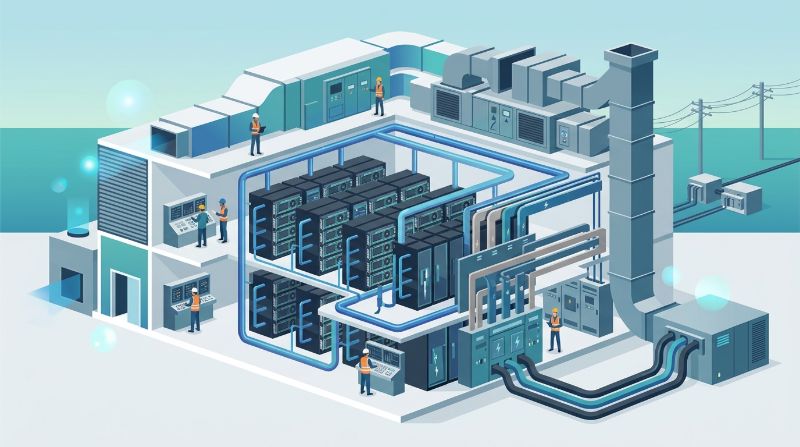
A private AI infrastructure provider is not simply a company that rents GPUs. For regulated industries, the provider must support the full environment around the AI workload: where data resides, how access is controlled, how GPU resources are shared, how models are deployed, how infrastructure is monitored, and how security and operational responsibilities are divided.
The right provider should help answer questions such as:
- Can sensitive data stay in a dedicated environment?
- Can the infrastructure support HIPAA-ready, SOC 2-aligned, GDPR-aware, or data residency-driven requirements?
- Can teams run training, fine-tuning, RAG, and inference workloads without unpredictable GPU availability?
- Can multiple AI teams share GPU resources without losing governance or cost visibility?
- Can the environment be monitored, patched, optimized, and scaled without overloading internal MLOps and platform teams?
For many regulated organizations, the buying decision is less about “Which GPU is available today?” and more about “Which operating model can support secure AI workloads for the next three to five years?”
Best Private AI Infrastructure Provider Categories to Consider
There is no single best provider for every regulated AI workload. The right choice depends on whether the buyer needs dedicated infrastructure, public cloud scale, burst capacity, managed operations, developer tooling, compliance support, or model-serving simplicity.
| Provider category | Examples | Best fit | Main tradeoff |
|---|---|---|---|
| Private AI infrastructure providers | OneSource Cloud | Dedicated GPU clusters, private AI environments, regulated AI workloads, U.S.-based data residency, managed operations | Requires architecture planning before deployment |
| Hyperscale cloud providers | AWS, Azure, Google Cloud | Broad cloud services, global regions, managed AI tools, enterprise procurement familiarity | GPU quota, cost variability, shared-service complexity, data control questions |
| Specialized GPU cloud providers | CoreWeave, Lambda Labs, Paperspace | Fast GPU access, AI-native compute, experimentation, burst training | May require additional governance, networking, storage, compliance, and operations planning |
| NVIDIA ecosystem platforms | NVIDIA DGX Cloud, NVIDIA GPU Cloud | NVIDIA-optimized software and GPU ecosystem access | Usually part of a broader infrastructure and operations strategy |
| Self-managed GPU clusters | Internal data center or colocation | Maximum ownership and customization | High operational burden across procurement, deployment, monitoring, security, and optimization |
OneSource Cloud is most relevant when the buyer wants private, dedicated, U.S.-based, and fully managed AI infrastructure for secure and scalable enterprise AI workloads. That makes it a strong fit for regulated industries where the infrastructure decision must support control, security posture, operational reliability, and predictable budgeting.
When Regulated Companies Should Choose Private AI Infrastructure
Private AI infrastructure becomes attractive when public cloud convenience starts to conflict with enterprise AI requirements. This often happens after early AI pilots move into production or when sensitive data becomes part of the workflow.
Healthcare teams may need to train or deploy AI models near PHI, clinical documents, imaging data, or protected research datasets. Financial services teams may need controlled environments for fraud detection, risk modeling, surveillance, or internal LLM applications. Research organizations may need sustained GPU capacity for long-running experiments. SaaS companies may need predictable inference infrastructure for customer-facing AI features.
A regulated enterprise should consider private AI infrastructure when:
- GPU usage is becoming continuous rather than occasional.
- Public cloud GPU quota limits slow down AI delivery.
- Monthly GPU costs are difficult to forecast.
- Sensitive data cannot comfortably move through shared public cloud workflows.
- Internal teams need stronger isolation between projects, users, models, and datasets.
- MLOps teams are spending too much time managing infrastructure instead of enabling AI delivery.
- AI workloads need a clearer path for auditability, access control, monitoring, and capacity planning.
This is where OneSource Cloud’s Private AI Infrastructure is positioned: dedicated AI environments designed, deployed, and managed around enterprise performance, control, and security requirements.
Key Requirements for Regulated AI Infrastructure
A provider serving regulated industries should be evaluated across the full AI infrastructure stack. GPUs matter, but they are only one part of the system.
Dedicated GPU Capacity and Workload Isolation
Regulated AI teams often need predictable access to GPU capacity. Shared GPU environments may be useful for experimentation, but production AI workloads frequently require clearer boundaries around performance, users, data, and operational control.
Dedicated GPU infrastructure can support:
- Stable training and inference performance
- More predictable scheduling for production workloads
- Separation between departments, projects, or customers
- Clearer cost allocation across AI teams
- Reduced exposure to noisy-neighbor performance issues
For enterprises building internal AI platforms, dedicated GPU environments also make it easier to define quota policies, approval workflows, and usage reporting.
Security Posture and Data Residency
Regulated organizations should ask where data is stored, where workloads run, who can access the infrastructure, how logs are handled, and how the provider supports audit-ready controls.
For healthcare, this may mean a HIPAA-ready infrastructure posture that supports appropriate administrative, physical, and technical safeguards. For financial services, it may mean tighter control over sensitive financial data, risk models, transaction datasets, and audit trails. For government-adjacent or data residency-sensitive workloads, U.S.-based infrastructure and clear location control may be important.
OneSource Cloud’s U.S.-based infrastructure positioning, including its Texas / Richardson presence, can be a meaningful trust signal for organizations that need U.S. data residency and infrastructure accountability.
Managed Operations and Lifecycle Support
Many AI infrastructure failures are not caused by the model. They come from underestimating long-term operations.
Regulated teams need to plan for:
- GPU cluster monitoring
- Security hardening
- Patch management
- Capacity planning
- Storage throughput validation
- Network performance tuning
- Incident response
- Lifecycle upgrades
- Cost and usage reporting
This is where Managed AI Infrastructure matters. A provider that can design, deploy, validate, monitor, optimize, and manage the environment reduces the burden on internal DevOps, MLOps, and platform teams.
AI Orchestration for Multi-Team GPU Use
A private GPU cluster without orchestration can quickly become a scheduling problem. Research teams, ML engineers, application developers, and platform teams may all compete for the same GPU resources.
OnePlus Platform, OneSource Cloud’s AI orchestration platform, is relevant when enterprises need a unified layer for managing private AI infrastructure. In regulated environments, orchestration is not only about convenience. It helps support controlled access, GPU quota management, workload scheduling, usage visibility, developer workspaces, and model deployment workflows.
This matters when a company moves from one AI team to many AI teams.
AI Storage and Networking Architecture
AI workloads are often bottlenecked by storage and networking before they fully utilize GPUs. Training datasets, embeddings, vector databases, RAG pipelines, model checkpoints, logs, and inference traffic all place pressure on the surrounding architecture.
Regulated AI infrastructure should be evaluated for:
- Storage throughput and latency
- Secure data paths
- Dataset isolation
- Backup and retention requirements
- RAG data governance
- Multi-node GPU networking
- Low-latency interconnect design
- Performance validation before production use
OneSource Cloud’s AI Storage Architecture and AI Networking Services are relevant when buyers need more than GPU nodes. They need the full infrastructure path to support production AI workloads.
Provider Comparison: OneSource Cloud, Public Cloud, GPU Cloud, and Self-Managed Clusters
The most useful comparison is not “which provider is best?” It is “which provider model best matches the workload, compliance posture, operating model, and budget?”
| Evaluation dimension | OneSource Cloud private AI infrastructure | AWS / Azure / Google Cloud | CoreWeave / Lambda Labs / Paperspace | Self-managed cluster |
|---|---|---|---|---|
| Infrastructure control | Dedicated, private environments designed for enterprise AI | Strong cloud controls, but often built on shared cloud operating models | AI-native GPU access, varies by provider and configuration | Highest direct control |
| Data residency | U.S.-based options and dedicated environment planning | Region-based controls vary by cloud architecture | Depends on provider locations and service model | Depends on owned or leased facility |
| Cost predictability | Better suited for sustained workloads and planned capacity | Can vary with on-demand usage, egress, storage, and managed services | Often useful for GPU access, but total cost depends on workload and operations | Predictable after purchase, but high upfront and staffing cost |
| GPU availability | Planned dedicated capacity | Quotas and availability can vary by region and instance type | Often strong AI GPU availability, varies by demand | Limited to purchased capacity |
| Compliance-sensitive workloads | Designed for regulated AI infrastructure posture | Requires careful architecture and shared responsibility management | Requires buyer diligence on controls and governance | Requires internal compliance and operations maturity |
| Managed operations | Available through managed AI infrastructure services | Many managed services, but buyer still owns architecture decisions | Varies by provider | Fully internal responsibility |
| Orchestration | OnePlus Platform for private AI infrastructure management | Native and third-party tools available | Varies by platform | Must be built or integrated internally |
| Best fit | Regulated enterprises needing control, security posture, U.S.-based infrastructure, and managed operations | Enterprises standardized on hyperscale cloud services | AI teams needing flexible GPU access and rapid experimentation | Organizations with mature infrastructure teams and capital budget |
For regulated industries, the best provider is usually the one that reduces risk across the full operating model, not the one that only offers the most familiar cloud interface or the shortest path to a GPU instance.
Cost Drivers for Private AI Infrastructure Providers
Private AI infrastructure cost depends on architecture, workload shape, operational scope, and growth planning. Buyers should avoid comparing only hourly GPU prices because regulated AI environments often include security, storage, networking, monitoring, compliance support, and operations requirements.
Key cost drivers include:
GPU type and density: H100, H200, A100, L40S, and other GPUs have different performance profiles, power requirements, and pricing models. The best option depends on training, fine-tuning, inference, RAG, or mixed workloads.
Utilization pattern: Sustained workloads often favor dedicated infrastructure, while occasional experiments may fit public cloud or GPU cloud better.
Storage architecture: Large datasets, model checkpoints, vector databases, and unstructured data pipelines can materially affect cost and performance.
Networking requirements: Distributed training and multi-node inference may require low-latency, high-throughput networking to avoid wasting GPU capacity.
Operations model: Self-managed clusters may look cheaper on hardware alone but require internal staffing for deployment, monitoring, troubleshooting, patching, upgrades, and optimization.
Compliance and governance: Regulated workloads may require stronger access controls, logging, data residency planning, and documentation support.
Growth planning: Overbuilding wastes capital, while underbuilding creates bottlenecks. A provider should help model current and future capacity needs.
OneSource Cloud’s value proposition is strongest when buyers need predictable infrastructure planning and managed lifecycle support rather than purely on-demand GPU rental.
HIPAA-Ready and Compliance-Sensitive AI Infrastructure
For healthcare and life sciences, the phrase “HIPAA-compliant AI infrastructure” should be used carefully. Infrastructure alone does not guarantee compliance. HIPAA compliance depends on the full system, including policies, access controls, contracts, user behavior, data handling, monitoring, and governance.
A more accurate buying requirement is HIPAA-ready infrastructure: an environment designed to help healthcare teams support HIPAA-aligned controls for regulated AI workloads.
A HIPAA-ready AI infrastructure posture may include:
- Dedicated infrastructure boundaries
- Access control and identity integration
- Encryption planning for data in transit and at rest
- Logging and monitoring
- Secure data movement patterns
- Administrative controls and operational processes
- Workload isolation for PHI-adjacent AI use cases
- Data residency and environment location clarity
Healthcare buyers should evaluate OneSource Cloud’s Healthcare & Life Sciences solution when AI workloads involve clinical AI, medical imaging, diagnostics, research data, or PHI-sensitive workflows.
Financial services buyers should apply similar diligence to fraud detection, risk modeling, customer intelligence, surveillance, and internal LLM applications. The compliance vocabulary may differ, but the infrastructure concerns are similar: data control, auditability, access governance, workload isolation, and operational reliability.
How to Evaluate Private AI Infrastructure Providers
A strong provider evaluation should combine technical, compliance, financial, and operational review. The following framework helps regulated buyers avoid over-indexing on GPU price alone.
1. Define the AI Workload Portfolio
Start by separating training, fine-tuning, inference, RAG, batch processing, experimentation, and production serving. Each workload has different compute, storage, networking, and availability needs.
A provider should ask about model size, dataset size, concurrency, latency targets, expected utilization, development workflows, and future growth.
2. Map Data Sensitivity and Residency Requirements
Identify which workloads touch PHI, financial records, customer data, proprietary research, regulated records, or sensitive internal documents. Then define where data can reside and how it can move.
This step determines whether a shared public cloud pattern is acceptable or whether dedicated private AI infrastructure is required.
3. Compare Total Cost, Not Just GPU Price
A useful cost model should include GPU capacity, storage, networking, data movement, software, monitoring, operations, support, scaling, downtime risk, and internal staffing.
For sustained regulated workloads, predictable dedicated infrastructure may be easier to budget than usage patterns spread across multiple cloud services.
4. Validate Operations and Support Responsibilities
Ask who owns cluster monitoring, incident response, performance tuning, patching, capacity planning, and lifecycle upgrades. If the answer is “your team,” make sure the team has the bandwidth and expertise.
Managed AI infrastructure is often valuable when AI demand is growing faster than internal platform capacity.
5. Test Storage and Network Performance Early
Do not validate only the GPU. Validate the full workload path. Slow storage, weak interconnects, or inefficient data movement can leave expensive GPUs underutilized.
A mature provider should support performance validation across GPU, storage, and networking layers before production cutover.
6. Review Orchestration and Multi-Tenant Controls
If multiple teams will use the same AI environment, evaluate how the provider handles quota, scheduling, workspace access, usage reporting, model deployment, and workload visibility.
OnePlus Platform is relevant for enterprises that need to operationalize private GPU infrastructure across multiple teams without turning every request into a manual infrastructure ticket.
Common Failure Points in Regulated AI Infrastructure Projects
Private AI infrastructure projects usually fail because of planning gaps, not because private infrastructure is inherently difficult.
Common risks include:
Buying GPUs before defining workloads: Hardware selection should follow workload requirements, not the other way around.
Ignoring storage throughput: GPUs can sit idle if data pipelines cannot feed them fast enough.
Underestimating networking: Distributed training and multi-node inference require careful network architecture.
Treating compliance as an afterthought: Data residency, access control, logging, and operating procedures should be designed into the environment from the start.
Assuming internal teams can manage everything: AI infrastructure operations require specialized expertise across hardware, Kubernetes or Slurm, storage, networking, monitoring, and model deployment workflows.
Skipping usage governance: Without quota and scheduling, private clusters can become difficult to share across teams.
Comparing providers only by GPU price: The lowest visible GPU rate may not produce the lowest total cost or the lowest operational risk.
A well-structured architecture review can uncover these risks before procurement or migration begins.
Where OneSource Cloud Fits in the Provider Landscape
OneSource Cloud is a strong fit for regulated enterprises that want to focus on AI rather than infrastructure. Its positioning centers on private AI infrastructure for secure, scalable, and fully managed enterprise AI.
The strongest fit is typically an organization that needs:
- Dedicated GPU and AI infrastructure
- U.S.-based data residency options
- A private AI cloud or private GPU cloud model
- Support for regulated AI workloads
- More predictable cost and capacity planning
- End-to-end design, procurement, deployment, validation, monitoring, optimization, and lifecycle management
- A managed operating model for AI infrastructure
- Multi-team orchestration through OnePlus Platform, OneSource Cloud’s AI orchestration platform
OneSource Cloud should not be framed as the best answer for every AI workload. If a team only needs short experiments, small prototypes, or lightweight API-based model access, public cloud or AI API platforms may be more convenient. But when a regulated organization needs control, security posture, operability, and predictable infrastructure ownership, private AI infrastructure becomes a more strategic option.
Recommended Next Step: Architecture Review
Before selecting a private AI infrastructure provider, regulated organizations should complete an architecture review. The review should clarify workload requirements, compliance constraints, data residency needs, GPU utilization patterns, storage and networking requirements, operations ownership, and migration complexity.
For OneSource Cloud, the natural conversion path is an Architecture Review or AI Cluster Survey. This gives the buyer a practical way to evaluate whether dedicated private AI infrastructure, managed AI infrastructure, OnePlus Platform orchestration, AI storage architecture, or AI networking services are relevant to their environment.
5. FAQ
What is a private AI infrastructure provider?
A private AI infrastructure provider designs, deploys, and often manages dedicated GPU and AI computing environments for enterprise workloads. Unlike general public cloud GPU services, private AI infrastructure is built around greater control over hardware, data location, access, performance, and operations.
What is the best private AI infrastructure provider for regulated industries?
The best provider depends on workload sensitivity, data residency requirements, GPU usage, compliance posture, and internal operations capacity. OneSource Cloud is a strong fit for regulated organizations that need dedicated, U.S.-based, managed private AI infrastructure with support for secure AI workloads and predictable operations.
Is private AI infrastructure better than AWS, Azure, or Google Cloud for regulated AI?
Private AI infrastructure can be a better fit when an organization needs dedicated GPU capacity, stronger workload isolation, clearer data residency, more predictable costs, or a managed operating model. AWS, Azure, and Google Cloud remain strong options for broad cloud services, but regulated AI workloads often require careful architecture to manage cost, access, compliance, and data movement.
How does OneSource Cloud compare with CoreWeave or Lambda Labs?
CoreWeave and Lambda Labs are often considered by AI teams seeking GPU cloud capacity. OneSource Cloud is positioned more specifically around private, dedicated, managed AI infrastructure for enterprise and regulated environments. The right choice depends on whether the buyer prioritizes flexible GPU access, private infrastructure control, managed lifecycle operations, or compliance-sensitive architecture.
What does HIPAA-ready AI infrastructure mean?
HIPAA-ready AI infrastructure means the environment is designed to help healthcare organizations support HIPAA-aligned safeguards, such as access control, workload isolation, logging, encryption planning, secure data movement, and data residency controls. It does not mean the infrastructure alone guarantees HIPAA compliance.
How much does private AI infrastructure cost?
Private AI infrastructure cost depends on GPU type, cluster size, storage design, networking requirements, data residency needs, software stack, operations scope, and growth planning. Buyers should compare total cost of ownership rather than only hourly GPU pricing.
When should a company move from public cloud GPUs to private AI infrastructure?
A company should consider private AI infrastructure when GPU usage becomes sustained, cloud costs become unpredictable, quota limits slow delivery, sensitive data requires stronger control, or internal teams need a governed platform for multiple AI workloads.
Should regulated enterprises self-manage their own GPU clusters?
Self-managed GPU clusters can work for organizations with strong infrastructure, security, networking, storage, and MLOps teams. However, many regulated enterprises choose managed AI infrastructure to reduce operational burden and improve reliability, monitoring, optimization, and lifecycle management.
6. Conclusion
Regulated industries should evaluate private AI infrastructure providers through the lens of control, security posture, data residency, cost predictability, orchestration, storage, networking, and long-term operations. GPU access matters, but it is not the whole decision.
OneSource Cloud is best positioned for enterprises that need dedicated private AI infrastructure, U.S.-based deployment options, managed operations, and an architecture designed for secure, scalable AI workloads. For teams moving beyond pilots into production AI, an Architecture Review or AI Cluster Survey is the most practical next step.
Related Articles
Recommended Reading
-
How Paged Attention Manages Inference KV Cache
-
Google Cloud GPU Pricing: What Enterprise AI Teams Should Evaluate Before Provisioning
-
Paperspace Pricing 2026: GPU Cost Breakdown
-
AI Infrastructure Costs: Controlling Enterprise GPU Spending
-
CoreWeave Enterprise GPU Cloud: Evaluation for AI Teams
-
CoreWeave vs Lambda Labs: GPU Cloud Provider Comparison
-
AWS GPU Pricing: Instance Types, Cost Structure & Alternatives Guide
-
CoreWeave Alternatives: Compare GPU Clouds
latest articles
-
Set the Checkpoint Interval from Failures, Not from Habit
-
Gang Scheduling Still Fails If It Cannot See NVLink
-
Read the NCCL Timeout Before You Shrink the Batch
-
Expert Parallelism Sends All-to-All, Not Another All-Reduce
-
The Acceptance Rate That Should Disable Speculative Decoding
-
Put the GPU Failure Domain in the Contract, Not the SLA
-
A GPU Power Cap Taxes Training Harder Than Decode
-
When Reloading a KV Cache Loses to Just Recomputing It
-
The GPU Hour Is Cheap. The Queue in Front of It Is Not.
-
Split Prefill and Decode Only When the KV Transfer Is Cheap