
Open-Source LLM Deployment: Requirements and Real Cost Breakdown
Open-source LLM weights are free. The deployment around them is not — and the gap between those two sentences is where most self-hosting budgets fail. Published analyses place real deployments anywhere from roughly $50K annually for modest setups to six or seven figures at scale, with the difference driven by GPU class, utilization, and the cost lines first-time self-hosters consistently omit. This page walks the requirements stack, assembles the full bill with its hidden lines, and frames the breakeven condition against API pricing — with published figures stated alongside their assumptions.
The Requirements Stack Beyond the Weights
The weights are free; the deployment is not — the requirements stack runs model selection and licensing review, hardware sized to serving targets, a serving stack and its orchestration, security and access controls, and the ongoing operations of all of it — and every cost line in the bill traces to one of these stack layers.
| Stack layer | What it includes | What it drives |
|---|---|---|
| Model selection and licensing | Choosing the model; reviewing its license's commercial terms | Hardware class and legal review effort |
| Hardware | GPU class, count, interconnect for your serving targets | The largest capital or rental line |
| Serving stack | Inference engine, batching configuration, API layer | Engineering setup and performance ceiling |
| Security and access | Endpoint controls, logging, data boundaries | Compliance effort and audit surface |
| Operations | Patching, monitoring, capacity management, refresh planning | The persistent headcount line |
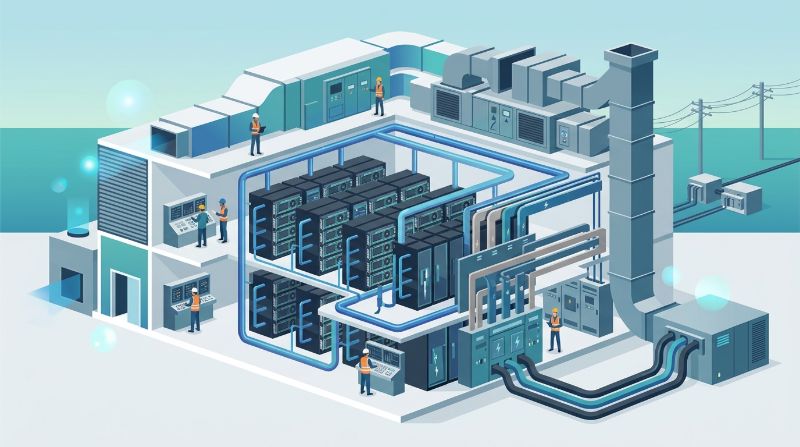
Self-hosting guides enumerate essentially this stack — model selection and licensing, hardware sizing, serving platform, orchestration, ongoing maintenance — and the licensing layer is worth flagging for teams arriving from API thinking: open-weight does not mean license-free, and several popular model families carry commercial-use terms that need review before the deployment is scoped around them. Stack depth varies with scale — a pilot and a production fleet read this table differently — but every layer skipped at planning returns as a cost line at operations.
The Bill: Published Ranges and the Hidden Lines
Published analyses put self-hosted deployments from roughly $50K annually for modest 24/7 setups to six or seven figures at scale, with the range driven by GPU class, utilization, and — the lines hidden-cost analyses surface most — talent, electricity, security, and hardware refresh; every published number carries assumptions, so treat ranges as calibration for your own bottom-up build.
| Bill line | What analyses include | Commonly omitted until it hurts |
|---|---|---|
| Hardware | GPUs, servers, networking | Refresh cycles and obsolescence |
| Facility | Power and cooling where owned | The true all-in power draw at load |
| Talent | Platform engineers operating the stack | The largest persistent line — and the hardest to hire |
| Security | Endpoint and data controls | Compliance effort for regulated data |
| Software and support | Support contracts where chosen | Version-upgrade engineering |
Hidden-cost analyses converge on the same omissions: talent, electricity, security, and hardware refresh are the lines first-time self-hosters leave out of the comparison, and they are precisely the lines that accumulate. The published figures above are dated third-party estimates with stated assumptions — different hardware classes, utilization profiles, and geographies produce different bills — so their role is calibration: they tell you the plausible band while your bottom-up build, priced line by line against your deployment, produces the number that goes in the budget.
The Breakeven: When Self-Hosting Pays
Self-hosting pays at high, steady query volumes or under privacy constraints APIs cannot satisfy: entry-level analyses cite parity within months above tens of thousands of monthly queries on modest hardware, academic framing puts viability at sustained utilization, and the honest statement is conditional — the breakeven is your volume against your built bill, recomputed as either side moves.
- The volume route: at high steady utilization, the fixed bill amortizes below per-token API pricing — entry-level analyses cite cost parity within three to six months above roughly fifty thousand queries monthly on modest hardware, with larger deployments needing proportionally more volume.
- The privacy route: when data cannot leave your boundary, API pricing is not the alternative — the comparison is self-hosting versus not deploying, which changes the arithmetic entirely.
- The recompute triggers: token prices move, your volume moves, your bill moves — the breakeven is a living number with named recompute conditions.
Academic cost-benefit work on on-premise deployment reaches the same conditional conclusion from the rigorous side: viability is a function of utilization and requirements, not of open-source enthusiasm. And the decision it feeds is already covered in depth by our sourcing comparison — API versus self-hosted inference — which this page complements with the open-source path's specific inventory: teams that decide the self-hosted route from that comparison will find their budget lines here. Where the built bill points to dedicated hosting without the facility burden of ownership, environments such as OneSource Cloud's private AI infrastructure are one way to take the self-hosted path — and low-volume deployments whose real justification is privacy should read that as the honest answer: the breakeven math is one input, not the whole decision.
FAQ
What is the minimum viable budget for a self-hosted open-source LLM?
Entry-level analyses cite capable single-server deployments starting in the five figures for hardware, with the first year's true cost roughly doubling once electricity, security, and someone's time are counted — viable for team-internal workloads, well below production-fleet requirements.
Which hidden cost surprises self-hosters most?
Talent: the engineers who run, patch, monitor, and capacity-plan the serving stack are the largest and most persistent line, and hidden-cost analyses consistently surface them alongside electricity and refresh — the weights were the free part.
Does self-hosting ever make sense at low volume?
Yes, when the justification is privacy or control rather than economics: at low volume the API is cheaper on pure cost, but deployments whose data cannot leave the boundary, or whose availability cannot depend on a vendor, justify the bill on non-cost grounds — the breakeven math is one input, not the whole decision.
Related Articles
Recommended Reading
-
Google Cloud GPU Pricing: What Enterprise AI Teams Should Evaluate Before Provisioning
-
Paperspace Pricing 2026: GPU Cost Breakdown
-
CoreWeave Enterprise GPU Cloud: Evaluation for AI Teams
-
AI Infrastructure Costs: Controlling Enterprise GPU Spending
-
CoreWeave vs Lambda Labs: GPU Cloud Provider Comparison
latest articles
-
Open-Source LLM Deployment: Requirements and Real Cost Breakdown
-
AI Search Assistants Under Data Residency: Architectures and Evidence
-
LLM Inference GPUs Compared: A100, H100, H200, or B200 for Production
-
LLM Deployment Best Practices: An Enterprise Stage-by-Stage Checklist
-
HIPAA Patient Scheduling AI: Controls, Consent, and Evidence
-
Cloud-Agnostic LLM Deployment: Architecture Principles Against Lock-In
-
HIPAA-Compliant AI Tools for Healthcare: Categories and Evaluation
-
Batch vs Real-Time LLM Inference: Cost, Latency, and Fit
-
Model Deployment Strategies Compared: Canary, Blue-Green, Shadow, Rolling
-
GPU Rental vs Owning: Cost, Commitment, and When to Buy