
Managed HPC Storage and Networking for AI Clusters
Managed HPC storage and networking delivers the high-throughput, low-latency data paths AI workloads demand — parallel filesystems, RDMA fabrics, and optimized data pipelines — as a service, removing the design and operations burden from the customer. For the storage requirements, see AI storage architecture requirements. For the networking evaluation, see evaluating AI cluster networking.
What Managed HPC Brings to AI
Storage: parallel filesystems (Lustre, GPFS, Weka) that aggregate bandwidth across storage nodes, delivering the throughput training needs and the burst write bandwidth checkpointing demands — configured and operated by the provider. Without HPC-grade storage, GPUs starve waiting for data. Networking: RDMA fabrics (InfiniBand or high-speed Ethernet) with non-oversubscribed topologies, configured for the collective operations and low-latency communication that distributed training and multi-node inference require. For the interconnect design, see GPU cluster networking requirements. Together: storage and networking co-designed so the data path from storage to GPU has no bottleneck — the storage feeds the network, the network feeds the GPUs, and no hop starves the next.
FAQ
Do I need HPC storage for AI workloads?
For training at scale, yes — enterprise storage typically cannot deliver the sustained throughput GPUs demand. For inference, the latency of storage matters more than throughput. Managed HPC storage provides the performance profile without the operations burden of running it yourself. See AI storage architecture requirements.
Summary
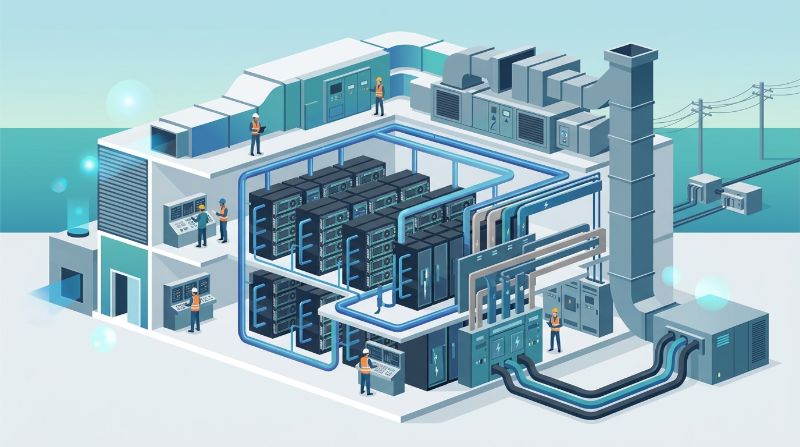
Managed HPC storage and networking delivers AI-optimized data paths as a service. For the full storage and networking framework, see AI storage requirements and GPU cluster networking.
Related Articles
Recommended Reading
latest articles
-
Thermal Soak and Rack Burn-In Protocols for Enterprise AI Racks
-
Sizing 3-Phase 415V Power Drops for 80kW Enterprise GPU Racks
-
When Is a BAA Required for Enterprise Healthcare AI Hosting?
-
AI Platform Scheduler Selection Criteria for Enterprise Training
-
Preventing Preemption Thrashing in Enterprise Multi-Tenant AI
-
Why Larger Batches Increase TTFT in Enterprise LLM Serving
-
Tokens Per Second vs User Latency in Enterprise LLM Serving
-
When Are Async Checkpoints Unsafe in Enterprise Model Training?
-
Should Checkpoint and Dataset I/O Share Enterprise AI Storage?
-
InfiniBand vs RoCE v2 for AI Training Gradient Synchronization