
GPU Vendor Preemption Risk Cost for Distributed Model Training
When enterprise technology leaders budget distributed artificial intelligence initiatives, public cloud hyperscalers heavily market spot or preemptible GPU instances as cost-effective alternatives to dedicated infrastructure. On surface-level pricing calculators, spot GPU discounts ranging from 50% to 70% off standard on-demand rates appear financially compelling. However, in large-scale distributed foundation model training, raw hourly instance pricing represents only a fraction of total financial expenditure. Distributed training paradigms—such as Tensor Parallelism, Pipeline Parallelism, and Fully Sharded Data Parallel (FSDP)—require tightly coupled, synchronous execution across all participating nodes. When a cloud vendor abruptly reclaims even a single GPU node with a 30-second preemption notice, the entire distributed training run crashes. Analyzing the true GPU vendor preemption risk cost reveals that unmanaged interruptions frequently erase all anticipated spot savings, driving net pre-training costs well above dedicated bare-metal infrastructure.
The Hidden Financial and Operational Costs of Spot GPU Preemption
Evaluating the true cost of preemptible GPU infrastructure requires modeling four compounding operational penalties:
- The "Lost Work" Window Between Checkpoints: Distributed training frameworks save state checkpoints periodically (typically every 1 to 2 hours) to avoid continuous storage write stalls. If a spot node is preempted 55 minutes after the last checkpoint, that 55 minutes of compute across all 512 GPUs is permanently lost. Over a 30-day pre-training run with frequent spot evictions, discarded compute cycles consume between 15% and 25% of total paid GPU hours.
- Multi-Node Checkpoint Reload Latency (Thundering Herd): After a preemption event, the job cannot resume until a replacement node is provisioned and all worker nodes reload multi-terabyte model weights and optimizer states from storage. In shared cloud environments, dozens of restarting nodes generate massive read congestion against object storage gateways, extending cluster restart latency to 30 to 60 minutes per interruption.
- High Engineering Triage and Manual Intervention Overhead: Preemption events frequently leave clusters in inconsistent states: zombie processes lock GPU memory, NCCL sockets hang, or corrupted checkpoint shards require manual deletion. Machine learning infrastructure engineers spend valuable hours triaging broken jobs, redirecting high-salaried engineering talent away from core model innovation.
- Opportunity Cost of Delayed Time-to-Market: In competitive generative AI markets, launching a proprietary model weeks behind schedule carries massive commercial penalties. Constant preemption interruptions extend 30-day training campaigns to 60 or 90 days, eroding first-mover market advantages and burning corporate operational runways.
The Mathematical Breakeven Formula for Spot vs. Dedicated GPUs
Financial analysts and infrastructure architects calculate net cost efficiency using an effective compute yield formula:
- Effective Compute Yield Equation:
Effective Yield = (Total Compute Time - Lost Unsaved Time - Restart Overhead Time) / Total Allocated Time. In environments with a modest 4% daily preemption rate, effective yield drops below 65%, meaning 35% of all paid GPU hours produce zero useful training progress. - The Preemption Frequency Threshold: When cluster size scales beyond 256 GPUs, the probability of at least one node experiencing preemption within a 24-hour window approaches 100%. Once preemption frequency exceeds 2 interruptions per week, the aggregate cost of lost compute, storage bandwidth charges, and engineering labor completely negates the initial spot discount.
- Predictable Multi-Month Budgeting: Dedicated bare-metal clusters provide flat, predictable monthly operating expenditures without unexpected burst overages or volatile spot spot-market price spikes during industry-wide compute shortages.
- Hardware Consistency and Performance Uniformity: Hyperscaler spot pools frequently mix different server hardware revisions, optical cabling standards, and CPU host types within the same allocation. Heterogeneous compute nodes introduce straggler effects that reduce overall Model Flops Utilization (MFU) by 15% to 20% compared to uniform bare-metal environments.
Through OneSource Cloud's dedicated AI infrastructure, enterprises eliminate preemption risks entirely. OneSource delivers single-tenant bare-metal GPU clusters with 100% guaranteed resource availability, non-blocking 800Gbps RoCE v2 fabrics, and high-performance NVMe-oF parallel storage. Managed via the OnePlus™ AI Orchestration Platform, OneSource guarantees uninterrupted training runs with zero compute waste and predictable TCO.
Comparative Financial Matrix: Spot Clouds vs. Dedicated Bare Metal
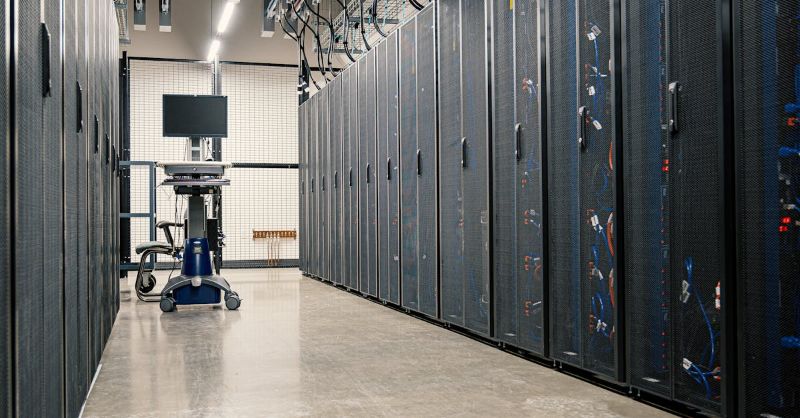
The following financial and operational matrix models a 60-day foundation model training campaign across 256 H100 GPUs comparing spot cloud instances, on-demand cloud VMs, and OneSource Cloud dedicated bare metal:
| Financial & Operational Metric | Hyperscaler Spot / Preemptible GPUs | Standard Cloud On-Demand VMs | OneSource Dedicated Bare Metal |
|---|---|---|---|
| Nominal Hourly Rate per GPU | $1.80 to $2.40 / hr (Apparent discount) | $3.80 to $4.50 / hr (Full price) | $2.20 to $2.80 / hr (Predictable fixed) |
| Average Preemption Interruptions | 2 to 5 interruptions per week | Zero (Barring unhandled host crashes) | Zero (Guaranteed single-tenant SLA) |
| Lost Compute Time (Between Checkpoints) | 120 to 180 total cluster hours lost | < 5 hours lost | Zero wasted compute hours |
| Job Restart & Model Ingestion Overhead | 45 to 90 minutes per interruption | Minimal restart overhead | < 90 seconds via NVMe-oF GDS |
| Actual Training Campaign Duration | 78 to 95 days (Frequent delays) | 61 to 63 days | Strict 60-day deterministic schedule |
| True Effective Cost per Productive Hour | $3.60 to $4.40 / hr (Hidden cost inflation) | $4.00 to $4.70 / hr | $2.20 to $2.80 / hr (Lowest Net TCO) |
| Engineering Triage Hours Required | > 120 senior engineering hours | < 15 engineering hours | Zero infrastructure triage needed |
This financial analysis demonstrates that spot GPU instances carry substantial hidden costs that make dedicated bare-metal infrastructure the superior economic choice for large-scale training.
Preemption Risk Assessment Checklist
Before committing enterprise AI budgets to spot or preemptible GPU infrastructure, financial and engineering leaders should execute five due diligence checks:
- Calculate Realized Model Flops Utilization (MFU): Factor in checkpoint write pauses, unsaved compute losses, and model reload delays to evaluate true net computational productivity.
- Audit Cloud Provider Preemption Warning Policies: Verify whether the cloud vendor provides at least 2 minutes of warning before reclaiming instances to allow emergency state flushing.
- Model Multi-Node Statistical Failure Probabilities: Calculate the cumulative probability of node loss as cluster size expands:
1 - (1 - p)^N, where N is GPU node count. - Evaluate Network and Storage Data Transfer Fees: Account for cloud egress and inter-zone data transfer fees incurred every time a preempted job relocates to a different availability zone.
- Quantify Commercial Time-to-Market Valuation: Measure the direct revenue and market share impact of launching an enterprise model 30 to 60 days late due to spot preemption delays.
FAQ
Why do spot GPU instances often end up costing more than dedicated bare metal for AI training?
When a spot node is preempted, all compute progress made since the last checkpoint across the entire cluster is lost. Frequent interruptions, checkpoint reload delays, and engineering triage overhead can inflate the effective cost per productive training hour by over 60%.
How does OneSource Cloud protect enterprise training campaigns from compute interruptions?
OneSource Cloud provides 100% single-tenant bare-metal GPU clusters backed by contractual availability SLAs, eliminating spot preemption risks, multi-tenant resource contention, and unexpected project delays through dedicated, non-shared infrastructure.
Related Articles
Recommended Reading
-
How Paged Attention Manages Inference KV Cache
-
Google Cloud GPU Pricing: What Enterprise AI Teams Should Evaluate Before Provisioning
-
Paperspace Pricing 2026: GPU Cost Breakdown
-
AI Infrastructure Costs: Controlling Enterprise GPU Spending
-
CoreWeave Enterprise GPU Cloud: Evaluation for AI Teams
-
CoreWeave vs Lambda Labs: GPU Cloud Provider Comparison
-
AWS GPU Pricing: Instance Types, Cost Structure & Alternatives Guide
-
CoreWeave Alternatives: Compare GPU Clouds
latest articles
-
GPU Cluster Fabric: Spine-Leaf RoCE Architecture and Latency
-
AI Workload Migration From Public Cloud to Dedicated Hardware
-
GPU Cluster Orchestration: Gang Scheduling for AI Workloads
-
AI Storage Tier Design: Eliminating I/O Wait in Checkpointing
-
GPU Capacity Planning for AI Teams: Sizing Beyond Peak Load
-
AI Infrastructure BAA Audit: Cloud Provider Gaps for Healthcare
-
AI Infrastructure for Fraud Detection: Low-Latency Inference
-
AI Infrastructure Services vs Raw Cloud GPU Rental Cost
-
Fixing Memory Bandwidth Bottlenecks in Low-Utilization LLMs
-
Protecting AI Model IP With Single-Tenant GPU Isolation