
Slurm vs Kubernetes Throughput for Enterprise Deep Learning
When enterprise infrastructure teams architect compute platforms for large-scale artificial intelligence, selecting the cluster orchestrator represents a foundational technical decision. For decades, high-performance computing (HPC) research environments relied almost exclusively on Slurm (Simple Linux Utility for Resource Management). Conversely, enterprise cloud-native software ecosystems have standardized on Kubernetes. While Kubernetes excels at managing microservices, web applications, and dynamic horizontal pod autoscaling, distributed deep learning introduces fundamentally different operational requirements: all-or-nothing gang scheduling, strict hardware topology awareness (aligning tasks with NVLink domains and non-blocking network switches), and sub-millisecond job dispatch latency. Comparing Slurm versus Kubernetes throughput across production GPU clusters reveals critical performance trade-offs that directly impact Model Flops Utilization (MFU) and infrastructure return on investment.
The Physics of Scheduling Overhead in Distributed Training
Distributed deep learning workloads place unique stress on orchestration control planes:
- All-or-Nothing Gang Scheduling Requirements: Distributed training jobs (such as 64-node PyTorch training runs using Megatron-Core) cannot execute with partial allocations. If 511 GPUs are ready but the 512th GPU is unavailable, the entire allocation must wait. Native Kubernetes scheduling lacks native gang scheduling semantics, requiring third-party plugins (such as Volcano, Kueue, or Coscheduling) that introduce significant state reconciliation overhead against the central etcd database. Slurm natively supports deterministic gang scheduling and priority queue preemption with microsecond execution overhead.
- Hardware Topology and Interconnect Locality: Maximizing training throughput requires packing tightly coupled parallel ranks within the same physical rack or leaf switch fabric to minimize latency across the RoCE v2 or InfiniBand interconnect. Slurm's native
topology/treeplugin directly models physical network switches, ensuring optimal rank placement. In vanilla Kubernetes, pod placement is largely topology-blind unless complex node affinity, anti-affinity, and custom topology plugins are manually engineered and maintained. - Control Plane Latency and etcd Bottlenecks: When orchestrating thousands of short-lived evaluation jobs, reinforcement learning rollouts, or hyperparameter sweeps, Kubernetes API server and etcd key-value stores experience severe serialization bottlenecks, limiting job throughput to 10 to 30 pod dispatches per second. Slurm's lightweight C daemon architecture easily sustains thousands of job transitions per second.
Throughput Benchmarking: Slurm vs. Kubernetes with AI Plugins
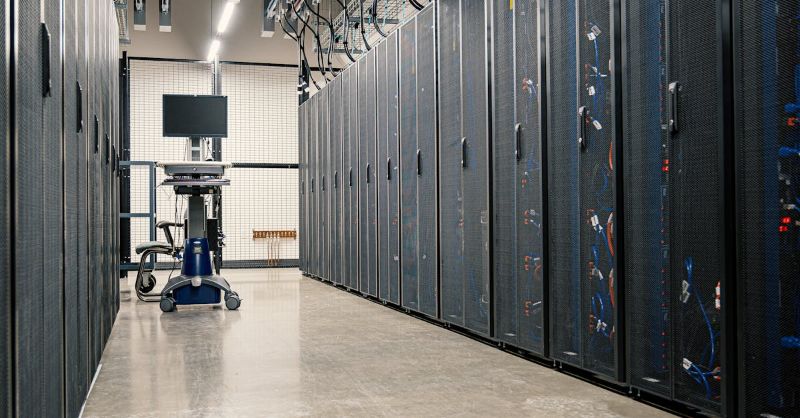
Infrastructure teams evaluate orchestration performance across four critical operational dimensions:
- Job Submission and Dispatch Latency: Measure the elapsed wall-clock time from job submission to active kernel execution on allocated GPUs. Slurm consistently dispatches multi-node allocations in under 150 milliseconds, whereas Kubernetes control planes—even when augmented with Volcano—typically require 2 to 5 seconds per job, introducing substantial idle gaps between rapid batch iterations.
- Gang Scheduling Failure and Deadlock Resilience: Simulate concurrent multi-team job submissions that exceed total cluster capacity. Test whether the scheduler accurately prevents partial-allocation deadlocks where two competing jobs each claim half of a required multi-node allocation and stall indefinitely.
- Model Flops Utilization (MFU) Impact: Benchmark identical distributed 70B transformer training runs under both orchestrators. High-efficiency Slurm topology placement frequently yields 3% to 6% higher sustained MFU due to reduced network hop counts and optimized NUMA affinity.
- Containerization and MLOps Integration: While Slurm excels at raw batch throughput, Kubernetes offers superior native integration with container registries, GitOps pipelines (ArgoCD), interactive JupyterHub workspaces, and production inference serving stacks (vLLM, Triton).
Through OneSource Cloud's dedicated AI infrastructure, enterprise teams bypass orchestrator compromises. OneSource provides single-tenant bare-metal GPU clusters pre-configured with unified orchestration powered by the OnePlus™ AI Platform. OnePlus seamlessly bridges Slurm's ultra-high-throughput bare-metal scheduling for foundational pre-training with Kubernetes' cloud-native agility for inference and MLOps workflows.
Comparative Throughput Matrix: Orchestration Platforms
The following performance matrix contrasts scheduling and operational characteristics across native Slurm, vanilla Kubernetes, Kubernetes with Volcano, and OneSource Unified AI Orchestration:
| Orchestration Dimension | Native Slurm HPC | Vanilla Kubernetes | Kubernetes with Volcano | OneSource Unified Platform |
|---|---|---|---|---|
| Native Gang Scheduling | Built-in (Zero overhead) | Unsupported (Prone to deadlocks) | Supported via Custom Scheduler | Native Hardware-Aware Gang Scheduling |
| Topology-Aware Placement | Native topology/tree mapping | Basic node labels & affinity | PodGroup network topology plugins | Full physical leaf-spine switch alignment |
| Job Dispatch Latency (512 GPUs) | < 150 milliseconds | 3 to 8 seconds (API serialization) | 1.2 to 3.5 seconds | Sub-200 milliseconds Line-Rate Dispatch |
| Max Job Submission Rate | > 5,000 jobs/minute | 200 to 500 pods/minute (etcd bound) | 800 to 1,500 jobs/minute | > 4,000 jobs/minute Distributed Scale |
| Multi-Tenancy Fair-Share QoS | Sophisticated multi-tier fairshare | Basic ResourceQuotas (Static) | Dynamic Queue & Capability Sharing | Enterprise SLA-Guaranteed QoS Isolation |
| Inference Serving & Autoscaling | Poor fit for dynamic microservices | Industry Standard / Native HPA | Strong cloud-native integration | Seamless transition from Train to Serve |
This comparison confirms that while Kubernetes has made significant strides with batch plugins, Slurm remains the performance gold standard for raw multi-node training throughput.
Orchestrator Selection and Optimization Checklist
Before standardizing enterprise AI infrastructure on an orchestration platform, engineering leaders should execute five evaluation steps:
- Benchmark Control Plane Dispatch Under 1,000 Concurrent Jobs: Test scheduler responsiveness during synthetic hyperparameter sweeps to identify etcd or daemon queue bottlenecks.
- Audit Physical Network Topology Tree Mappings: Ensure the orchestrator accurately recognizes leaf switch boundaries to prevent cross-spine network hop penalties during collective communication.
- Verify Multi-User Fair-Share and Priority Preemption: Confirm the scheduler automatically pauses low-priority research experiments when mission-critical pre-training runs submit jobs.
- Measure MFU Difference Across Identical Workloads: Run identical 64-node LLM training benchmarks on both platforms to quantify the real-world throughput divergence caused by orchestrator placement.
- Evaluate MLOps Ecosystem Interoperability: Assess whether data science teams require native Kubernetes tooling (Kubeflow, MLflow, Ray) or if lightweight container runtimes (Enroot/Pyxis on Slurm) satisfy operational needs.
FAQ
Why is Slurm considered faster than Kubernetes for distributed deep learning training?
Slurm features a lightweight C-based architecture with native gang scheduling and network topology awareness, dispatching multi-node jobs in milliseconds without the etcd serialization bottlenecks and API server reconciliation overhead inherent in Kubernetes.
How does OneSource Cloud deliver optimal scheduling performance for both training and inference?
OneSource Cloud integrates its bare-metal GPU infrastructure with the OnePlus™ AI Platform, combining low-latency Slurm HPC execution for large-scale model pre-training with Kubernetes cloud-native agility for inference serving and automated MLOps pipelines.
Related Articles
Recommended Reading
-
How Paged Attention Manages Inference KV Cache
-
Google Cloud GPU Pricing: What Enterprise AI Teams Should Evaluate Before Provisioning
-
Paperspace Pricing 2026: GPU Cost Breakdown
-
AI Infrastructure Costs: Controlling Enterprise GPU Spending
-
CoreWeave Enterprise GPU Cloud: Evaluation for AI Teams
-
CoreWeave vs Lambda Labs: GPU Cloud Provider Comparison
-
AWS GPU Pricing: Instance Types, Cost Structure & Alternatives Guide
-
CoreWeave Alternatives: Compare GPU Clouds
latest articles
-
GPU Cluster Fabric: Spine-Leaf RoCE Architecture and Latency
-
AI Workload Migration From Public Cloud to Dedicated Hardware
-
GPU Cluster Orchestration: Gang Scheduling for AI Workloads
-
AI Storage Tier Design: Eliminating I/O Wait in Checkpointing
-
GPU Capacity Planning for AI Teams: Sizing Beyond Peak Load
-
AI Infrastructure BAA Audit: Cloud Provider Gaps for Healthcare
-
AI Infrastructure for Fraud Detection: Low-Latency Inference
-
AI Infrastructure Services vs Raw Cloud GPU Rental Cost
-
Fixing Memory Bandwidth Bottlenecks in Low-Utilization LLMs
-
Protecting AI Model IP With Single-Tenant GPU Isolation