
GPU Sharing for Enterprise AI: MIG, Time-Slicing, and vGPU Compared
Once multiple teams share GPU capacity, the sharing mechanism quietly decides most of their experience: whether one team's training run degrades another's inference, whether performance is guaranteed or best-effort, and whether the isolation boundary would survive a compliance conversation. The mechanisms — MIG hardware partitioning, time-slicing, MPS, and virtualization — are well documented individually but rarely compared honestly against each other. This page puts them on one spectrum, prices the trade-offs, and ends with the per-workload-class policy that turns the comparison into a fleet decision.
The Isolation Spectrum: Hardware to Software
The mechanisms sit on an isolation spectrum: MIG partitions the hardware itself so slices have isolated memory and compute with guaranteed resources, while time-slicing and software sharing interleave tenants with software-enforced boundaries that trade isolation hardness for density and flexibility.
| Mechanism | Boundary type | Resource guarantee | Best characterized as |
|---|---|---|---|
| MIG (Multi-Instance GPU) | Hardware partition | Guaranteed memory and compute per slice | One physical GPU behaving as several smaller, independent ones |
| Time-slicing | Software scheduling | None — best-effort interleaving | Tenants taking turns on shared capacity |
| MPS (Multi-Process Service) | Cooperative sharing | Shared memory space, cooperative scheduling | Multiple processes using one GPU with improved utilization |
| Virtualization (vGPU) | Hypervisor-mediated | Profile-dependent | Virtual GPUs presented to guests, backed by either mechanism above |
The spectrum's official anchor: NVIDIA's documentation states plainly that both time-sliced and MIG-backed vGPU enable multi-tenancy, but MIG-backed vGPU provides hardware-level isolation. That single sentence is the load-bearing fact of fleet design — everything else in this comparison is its consequences. Mechanism availability depends on GPU generation and platform, with MIG requiring supported hardware.
Density, Guarantees, and Performance Trade-offs
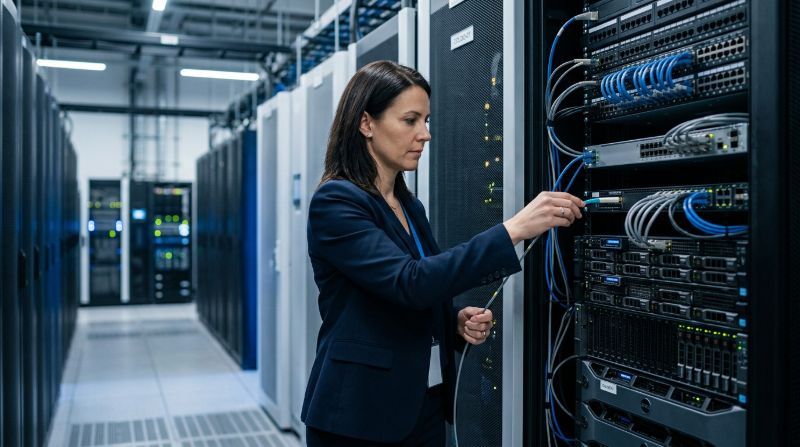
Time-slicing achieves the highest tenant density but provides no per-tenant performance floor, MIG caps partition count in exchange for guaranteed resources per slice, and MPS shares compute with cooperative scheduling that improves utilization while leaving memory shared — each fitting different predictability requirements.
| Mechanism | Typical density | Performance predictability | Noisy-neighbor exposure |
|---|---|---|---|
| MIG | Lowest (bounded partitions per GPU) | Strong — resources are reserved per slice | Minimal: partitions do not contend |
| Time-slicing | Highest tenants per GPU | Weakest — throughput depends on co-tenants | Direct: co-tenant load visibly degrades slices |
| MPS | Moderate | Moderate — cooperative, memory shared | Partial: scheduling cooperates, memory does not isolate |
| vGPU profiles | Profile-dependent | Follows the backing mechanism | Inherits whichever boundary backs the profile |
Read the table as a predictability market: you are choosing between density (time-slicing's many tenants) and guarantees (MIG's reserved slices), with MPS as the utilization-focused middle. The failure pattern to internalize: a latency-sensitive inference workload placed on time-sliced capacity shared with a training job experiences exactly the degradation the table predicts — the fix is placement policy, not tuning. Performance outcomes depend on your workload mix, so measure your combination rather than quoting comparisons.
Choosing Per Workload Class, Not Fleet-Wide
Standardize per class, not fleet-wide: latency-sensitive and noisy workloads get MIG's guaranteed slices or dedicated GPUs, batch and tolerant internal workloads get time-slicing's density, and compliance-sensitive tenants get hard partitions or physical boundaries rather than any software sharing.
| Workload class | Mechanism | Rationale |
|---|---|---|
| Latency-sensitive inference | MIG slices or dedicated GPUs | Predictability is the product requirement |
| Training and fine-tuning | Dedicated or MIG; never time-shared with serving | Saturates whatever it shares |
| Batch and internal tools | Time-slicing | Density matters, predictability does not |
| Compliance-sensitive tenants | MIG hard partitions or physical boundaries | Software sharing is hard to represent in a control discussion |
Two implementation notes make the policy real: your scheduler must be able to express the classes (Kubernetes device plugins and their kin handle MIG and time-slicing differently — verify your platform's support before writing policy you cannot enforce), and the exceptions process needs a name and a review, because every fleet accumulates "just this once" placements that quietly become the norm. For the compliance class specifically, hardware partitions are the strongest sharing-mode boundary — but whether partitions alone satisfy a specific control is a risk-analysis determination, and the safe answer for strict cases is physical separation, which is exactly what dedicated single-boundary environments such as OneSource Cloud's private AI infrastructure provide.
FAQ
Does MIG isolation satisfy compliance requirements?
Hardware-level isolation is the strongest sharing-mode boundary and often the right primitive for multi-tenant regulated load — but compliance attaches to your whole deployment: whether partitions alone satisfy a specific control is a risk-analysis determination, and the safe answer for strict cases is physical separation.
Should inference and training share GPUs through these mechanisms?
Rarely well: training saturates whatever it shares and punishes co-tenants under time-slicing, while inference needs predictable latency — put them on separate capacity or MIG partitions at minimum, and reserve fine-grained sharing for same-class workloads.
What is the safe default if we cannot decide?
MIG where hardware supports it, dedicated GPUs where it does not: the default spends some density to buy hard boundaries and predictable slices, which is the cheaper mistake to walk back than a noisy-neighbor incident on a shared fleet.
Related Articles
Recommended Reading
-
Google Cloud GPU Pricing: What Enterprise AI Teams Should Evaluate Before Provisioning
-
Paperspace Pricing 2026: GPU Cost Breakdown
-
CoreWeave Enterprise GPU Cloud: Evaluation for AI Teams
-
AI Infrastructure Costs: Controlling Enterprise GPU Spending
-
CoreWeave vs Lambda Labs: GPU Cloud Provider Comparison
latest articles
-
GPU Requirements for Video Diffusion Models
-
GPU Sharing for Enterprise AI: MIG, Time-Slicing, and vGPU Compared
-
Can AI Be HIPAA Compliant? What the Question Actually Means
-
AI Infrastructure Management Tools: How to Compare Platforms
-
Cloud Deployment Models Compared: Choosing for AI Workloads
-
LLM Inference API vs Self-Hosted: Cost, Control, and Compliance
-
LLM Deployment Architecture: Layers, Topology, and Design Choices
-
GPU Cluster Requirements: The Planning Checklist Before You Buy
-
MLOps Platforms Compared: How to Evaluate Enterprise Options
-
ASIC vs GPU for AI Inference: TPU, Trainium, and the Fit Question