
Dedicated GPU Pricing vs Shared GPU Cost for Inference
Quick Verdict: Dedicated GPU pricing for inference is an exclusive-card bill. Shared GPU cost is a pooled-tenancy bill. Occupancy, noisy-neighbor retries, isolation work, idle nights, and queue delay move the comparison more than a sticker rate.
Dedicated GPU pricing is an exclusive-tenancy charge that reserves named accelerators for your inference pool, while shared GPU cost is a pooled-tenancy charge that sells time on cards other tenants can also occupy. This is not a per-token versus reserved-GPU debate. Both sides here are GPU capacity. The fork is who else can land on the same device.
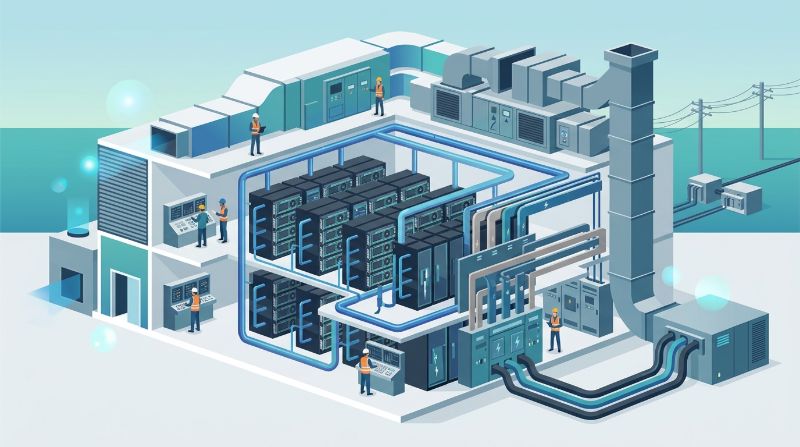
Do not invent a crossover price. Mark occupancy and isolation as pass/fail first. Then compare idle nights and queue delay on the same traffic shape.
Dedicated versus shared GPU inference cost: comparison table
Use this table before anyone pastes a unit price into a spreadsheet. Exclusive cards and a shared pool can quote the same SKU. The billable risk is not the same, so a raw GPU-hour cell is not a decision.
| Cost driver | Dedicated / exclusive cards | Shared GPU pool |
|---|---|---|
| Occupancy | You pay for reserved cards; unused slices are waste you bought | You pay for time you can obtain; unused pool time is the operator’s |
| Noisy-neighbor retries | Contention is mostly your own jobs and canaries | Another tenant can evict cache and force retries you still run |
| Isolation | Prompts stay on devices you can name in a residency story | You buy process isolation and a harder forensics path |
| Idle nights | The reservation bills through nights and empty failover replicas | The pool can reclaim idle slots; a platform fee may remain |
| Queue delay | The queue is yours: admission, batching, and saturation | The queue includes other tenants on launch week |
Which tenancy cost drivers actually move the inference bill?
Occupancy is the first fork. Exclusive cards that spend most hours waiting lose to a shared pool even when the reserved quote looked friendly. The same cards at sustained concurrency, with a stable model and reusable prefixes, often beat a shared meter because you pay for a machine you keep full instead of for placement uncertainty.
Noisy-neighbor retries are the shared-pool leak that unit prices hide. A retry is extra prefill, extra decode, and extra SLO burn. If the client repeats a timed-out call, you pay twice for work isolation would have prevented. Count retry rate and tail latency as cost.
Isolation is not a soft factor. If prompts cannot share a device with unknown tenants, a cheaper shared hour is ineligible. Exclusive hardware reduces that exposure. It does not replace identity, encryption, or a deletion story. It changes whether finance and security will sign the same residency sentence.
Idle nights are the exclusive leak: cards reserved for a slipped launch, or a failover replica that never takes traffic, still bill. Queue delay is the shared-pool leak: you sized QPS correctly and still wait because the pool is sold. Those leaks appear in different weeks. They do not cancel.
When exclusive GPU tenancy wins for inference
Choose dedicated GPU pricing when inference is a standing load with an SLO, not a trial. Sustained occupancy, stable weights, and a known context mix let you fill the card. Choose exclusive tenancy also for custom serving flags or prompts that must not land on a multi-tenant device.
Predictable capacity is a finance reason, not only an engineering one. A reservation with a named count is easier to forecast than a shared pool that silently queues. Include idle nights, failover replicas, and the people who operate the stack.
Cost Decision Matrix: Enterprise GPU Infrastructure TCO
| Infrastructure Model | Billing Structure & Predictability | Data Egress & Transfer Surcharges | Idle Compute Wastage Risk | Long-Term TCO for Sustained AI |
|---|---|---|---|---|
| Public Cloud On-Demand & Spot | Per-hour metered billing with dynamic peak surge rates | Metered egress fees ($0.05–$0.09/GB) creating billing unpredictability | Severe runaway costs when idle instances remain unmonitored | High volatility; massive cost inflation under continuous utilization |
| On-Premises Hardware Purchase | Upfront capital expenditure (Capex) with 3–5 year depreciation | Zero egress fees within enterprise local network | Sunk capital cost whenever project workloads fluctuate or pause | Fixed asset depreciation plus unpredictable power and cooling overhead |
| OneSource Dedicated GPU Cloud | Predictable flat-rate monthly pricing with zero surprise surcharges | Zero data egress fees ($0.00 transfer penalties) | OnePlus platform automated idle shutdown eliminates compute waste | Highest TCO predictability and significant cost savings for sustained AI |
Private AI infrastructure is the environment pattern for exclusive GPUs and a residency story you can write down. OneSource Cloud dedicated environments are one way to keep that pool off public-cloud quota swings. They do not erase occupancy math.
When a shared GPU pool wins for inference
Choose shared GPU cost when occupancy would stay low, the model is still changing, or you cannot keep a card busy through the night. Prototypes, bake-offs, and seasonal features belong here. So do overflow paths: exclusive cards for production, a shared pool for a shadow model or a rare large-context job.
Shared pools also win when many model families need a short window. An exclusive replica for each experiment creates idle nights by design. Pay for the hours you can obtain, keep the traces, and reserve cards only after a model and traffic shape survive users.
A shared pool is not a lesser product. It is the correct product when utilization would be low, isolation rules allow colocated tenants, and queue delay is acceptable. Judge eligibility first, then price.
How to choose without a fabricated price crossover
Skip published break-even charts that do not use your traces. Build a short model from production-like traffic, then ask vendors to price that mix on exclusive cards and on a shared pool. Keep the method small enough that finance and the serving owner can argue about inputs.
- Freeze the model, max context, and a week of concurrency plus latency histograms. A single synthetic prompt will lie about occupancy.
- Estimate occupancy as busy GPU-hours divided by reserved GPU-hours, including canary and failover cards you intend to keep warm.
- Mark isolation and residency as pass/fail. A cheaper shared path that cannot hold prompts is not a candidate.
- Add retry cost and queue delay: extra tokens of work you will not see on a clean unit price, plus launch-week wait.
- Only then compare an exclusive reservation and a shared-pool quote for the same term. If occupancy stays low and isolation allows sharing, the pool wins. If QPS stays high and idle is small, exclusive wins.
If you take the exclusive path and lack a day-2 owner, price managed AI infrastructure in the same worksheet. OneSource Cloud managed operations are an example of putting patches, monitoring, and capacity review on a named operator.
FAQ
What is dedicated GPU pricing versus shared GPU cost for inference?
Dedicated GPU pricing reserves exclusive accelerators for your serving pool. You pay whether the card is busy or idle. Shared GPU cost sells time on a pool other tenants can also occupy. You usually pay for hours you obtain, and you inherit contention, retries, and queue delay. Both are GPU capacity products, not a hosted token API.
Why do idle nights matter more on exclusive cards?
An exclusive reservation bills through the night, the weekend, and the replica you keep warm for failover. If those hours are empty, you already bought them. A shared pool can reclaim idle slots. Exclusive tenancy still wins when daytime occupancy absorbs the night, or when isolation forbids sharing. Idle is a utilization input, not a reason to reject dedicated capacity on principle.
How do noisy-neighbor retries show up as cost?
Retries repeat prefill and decode. They also trip client timeouts and downstream queues. On a shared device, cache eviction or thermal throttling you do not control can raise that rate. On exclusive cards, the same symptoms usually come from your own batch mix. Count retry volume and tail SLO misses. A friendly shared unit price that doubles work is not cheaper capacity.
Does exclusive tenancy automatically keep prompts private?
No. Exclusive cards are a tenancy and residency control, not a privacy program. You still need access control, encryption, logging, and a deletion story. Dedicated hardware reduces shared-device exposure and noisy-neighbor risk. It does not replace identity, key management, or a business associate agreement if you process regulated data.
When should we run exclusive cards and a shared pool together?
A common pattern is exclusive cards for the production lane that has an SLO and a residency rule, with a shared pool for prototypes, bake-offs, and overflow. Keep both paths behind one gateway so application teams do not hard-code a tenancy. Measure each path on the same traces, or you will compare a lab shared bill to a production reservation.
How does OneSource Dedicated GPU Cloud reduce total cost of ownership for AI workloads?
OneSource Dedicated GPU Cloud eliminates the high hourly premiums and hidden egress fees typical of multi-tenant hyperscalers. By offering transparent, flat-rate monthly contracts with zero data transfer surcharges and fully managed bare-metal hardware, enterprises achieve predictable budgeting, eliminate noisy-neighbor compute waste, and lower their total cost of ownership by 30% to 50% on sustained workloads.
Summary
Exclusive GPU pricing wins for inference when occupancy is sustained, idle nights are small, and isolation matters. Shared GPU cost wins when demand is bursty and colocated tenants are allowed. Run the five-step mix. If exclusive U.S. capacity is the fit, review OneSource Cloud against the same occupancy and residency tests you would apply to any dedicated provider.
Related Articles
Recommended Reading
-
Google Cloud GPU Pricing: What Enterprise AI Teams Should Evaluate Before Provisioning
-
Paperspace Pricing 2026: GPU Cost Breakdown
-
CoreWeave Enterprise GPU Cloud: Evaluation for AI Teams
-
AI Infrastructure Costs: Controlling Enterprise GPU Spending
-
CoreWeave vs Lambda Labs: GPU Cloud Provider Comparison
latest articles
-
Open-Source LLM Deployment: Requirements and Real Cost Breakdown
-
AI Search Assistants Under Data Residency: Architectures and Evidence
-
LLM Inference GPUs Compared: A100, H100, H200, or B200 for Production
-
LLM Deployment Best Practices: An Enterprise Stage-by-Stage Checklist
-
HIPAA Patient Scheduling AI: Controls, Consent, and Evidence
-
Cloud-Agnostic LLM Deployment: Architecture Principles Against Lock-In
-
HIPAA-Compliant AI Tools for Healthcare: Categories and Evaluation
-
Batch vs Real-Time LLM Inference: Cost, Latency, and Fit
-
Model Deployment Strategies Compared: Canary, Blue-Green, Shadow, Rolling
-
GPU Rental vs Owning: Cost, Commitment, and When to Buy