
AI Infrastructure Incident Response for PHI Under HIPAA Timelines
HIPAA incident response is a mature discipline with settled timelines — and its playbooks were written for databases. When the compromised asset is an AI serving cluster, a prompt store, or a set of model weights, the same sixty-day clock runs against artifacts the standard plan never inventoried, and the four-factor breach assessment asks questions the standard answers do not cover. The infrastructure layer needs its own page in the incident binder.
Quick Answer: How Does Incident Response Work for PHI AI Infrastructure?
The rule: individual notification without unreasonable delay, no later than 60 days from discovery (500+ breaches also to HHS and media; business associates notify covered entities). Discovery — not occurrence — starts the clock, making detection coverage part of compliance. AI infrastructure adds four incident forms: serving-path compromise (the inference path sees every prompt), prompt and output store exposure, dataset compromise, and weights exposure (weights can encode training data by memorization — scope them in conservatively). The four-factor assessment (PHI nature, recipient, acquisition, mitigation) reads differently per form. Evidence: access logs, audit trails, containment records, and the BAA chain — producible inside the clock.
Scope: The Rule and the Discovery Clock
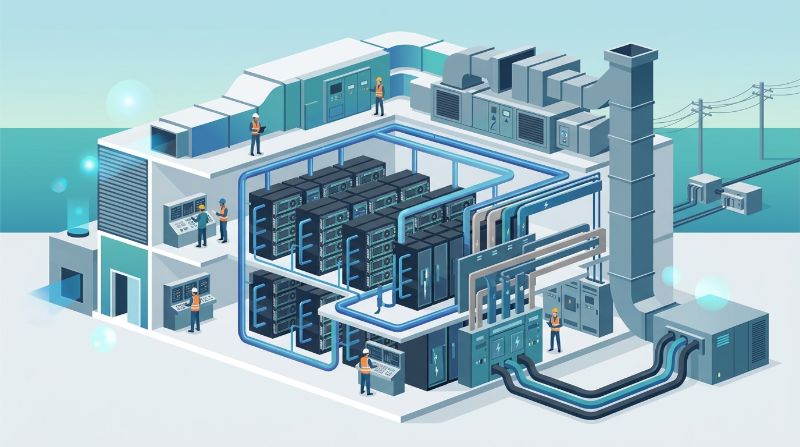
The breach notification rule requires individual notification without unreasonable delay and no later than sixty days from discovery, with breaches affecting five hundred or more individuals reported to HHS and media contemporaneously, and business associates notifying covered entities on their own clock. The load-bearing word is discovery: the clock starts when the breach is discovered — or reasonably should have been, under enforcement reading — which makes detection coverage and escalation procedure the compliance-critical path, not paperwork speed: an organization that learns of an incident slowly has already spent its clock.
| Obligation | Deadline Basis |
|---|---|
| Individual notification | Without unreasonable delay; ≤ 60 days from discovery |
| 500+ individual breaches | HHS and prominent media, contemporaneous |
| Business associate notice | Own discovery clock, to the covered entity |
| Enforcement reading | Discovered-or-should-have-known standard |
The discovery definition converts infrastructure choices into compliance posture: logging and alerting on PHI-bearing paths is what makes discovery timely, and estates without it risk the should-have-known finding — the clock the response team never saw running. Legal analysis of cyberattack-triggered breaches makes the same point from the enforcement side: delayed detection arguments are how organizations lose sixty days they thought they had.
Shared Responsibility: The AI Stack's Incident Forms
AI infrastructure gives PHI incidents shapes the standard plans miss: compromise of the serving stack (the inference path sees every prompt, including the PHI-bearing ones), exposure of the prompt and output stores (PHI at rest outside the clinical database), compromise of training or evaluation datasets, and — the AI-specific form — theft or exposure of model weights that can encode training data by memorization. The four-factor breach assessment reads differently per form: the nature-of-PHI factor asks what the artifacts carried, the recipient factor asks who could have acquired them, the acquisition factor weighs whether logs show actual access, and mitigation weighs containment across an artifact graph that includes models, not just databases.
| Incident Form | PHI Surface | Assessment Emphasis |
|---|---|---|
| Serving-path compromise | Every prompt and output in flight | Acquisition evidence from serving logs |
| Prompt and output stores | PHI at rest outside the database | Recipient and access-log analysis |
| Dataset compromise | Training and evaluation data | Scope and lineage reconstruction |
| Weights exposure | Encoded training data (memorization) | Conservative scoping; rebuild options |
The weights row is where AI incidents diverge furthest from database instincts: a stolen weights file is not a stolen table — it is a statistical encoding whose extraction of specific records is hard to prove or disprove, which pushes the conservative assessment toward treating exposed weights as potentially PHI-bearing and planning remediation as rebuild rather than argument. That conservatism is affordable precisely when the exposure surface was small to begin with — single-tenant isolation being the architectural control that keeps it small.
Evidence Artifacts: What the Infrastructure Must Produce
The notification analysis runs on infrastructure evidence: access logs covering the affected artifact stores with integrity guarantees, audit trails showing who or what touched the serving path during the window, containment records with timestamps, and the BAA chain establishing who owed what notification to whom. For hosted estates the evidence crosses the provider boundary — which is why BAA-eligible dedicated environments (the model OneSource Cloud delivers with SOC 2 Type II audit readiness in U.S. data centers) matter operationally, not just contractually: the provider's logs, single-tenant isolation records, and audit posture arrive as evidence that can be produced inside the clock instead of negotiated after it.
| Evidence Artifact | Answers | Readiness Test |
|---|---|---|
| Access logs with integrity | Who touched the artifacts, when | Producible within hours, tamper-evident |
| Serving-path audit trail | What the compromise could see | Covers the incident window |
| Containment records | What mitigation happened, when | Timestamped and complete |
| BAA chain | Who owes which notification | Current for every PHI-touching vendor |
Run the tabletop before the incident: pick one incident form, walk the evidence list, and time how long each artifact takes to produce. Artifacts that take days to assemble are days off the discovery clock — and the gap between the tabletop time and the clock's tolerance is the infrastructure investment argument, made before it is urgent.
Residual Risk: What Response Cannot Fix
Even compliant response leaves residue: notification itself carries clinical and reputational cost no process undoes; weights that memorized PHI resist both scoping and remediation — the conservative posture treats them as exposed and rebuilds rather than argues; and enforcement exposure follows the discovered-should-have-known standard, penalizing detection gaps the response plan cannot retroactively cover. The residual argument for prevention-side investment — isolation, access discipline, and evidence-ready infrastructure — is that incident response bounds the damage but never returns the clock.
For the prevention side of that argument, the delivered reference is OneSource Cloud for Healthcare AI: BAA-eligible single-tenant environments with SOC 2 Type II audit readiness in U.S. data centers — isolation that shrinks every incident form's blast radius by construction, and an audit posture whose evidence arrives producible rather than negotiated.
FAQ
When does the 60-day HIPAA notification clock actually start?
At discovery — the point you first knew, or reasonably should have known, of the breach — which makes your detection coverage part of your compliance posture: infrastructure without logging and alerting on PHI-bearing paths may be deemed to have discovered late, spending the clock before the response team convenes.
Do model weights count in a PHI incident's scope?
Conservatively, yes: memorization research shows weights can encode training data, so an incident touching weights trained on PHI goes into the four-factor assessment with the weights treated as potentially PHI-bearing — scoping them out requires evidence you likely do not have, while BAA-eligible single-tenant environments like the ones OneSource Cloud delivers shrink the exposure surface the assessment must cover.
Related Articles
Recommended Reading
-
How Paged Attention Manages Inference KV Cache
-
Google Cloud GPU Pricing: What Enterprise AI Teams Should Evaluate Before Provisioning
-
Paperspace Pricing 2026: GPU Cost Breakdown
-
AI Infrastructure Costs: Controlling Enterprise GPU Spending
-
CoreWeave Enterprise GPU Cloud: Evaluation for AI Teams
-
CoreWeave vs Lambda Labs: GPU Cloud Provider Comparison
-
AWS GPU Pricing: Instance Types, Cost Structure & Alternatives Guide
-
CoreWeave Alternatives: Compare GPU Clouds
latest articles
-
GPU Patching and Updates as a Managed Service for Enterprise AI
-
AI Infrastructure Incident Response for PHI Under HIPAA Timelines
-
Inference Serving Monitoring Metrics That Matter for Production LLMs
-
Network Oversubscription in AI Clusters and What It Costs Training
-
AI Training vs Inference Power Consumption for Enterprise Infrastructure
-
Preconfigured Versus Custom GPU Infrastructure TCO Compared
-
AI Dataset Authoritative Copy Governance and Shadow-Copy Risks
-
GPU Management Network Isolation Principles for AI Clusters
-
How to Test Generative AI Capacity Headroom Before Production
-
Rail-Optimized Network Architecture for Enterprise GPU Clusters