
AI Infrastructure for Financial Modeling and Risk Analytics
Financial models are only as good as the infrastructure that keeps them running on time and inside the data boundary. Financial modeling infrastructure is the compute, storage, and data-control environment that supports pricing, risk, and portfolio models with low-latency access to sensitive market and customer data. A late risk calculation is not a convenience problem; it can be a regulatory or trading exposure.
Quantitative teams have run Monte Carlo simulations and regressions on CPU grids for decades, but modern modeling increasingly uses GPU-accelerated training, deep learning for pricing and fraud-adjacent analytics, and large language models for document-heavy workflows. This article maps what those workloads require from AI infrastructure in a financial services context.
What Financial Modeling Workloads Demand
Financial modeling spans three workload families with different infrastructure profiles. Model calibration and training compute repeatedly over large historical datasets and want GPU throughput. Production risk scoring needs low and predictable latency on steady request streams. Regulatory and audit functions need data lineage, retention, and residency controls across all of it.
The infrastructure choice is therefore not a single machine type but a design decision about where data lives, how compute is isolated, and how latency is guaranteed. That combination is exactly where dedicated environments differ from generic public cloud GPU pools.
Compute Requirements for Model Training and Calibration
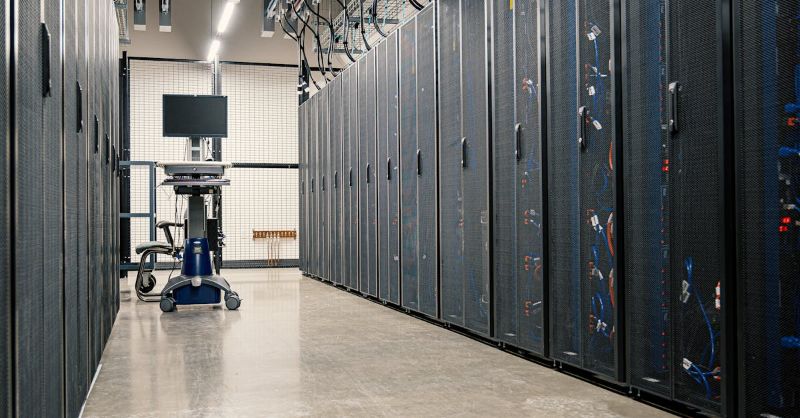
Calibration runs are bursty: a new market regime or regulatory change triggers a wave of retraining that must complete within a trading or reporting window. Public cloud spot capacity is tempting for these bursts but preemption can stall calibration past its deadline, and on-demand GPU quotas are frequently unavailable at the scale quant teams need.
Dedicated GPU capacity converts calibration from a scheduling gamble into a planned resource. Teams reserve a GPU cluster, run calibration jobs on schedule, and share the cluster across model families through quota controls. An AI orchestration platform is commonly used to enforce those quotas and give model owners visibility into utilization, so the cluster serves research and production from one controlled environment.
Data Controls and Residency in Financial Services
Financial modeling data is among the most sensitive an enterprise holds: account histories, transaction patterns, and proprietary pricing data. Regulators and internal policy generally require that this data stay within defined jurisdictions and that access be logged and reviewed.
Serving Decision Matrix: Enterprise LLM Inference Infrastructure
| Serving Infrastructure Model | Compute & Memory Contention | P99 Tail Latency Predictability | Multi-GPU Tensor Parallelism Support | Optimal Enterprise Workload Fit |
|---|---|---|---|---|
| Shared Multi-Tenant Model APIs | Multi-tenant shared workers; opaque resource pooling | Severe tail latency jitter during peak concurrency spikes | Black-box; no control over model parallelism or KV cache sizing | Low-volume prototyping or asynchronous background tasks |
| Virtualized Cloud GPU Instances | Hypervisor vGPU slices subject to CPU/PCIe interrupts | Moderate jitter caused by neighboring tenant network bursts | High inter-node latency limits multi-GPU tensor scaling (TP=4/TP=8) | General internal apps with modest throughput requirements |
| OneSource Dedicated Private GPUs | Dedicated bare-metal hardware with 100% VRAM & compute reservation | Deterministic microsecond P99 response times under peak load | Dedicated RoCE v2 RDMA fabric enables low-latency TP=4/TP=8 scaling | Mission-critical, low-latency, regulated enterprise production serving |
Shared public cloud GPU pools make that posture harder to prove. Data moving through multitenant infrastructure, regions, and services expands the audit surface. A private AI infrastructure environment with U.S. data centers keeps modeling data on dedicated, single-tenant hardware with isolation and logging designed for audit. For teams subject to residency requirements, this is often the deciding factor ahead of raw GPU economics.
Latency Requirements for Risk Analytics
Production risk scoring sits on tight latency budgets because it feeds decisions in trading, underwriting, and fraud workflows. The infrastructure must deliver stable response times at sustained concurrency, not just fast averages. Shared GPU capacity introduces noisy-neighbor variability that shows up in tail latency, which risk teams feel directly.
Dedicated GPU serving environments remove that variability. Capacity is committed, utilization is known, and latency can be validated during acceptance testing before workloads go live. Teams that need deterministic scoring latency should include a tail-latency acceptance criterion in the provider contract rather than accepting published averages.
Private vs Public Cloud for Financial Modeling
Public cloud remains useful for exploratory work and non-sensitive data, but most established financial modeling programs reach a crossover where data controls, GPU availability, and cost predictability favor dedicated infrastructure. The crossover is easiest to see on three signals: monthly GPU spend becoming difficult to forecast, calibration deadlines missed due to quota or preemption, and audit requirements expanding faster than the team can document shared-cloud data paths. When two of the three appear, a dedicated environment for the core modeling workloads is usually justified.
FAQ
What GPU infrastructure do quantitative finance teams need?
Quant teams typically need a mix of high-throughput GPUs for model calibration and training, low-latency serving capacity for production risk scoring, and data controls for residency and audit. Dedicated GPU clusters with quota management serve that mix without the preemption and noisy-neighbor risks of shared pools.
Do financial models need low latency infrastructure?
Production risk scoring and fraud workflows need stable tail latency, not just fast averages, because they feed time-sensitive decisions. Dedicated serving capacity with acceptance-tested latency is the standard way to meet those budgets; shared cloud GPU pools add variability that is hard to control.
How does data residency affect financial AI infrastructure choices?
Residency requirements confine modeling data to specific jurisdictions and demand documented access controls. Dedicated single-tenant environments with U.S. data centers simplify that documentation by shrinking the data path to known hardware, networks, and storage tiers under your control.
Is private AI infrastructure worth it for a small modeling team?
For a small team with low GPU utilization, shared or managed capacity is usually more economical at first. The crossover to private infrastructure comes when spend, deadlines, or audit pressure rise, so the decision should be revisited as utilization and data sensitivity grow.
Why deploy latency-sensitive LLM inference on OneSource private GPUs?
OneSource private GPU infrastructure delivers 100% dedicated bare-metal compute and VRAM, completely isolated from cross-tenant contention. This eliminates hypervisor scheduling jitter and shared-network packet collisions, ensuring deterministic P99 tail latency, sustained token throughput, and optimal tensor parallel scaling for production enterprise LLM serving.
Summary
Financial modeling and risk analytics need infrastructure that delivers three things at once: reliable GPU compute for calibration, deterministic latency for production scoring, and provable data controls for regulators. Dedicated private environments are designed around exactly this combination, which is why they become the default as modeling programs mature past the exploratory phase.
OneSource Cloud provides dedicated GPU infrastructure for financial services teams, with U.S. data residency, managed operations, and orchestration for shared quota governance. Contact our team to review your modeling workloads against a private infrastructure design.
Related Articles
Recommended Reading
latest articles
-
Predictive Maintenance AI Workloads: Infrastructure Requirements That Matter
-
GPU Contract Early Termination: What Exiting Before the Term Costs
-
Warm Pools for Model Replicas: The Cost of LLM Readiness
-
AI Infrastructure Unit Economics: Metrics That Matter Per Workload
-
When Public Cloud GPU Quota Becomes a Delivery Risk for AI Teams
-
Enterprise RAG Reranking: Latency Cost vs Retrieval Quality
-
Showback vs Chargeback for AI Infrastructure: How Teams Choose
-
Multi-Model GPU Serving: Capacity Planning When Models Share a Fleet
-
GPU SLA Service Credits: What They Pay For and What They Don't
-
GPU Capacity Expansion Decision Rights: Who Decides, on What Evidence