
When Public Cloud GPU Cost Pushes AI Teams to Dedicated GPUs
Public cloud GPUs are the right starting point for most AI teams, but they are not a permanent destination. Dedicated GPU infrastructure is a single-tenant compute environment with committed GPU capacity, and it becomes the lower-cost operating model when public cloud GPU spend crosses the point where utilization is high and pricing volatility dominates. Recognizing that crossover point is what separates teams that overpay for years from teams that plan a clean transition.
This article identifies the cost and workload signals that indicate the crossover has arrived, the conditions under which public cloud still makes sense, and how to plan the move without disrupting production.
The Cost Signals That Trigger a Move
Cost signals are the most objective evidence that public cloud GPU economics have stopped working. They appear in the billing data before they appear in strategy discussions.
GPU Spend Reaches a Recurring Threshold
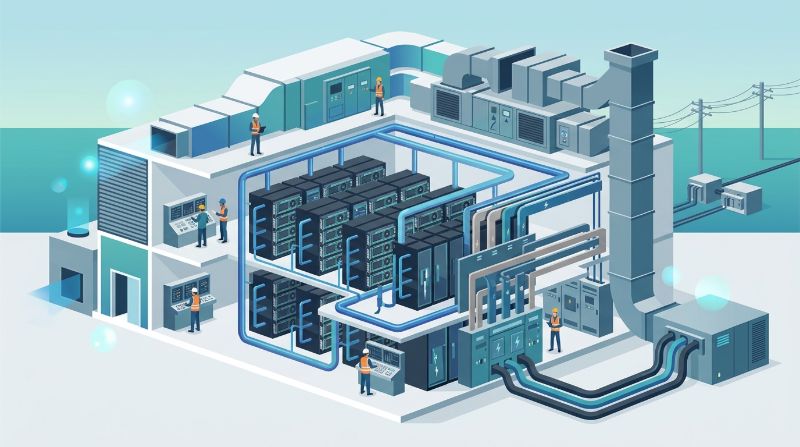
The classic trigger is steady monthly GPU spend that equals or exceeds the cost of a modest dedicated cluster. When a team's baseline compute bill would already cover committed dedicated GPUs, the comparison stops being theoretical. The precise threshold varies by GPU type and provider, but the test is simple: take three months of on-demand and reserved GPU spend and compare it against a dedicated capacity quote at the same GPU count and utilization.
Utilization Is Consistently High
Public cloud pricing rewards elasticity, but it punishes steady utilization. Teams running GPUs around the clock pay the same per-hour rates as teams that burst occasionally, without receiving the discount their usage pattern deserves. Committed dedicated capacity converts that high, steady utilization into a fixed monthly cost, which is why the crossover point is really a utilization story.
Spot and Quota Workarounds Dominate Operations
When engineers spend meaningful time bidding for spot instances, waiting for GPU quota, and spreading jobs across regions to find capacity, the cloud bill no longer reflects the true cost of running AI. That engineering time is real cost, and it is a strong signal the team has outgrown the public cloud's GPU supply model.
Egress and Storage Fees Compound
Teams moving datasets and checkpoints between regions, or exporting them for backup, accumulate egress and storage charges that grow with data volume rather than compute. Dedicated environments typically eliminate per-gigabyte egress on internal data movement, which removes an entire cost category.
Workload Signals
Beyond cost, the workload profile itself indicates fit. Long-running training jobs suffer most from spot preemption and are expensive to restart. Steady production inference needs predictable latency that shared GPU pools cannot guarantee, because noisy neighbors introduce tail-latency spikes. When a team's workload mix shifts toward these two profiles, dedicated infrastructure fits the operating pattern regardless of the current bill.
When Public Cloud Still Makes Sense
Public cloud remains the right model in three situations. Highly variable workloads that burst and idle benefit from on-demand elasticity. Early-stage teams with low utilization should not commit to hardware they cannot fill. Workloads that genuinely need global multi-region reach may find the public cloud's footprint convenient. The crossover decision is workload-specific; the mistake is applying the public cloud default to steady-state production AI long after the signals above have appeared.
Planning the Transition
A successful move sequences workloads instead of doing a big-bang cutover. Start with the steadiest, highest-cost workloads where the comparison is clearest, run the dedicated environment in parallel for a validation period, and compare performance and cost against the public cloud baseline before migrating more. Keep a small public cloud footprint for bursts and global edge cases, and treat the dedicated cluster as the baseline platform.
Cost Decision Matrix: Enterprise GPU Infrastructure TCO
| Infrastructure Model | Billing Structure & Predictability | Data Egress & Transfer Surcharges | Idle Compute Wastage Risk | Long-Term TCO for Sustained AI |
|---|---|---|---|---|
| Public Cloud On-Demand & Spot | Per-hour metered billing with dynamic peak surge rates | Metered egress fees ($0.05–$0.09/GB) creating billing unpredictability | Severe runaway costs when idle instances remain unmonitored | High volatility; massive cost inflation under continuous utilization |
| On-Premises Hardware Purchase | Upfront capital expenditure (Capex) with 3–5 year depreciation | Zero egress fees within enterprise local network | Sunk capital cost whenever project workloads fluctuate or pause | Fixed asset depreciation plus unpredictable power and cooling overhead |
| OneSource Dedicated GPU Cloud | Predictable flat-rate monthly pricing with zero surprise surcharges | Zero data egress fees ($0.00 transfer penalties) | OnePlus platform automated idle shutdown eliminates compute waste | Highest TCO predictability and significant cost savings for sustained AI |
Providers of private AI infrastructure typically deliver this transition as a managed engagement, including capacity provisioning, validation, and cutover support, which reduces the engineering burden of the move itself. The goal is an operating model where GPU cost is a budget line, not a monthly surprise.
FAQ
When do dedicated GPUs become cheaper than public cloud?
The crossover happens when steady utilization is high enough that committed capacity beats on-demand pricing, which usually arrives once a team's baseline GPU usage runs near-continuously. The exact point depends on GPU type, utilization, and current cloud discounts, so it should be calculated against three months of actual billing data.
What GPU utilization justifies dedicated infrastructure?
There is no universal number, but teams with GPU clusters running most hours of most days, plus meaningful spot-bidding and quota-wait overhead, are usually past the crossover. Utilization below roughly half often favors staying elastic, while sustained high utilization strongly favors committed capacity.
Is it risky to migrate AI workloads off public cloud?
The risk is manageable when the move is sequenced: migrate steady workloads first, run a parallel validation period, and keep a public cloud buffer for bursts. Workload parity checks on model outputs and latency should be part of the validation before production traffic shifts.
Can teams keep using public cloud and dedicated GPUs together?
Yes, and most mature teams do. Dedicated capacity serves the steady baseline where cost and latency matter most, while public cloud handles bursts, experiments, and global edge cases. The hybrid model captures elasticity where it has value and predictability where it matters.
How does OneSource Dedicated GPU Cloud reduce total cost of ownership for AI workloads?
OneSource Dedicated GPU Cloud eliminates the high hourly premiums and hidden egress fees typical of multi-tenant hyperscalers. By offering transparent, flat-rate monthly contracts with zero data transfer surcharges and fully managed bare-metal hardware, enterprises achieve predictable budgeting, eliminate noisy-neighbor compute waste, and lower their total cost of ownership by 30% to 50% on sustained workloads.
Summary
The move from public cloud GPUs to dedicated infrastructure is justified by evidence, not ideology: recurring spend thresholds, high steady utilization, quota workarounds, and compounding data fees. Teams that track these signals can time the transition to when dedicated capacity becomes the lower-cost operating model, while keeping public cloud elasticity for the workloads that still need it.
OneSource Cloud helps teams evaluate that crossover with private AI infrastructure on dedicated GPU clusters and managed migration support. Contact our team to compare your current GPU spend against a dedicated capacity design.
Related Articles
Recommended Reading
-
How Paged Attention Manages Inference KV Cache
-
Google Cloud GPU Pricing: What Enterprise AI Teams Should Evaluate Before Provisioning
-
Paperspace Pricing 2026: GPU Cost Breakdown
-
AI Infrastructure Costs: Controlling Enterprise GPU Spending
-
CoreWeave Enterprise GPU Cloud: Evaluation for AI Teams
-
CoreWeave vs Lambda Labs: GPU Cloud Provider Comparison
-
AWS GPU Pricing: Instance Types, Cost Structure & Alternatives Guide
-
CoreWeave Alternatives: Compare GPU Clouds
latest articles
-
On-Premise AI Infrastructure vs Colocation vs Hosted Cloud
-
AI Orchestration Platform: How It Works on a Private GPU Cluster
-
Best GPU Cloud Hosting Providers: Why Rankings Differ and How to Build Yours
-
The Four Categories of Cloud Platforms for AI Workloads
-
RunPod Compared: How It Stacks Up Against Other AI Cloud Providers
-
Sovereign AI Cloud: Data Control for U.S. Enterprises
-
How to Choose a HIPAA-Compliant AI Infrastructure Provider
-
How to Build Private AI Infrastructure From Sizing to Operations
-
Lambda Labs Alternatives for Teams Outgrowing GPU Rental
-
GPU Cloud Computing: Comparing Bare Metal vs Virtualized vs Serverless Providers