
Training Data Loader Storage Stall Fixes for GPU Clusters
A training data loader storage stall is a hardware and software I/O bottleneck where GPU compute cores remain idle waiting for host storage subsystems to read, deserialize, and stage training batches into accelerator memory. In modern deep learning and foundation model pretraining, modern tensor accelerators such as NVIDIA H100 and H200 GPUs consume training tokens and image tensors at sustained rates exceeding tens of gigabytes per second per node. When the underlying storage fabric, host CPU pipelines, or software data loader cannot match this ingestion velocity, GPU utilization plummets, extending multi-million-dollar training runs by days or weeks.
Storage stalls in distributed training are frequently misdiagnosed as GPU compute inefficiencies or gradient synchronization delays. In reality, the bottleneck often originates in the complex journey that raw training samples take from persistent storage across the host bus into high-bandwidth accelerator memory. Resolving these stalls requires an end-to-end understanding of I/O architecture, host concurrency limits, memory-mapped storage formats, and kernel-bypass direct memory access technologies.
The Anatomy and Root Causes of GPU Starvation
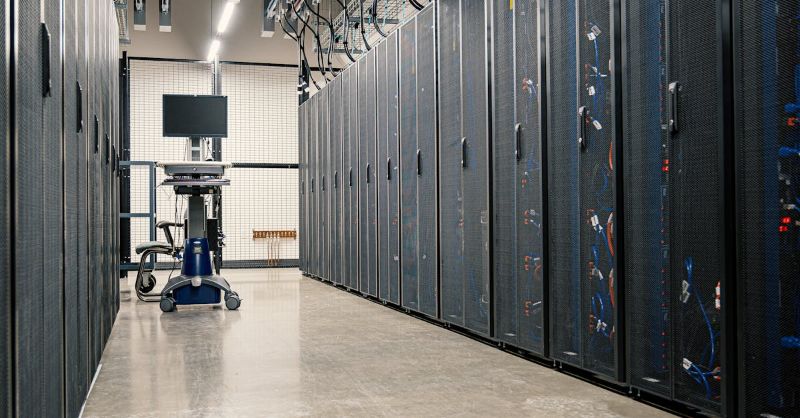
To systematically eliminate data loader stalls, infrastructure architects must isolate where latency accumulates between disk blocks and GPU tensor registers:
- Small-File Random I/O Bottlenecks: Datasets composed of millions of individual image, audio, or text files exhaust filesystem metadata servers (MDS) and generate millions of random 4KB reads, collapsing storage throughput to a fraction of wire speed.
- Python Global Interpreter Lock (GIL) Contention: Standard PyTorch DataLoaders relying on multiple worker processes face inter-process communication (IPC) serialization penalties when transferring transformed batches from worker memory to the main training process via POSIX shared memory.
- Host Page Cache Thrashing: Reading massive multi-terabyte datasets through the standard Linux OS page cache triggers aggressive memory eviction, dirty page flushing stalls, and CPU kernel lock contention that freezes DataLoader worker threads.
- Host-to-Device (H2D) PCIe Traversal: In conventional pipelines, data is read from disk into host kernel space, copied to host user space, and finally transferred over PCIe to GPU memory, incurring three distinct memory copy operations.
Diagnosing DataLoader Bottlenecks with Real-World Telemetry
Before applying architectural fixes, engineering teams must verify that GPU idle time is directly attributable to data ingestion rather than compute kernel overhead. The primary diagnostic indicators include:
# PyTorch DataLoader Timing Profiling Pseudocode
import time
from torch.utils.data import DataLoader
data_iter = iter(dataloader)
while training:
    t_start_fetch = time.perf_counter()
    batch = next(data_iter)
    t_data_ready = time.perf_counter()
    # Forward & Backward Pass
    outputs = model(batch)
    loss.backward()
    optimizer.step()
    t_step_end = time.perf_counter()
    data_time = t_data_ready - t_start_fetch
    compute_time = t_step_end - t_data_ready
    data_stall_ratio = data_time / (data_time + compute_time)
    if data_stall_ratio > 0.15:
        print(f"CRITICAL: Storage Stall Detected. Ratio: {data_stall_ratio:.2%}")
When profiling distributed training runs using NVIDIA Nsight Systems or PyTorch Profiler, storage stalls manifest as extended gaps between CUDA kernel execution streams where the GPU SM (Streaming Multiprocessor) active occupancy drops to 0% while host threads are trapped in read(), pread(), or unpickling system calls.
Four High-Impact Fixes to Eliminate DataLoader Storage Stalls
Modern enterprise AI platforms apply a layered engineering approach to decouple dataset ingestion from storage latency ceilings:
1. Transition to Sharded, Pre-Indexed Memory-Mapped Formats
Individual file storage must be deprecated in favor of contiguous, sequential container formats such as WebDataset (TAR shards), MosaicML StreamingDataset (MDS), or Apache Arrow. Sharding datasets into 100MB to 500MB sequential chunks transforms millions of random IOPS into high-throughput sequential reads, allowing NVMe drives and distributed object stores to deliver their maximum theoretical sustained bandwidth.
2. PyTorch DataLoader Runtime Parameter Tuning
Standard DataLoader configurations frequently default to conservative settings that guarantee stalls. High-performance distributed runs require precise tuning of runtime parameters:
num_workers:Set between 4 and 8 workers per active GPU to saturate CPU preprocessing cores without triggering hyperthreading thrashing.pin_memory=True:Allocates tensors in page-locked (pinned) host memory, enabling asynchronous Direct Memory Access (DMA) copies to GPU memory without host CPU intervention.persistent_workers=True:Retains worker processes across epoch boundaries, eliminating expensive worker teardown and re-forking overhead.prefetch_factor >= 3:Pre-stages multiple batches per worker in memory buffers to absorb transient network or disk read spikes.
3. GPUDirect Storage (GDS / cuFile) Architecture
GPUDirect Storage bypasses the host CPU and OS page cache entirely. Utilizing PCIe DMA and RDMA over Converged Ethernet (RoCE), GDS streams data directly from local NVMe drives or remote distributed storage targets into GPU High-Bandwidth Memory (HBM). This reduces end-to-end data transfer latency by up to 70% and frees host CPU cores to handle augmentations rather than memory copies.
4. Distributed NVMe-over-Fabrics (NVMe-oF) Caching Tiers
For large-scale clusters, streaming datasets across shared object storage introduces unpredictable noisy-neighbor latencies. Deploying a local high-speed NVMe-oF caching tier on compute nodes allows frequently accessed training shards to reside on local PCIe Gen5 NVMe arrays, providing sub-millisecond access and sustained 40+ GB/s read throughput per node.
Architecture Comparison: Ingestion Strategies & Performance Metrics
The operational impact of modernizing storage architectures across a multi-node GPU cluster is summarized below:
| Ingestion Architecture | Effective Read Speed | Host CPU Overhead | Average GPU Utilization | Primary Risk & Limitation |
|---|---|---|---|---|
| Raw Files over Shared NFS | 800 MB/s – 1.8 GB/s | Extreme (>75% host CPU) | 35% – 55% (Severe Stalls) | Metadata server exhaustion; catastrophic I/O lockup at scale. |
| PyTorch WebDataset (Page Cache) | 6.5 GB/s – 12.0 GB/s | Moderate (35% – 50%) | 70% – 82% | Susceptible to OS page cache eviction and memory pressure during large batching. |
| MosaicML Streaming + Pinned RAM | 14.0 GB/s – 22.0 GB/s | Low (20% – 30%) | 85% – 92% | Requires local NVMe staging space for pre-downloaded streaming cache. |
| GPUDirect Storage (GDS) + NVMe-oF | 38.0 GB/s – 55.0 GB/s | Minimal (<8% host CPU) | 95% – 99% (Zero Stalls) | Requires specialized kernel drivers and GDS-compatible storage infrastructure. |
Enterprise AI Storage Infrastructure with OneSource Cloud
Eliminating storage stalls requires tight integration between physical storage media, network fabrics, and accelerator compute nodes. Commercial public clouds frequently impose shared multi-tenant I/O rate limits and high egress taxes that restrict dataset streaming.
OneSource Cloud AI Storage Architecture provides purpose-built, dedicated high-performance parallel storage designed specifically for multi-node GPU training. By combining PCIe Gen5 NVMe-oF fabrics, non-blocking 400Gbps RoCE networking, and full native support for NVIDIA GPUDirect Storage, OneSource Cloud delivers guaranteed 40+ GB/s sustained throughput per compute node. This turnkey infrastructure eliminates GPU starvation, ensuring every expensive accelerator hour is utilized for productive tensor computation rather than waiting on disk I/O.
Related Articles
Recommended Reading
-
How Paged Attention Manages Inference KV Cache
-
Google Cloud GPU Pricing: What Enterprise AI Teams Should Evaluate Before Provisioning
-
Paperspace Pricing 2026: GPU Cost Breakdown
-
AI Infrastructure Costs: Controlling Enterprise GPU Spending
-
CoreWeave Enterprise GPU Cloud: Evaluation for AI Teams
-
CoreWeave vs Lambda Labs vs OneSource Cloud: GPU Provider Decision Guide
-
AWS GPU Pricing: Instance Types, Cost Structure & Alternatives Guide
-
U.S. Data Residency in the Cloud: Requirements, Regulations & Compliance Guide
latest articles
-
LLM Warm Cache Restart Time Optimization for Fast Inference
-
AI Workload Repatriation Checklist to Exit Public Clouds
-
Vector Database for Private RAG: Secure Air-Gapped Clusters
-
Kubernetes GPU Scheduling for Teams with Fair Share Quotas
-
Model Parallel LLM Network Topology: Bridging NVLink Rails
-
Effective Cost per Productive GPU Hour in Enterprise AI Run
-
Jurisdictional Control of AI Data: Sovereign Cloud Mandates
-
KV Cache Memory Sizing for High-Concurrency LLM Serving
-
Training Data Loader Storage Stall Fixes for GPU Clusters
-
Production LLM Quality Signal Framework for Live AI Serving