
Single-Tenant GPU for Confidential AI Workloads: Isolation Without TEE Overhead
Confidential AI conversations collapse into a single question — do you need confidential computing? — as if isolation were one product with one price. It is a spectrum: physical single tenancy removes classes of attackers outright, logical isolation manages routine sharing, and GPU trusted execution environments protect data in use even from the operator, each covering different threats at different costs. Confidential workloads deserve the spectrum, not the slogan.
Quick Answer: What Isolation Do Confidential AI Workloads Need?
Map the spectrum: physical single tenancy — dedicated bare metal, no co-tenants, operator exposure contracted and logged — covers most enterprise confidential work (valuable IP, regulated data) at full performance; logical isolation — software separation on shared hardware — fits routine multi-team workloads; GPU TEEs — encrypted memory, attestation, protection from the infrastructure operator itself — answer the strongest threat models (multi-party healthcare/finance collaboration) at up to ~98% of native performance plus ecosystem constraints. They stack: single-tenant hardware with TEEs for the strongest classes. The honest boundary: pay for the level your threat model justifies — over-isolation wastes performance on threats you do not have.
Definition: The Isolation Spectrum for AI
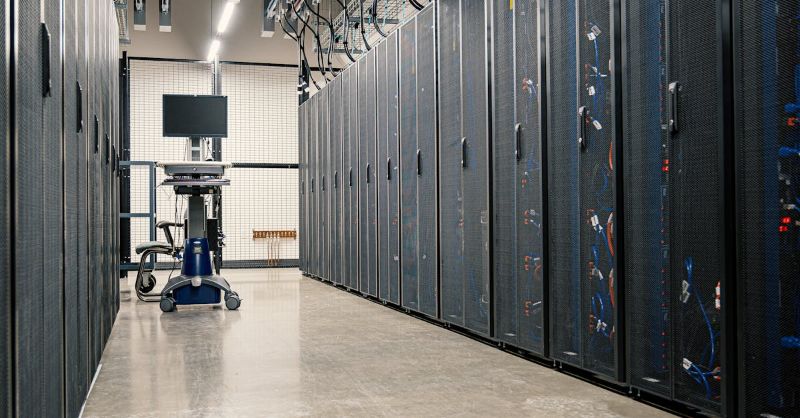
Confidential AI workloads sit on an isolation spectrum with three reference points: physical single tenancy — dedicated bare-metal hardware where no co-tenant exists and the operator question is contractual; logical isolation — shared hardware with software-enforced separation (the multi-tenant strategy layer, adequate for routine workloads); and hardware confidential computing — GPU TEEs that encrypt memory and protect data in use even from infrastructure administrators, with remote attestation proving the configuration, at up to roughly 98 percent of native performance on H100-class hardware. The spectrum's point is that these are not competing products but stacked coverage: physical isolation removes classes of attackers, TEEs narrow what remains — including the operator.
| Level | Removes | Performance Cost |
|---|---|---|
| Physical single tenancy | Co-tenants, hypervisor questions | None — full speed |
| Logical isolation | Accidental cross-team exposure | Platform overhead only |
| GPU TEEs | Operator access to data in use | ~2% plus ecosystem constraints |
The stacked-coverage framing — the structure behind the isolation levels OneSource Cloud delivers from its single-tenant foundation upward — resolves the TEE-versus-dedicated debate that vendor marketing keeps alive: single tenancy and confidential computing answer different questions — who shares my hardware, and who can see my data — and the strongest deployments answer both, while most confidential enterprise work is fully answered by the first question alone.
Enterprise Relevance: Threat Coverage Per Level
The threat coverage differs by level in ways buyers routinely blur: single tenancy eliminates co-tenant attacks entirely and reduces operator exposure to contracted, logged access — the answer for valuable IP and regulated data whose threat model is other tenants and casual inspection; logical isolation manages routine multi-team workloads where the threat is accident, not adversary; and TEEs answer the strongest threat model — protecting data in use from the infrastructure operator itself, the level regulated-confidential processing and multi-party computation research justify. End-to-end confidential AI research combines CPU and GPU TEEs for exactly the strongest classes — healthcare and finance collaboration scenarios — while most enterprise confidential workloads are fully served at single tenancy, and paying TEE overhead there buys protection against threats the workload does not have.
| Threat | Single Tenancy | TEE |
|---|---|---|
| Co-tenant attacks | Eliminated by architecture | Eliminated by architecture + memory encryption |
| Casual operator inspection | Contracted, logged | Blocked (encrypted memory) |
| Compelled operator disclosure | Legal exposure remains | Data-in-use protected; legal process still applies |
| Multi-party collaboration | Insufficient alone | The designed use case |
The multi-party row is where TEEs earn their overhead irreplaceably — collaboration scenarios where no party trusts the infrastructure or each other are what end-to-end confidential AI research exists for — and the disciplined reading of the table is from the workload side: name the threat, then pay for the level that covers it, never the level above.
Boundary: Costs, Combinations, and the Honest Fit
Costs run in opposite directions across the spectrum: single tenancy prices as dedicated capacity (flat-rate monthly structures on delivered enclaves), logical isolation prices as platform features, and TEEs price as a small performance overhead — a few percent on paper that compounds across large campaigns — plus ecosystem constraints in supported frameworks and attestation operations. The levels combine cleanly: single-tenant hardware with TEEs enabled covers the strongest threat models without co-tenancy underneath; single tenancy alone covers most confidential enterprise work; and the honest boundary is refusing over-isolation — workloads without a threat model matching the level are paying cash and performance for coverage they cannot use, which discredits the practice where it matters.
| Confidentiality Class | Right Level | Combination |
|---|---|---|
| Valuable model IP | Single tenancy | Plus weight-access logging |
| Regulated enterprise data | Single tenancy | Plus BAA/attestation evidence |
| Multi-party regulated collaboration | Single tenancy + TEEs | The stacked maximum |
| Routine internal workloads | Logical isolation | Platform policies suffice |
The class-to-level map is the procurement artifact: it converts security-review conversations from technology debates into threat-model assignments, and it prices the answer — which is why OneSource Cloud documents its foundation level explicitly rather than selling the whole spectrum to every buyer. The single-tenancy rows — most of the table — are delivered as dedicated bare-metal enclaves with isolated networking and storage, the foundation level OneSource Cloud Private AI Infrastructure documents, with the TEE stack available above it for the collaboration classes that justify the overhead.
FAQ
Does GPU TEE overhead matter for large campaigns?
Arithmetically yes, practically it depends: a few percent on paper — the published 98-percent-of-native figure — compounds to real GPU-days across a large campaign, so the question is whether your threat model includes the operator; if it does, the overhead is the cheapest protection available, and if it does not, single-tenant hardware without TEEs delivers the coverage you actually need at full speed.
Do TEEs make single-tenant GPUs unnecessary?
No — they answer different threats: single tenancy removes co-tenants and hypervisor questions by architecture while keeping full performance, and TEEs protect data in use from the operator itself at a small overhead — the strongest confidential workloads run both (single-tenant bare metal with TEEs enabled, the stack research demonstrates for healthcare and finance), while most enterprise confidential work is fully served on dedicated single-tenant enclaves like the ones OneSource Cloud delivers without enabling the TEE layer at all.
Related Articles
Recommended Reading
-
How Paged Attention Manages Inference KV Cache
-
Google Cloud GPU Pricing: What Enterprise AI Teams Should Evaluate Before Provisioning
-
Paperspace Pricing 2026: GPU Cost Breakdown
-
AI Infrastructure Costs: Controlling Enterprise GPU Spending
-
CoreWeave Enterprise GPU Cloud: Evaluation for AI Teams
-
CoreWeave vs Lambda Labs: GPU Cloud Provider Comparison
-
AWS GPU Pricing: Instance Types, Cost Structure & Alternatives Guide
-
CoreWeave Alternatives: Compare GPU Clouds
latest articles
-
Cost-Effective Isolated GPU Compute and When Single-Tenant Wins
-
Single-Tenant GPU for Confidential AI Workloads: Isolation Without TEE Overhead
-
GPU Cluster Provisioning and Deployment: From Racking to First Training Run
-
HIPAA-Ready LLM Hosting: Making Your Model Deployment Compliant
-
HIPAA-Ready H100 Hosting: How to Verify Scope for Enterprise PHI
-
How Much GPU Cluster Bandwidth AI Training Actually Needs
-
On-Shore GPU for HIPAA Workloads and Why Jurisdiction Matters
-
AI Infrastructure Providers for Startups: Credit Programs, Pricing, and Selection
-
GPU Cloud Service Model Comparison for Healthcare Teams
-
H100 GPU Cluster Rental Pricing and Contract Terms Explained