
Secure Enterprise AI Infrastructure: Controls to Audit
Quick Answer: A secure enterprise AI infrastructure platform combines identity, workload isolation, network segmentation, protected data paths, audit logging, and operational controls around GPU workloads. Security should be evaluated as a complete system that covers infrastructure, model artifacts, prompts, logs, backups, and administrator access.
Security requirements become more demanding when AI teams use sensitive customer, healthcare, financial, or proprietary data. The goal is not to promise a universal compliance outcome; it is to define controls, evidence, and shared responsibilities that match the workload.
Security Risks Across the AI Stack
| Risk Area | Example Exposure | Control to Verify |
|---|---|---|
| Identity and access | Unrestricted users can view data, images, or model endpoints. | Role-based access, project boundaries, and review process. |
| Workload isolation | Jobs or support sessions cross intended data boundaries. | Namespaces, tenant controls, network policy, and audit. |
| Model artifacts | Weights, checkpoints, or prompts are copied to uncontrolled locations. | Encryption, retention, registry access, and backup rules. |
| Operations | Changes or incidents are not traceable across provider and enterprise. | Logs, alerts, change control, and escalation runbooks. |
| Residency | Data or telemetry moves outside approved regions. | Documented processing locations and support boundaries. |
Platform Controls to Evaluate
Identity and project boundaries
Map users to teams, projects, and environments. Use least-privilege roles for workspace access, deployment, data, and administration. Require periodic review and record emergency access so sensitive AI workflows do not depend on shared credentials.
Network and data-path segmentation
Separate management, storage, training, and serving paths where the risk model requires it. Confirm how private endpoints, cross-connects, backups, and observability traffic are protected. High-performance networking should be secure as well as fast.
Logging and operational evidence
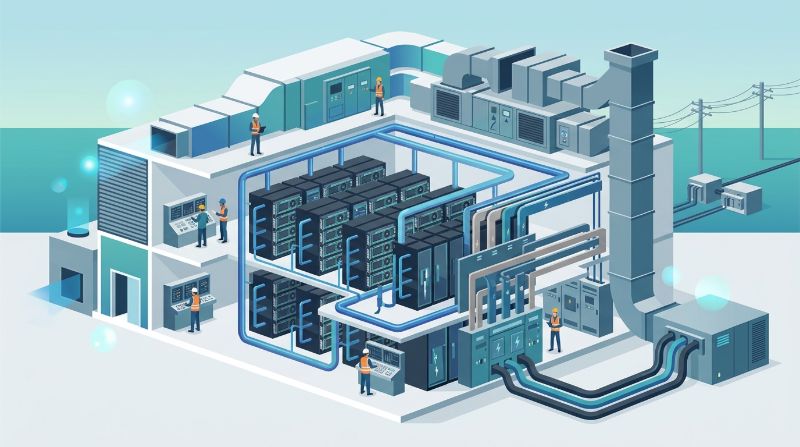
Capture authentication, workload changes, model releases, access to data, and infrastructure events. Logs need retention, ownership, and review procedures. OneSource Cloud’s managed AI infrastructure can be evaluated for ongoing monitoring and incident operations.
Shared Responsibility for Regulated Workloads
Healthcare and financial teams should ask which controls are supplied by the facility, infrastructure provider, orchestration platform, and enterprise. “HIPAA-ready” or similar language should be tied to scope, configuration, and evidence rather than treated as a blanket guarantee.
OneSource Cloud’s private AI infrastructure offers a dedicated environment and U.S.-based deployment options to evaluate for sensitive workloads. The enterprise remains responsible for application controls, data classification, user behavior, and its own compliance program.
Secure Platform Selection Checklist
- Can the platform enforce project-scoped access to GPU workspaces and data?
- Are management, storage, training, and serving paths documented and segmented?
- Are model releases, operator actions, and support sessions auditable?
- Are residency, backup, telemetry, and retention locations explicit?
- Can the provider explain incident response and shared responsibilities?
FAQ
What makes an AI infrastructure platform secure?
Security comes from combined controls for identity, workload isolation, network segmentation, data protection, logging, patching, and incident response. A secure platform makes those controls visible and testable for the specific workloads it hosts.
How do enterprises isolate sensitive AI workloads?
Use project and identity boundaries, approved images, network policies, protected storage paths, encryption, and audit logs. Test both normal workflows and administrative access, including backups and support operations.
Is private AI infrastructure automatically compliant?
No. Private infrastructure can provide a clearer control boundary, but compliance depends on configuration, processes, application behavior, and evidence. Review the provider’s scope and shared-responsibility model against the organization’s requirements.
What security evidence should a provider share?
Request architecture diagrams, access and logging descriptions, data-residency details, incident-response procedures, change controls, and relevant attestations or audit reports. Confirm that the evidence covers the services and regions being purchased.
Summary
Secure enterprise AI infrastructure is a control system, not a single product feature. Evaluate identity, isolation, network paths, data protection, logging, residency, and operational ownership together, then validate the evidence against each workload’s risk.
Next step: Review secure private AI infrastructure controls with OneSource Cloud.
Related Articles
Recommended Reading
-
Google Cloud GPU Pricing: What Enterprise AI Teams Should Evaluate Before Provisioning
-
Paperspace Pricing 2026: GPU Cost Breakdown
-
CoreWeave Enterprise GPU Cloud: Evaluation for AI Teams
-
AI Infrastructure Costs: Controlling Enterprise GPU Spending
-
CoreWeave vs Lambda Labs: GPU Cloud Provider Comparison
latest articles
-
Open-Source LLM Deployment: Requirements and Real Cost Breakdown
-
AI Search Assistants Under Data Residency: Architectures and Evidence
-
LLM Inference GPUs Compared: A100, H100, H200, or B200 for Production
-
LLM Deployment Best Practices: An Enterprise Stage-by-Stage Checklist
-
HIPAA Patient Scheduling AI: Controls, Consent, and Evidence
-
Cloud-Agnostic LLM Deployment: Architecture Principles Against Lock-In
-
HIPAA-Compliant AI Tools for Healthcare: Categories and Evaluation
-
Batch vs Real-Time LLM Inference: Cost, Latency, and Fit
-
Model Deployment Strategies Compared: Canary, Blue-Green, Shadow, Rolling
-
GPU Rental vs Owning: Cost, Commitment, and When to Buy