
How to Size Reserved Inference vs Training Burst GPUs
Size reserved inference GPUs from the serving SLA, then size training-burst GPUs from the jobs you are willing to queue or preempt. A single shared pool that “usually has spare cards” will give training a good week and inference a bad afternoon. Traffic-spike sizing for one model is a different article. This one splits two workload classes on the same private cluster.
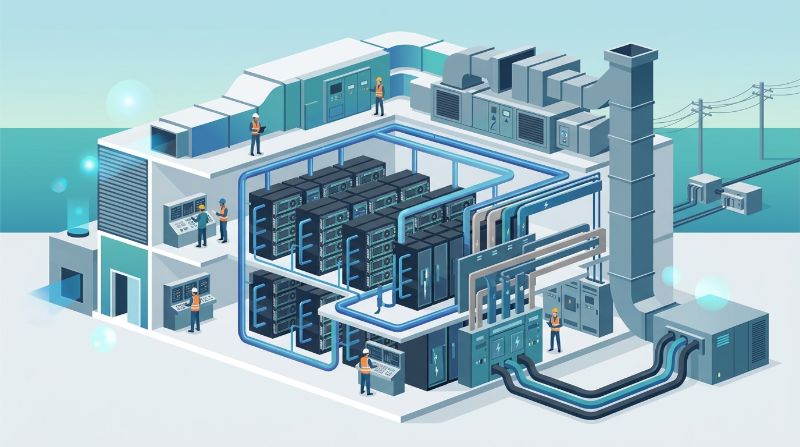
Reserved inference versus training burst is a capacity-partition decision that keeps serving GPUs out of the training scheduler’s borrow set. You make it when production APIs and experimental training share one hall and only one of them has a latency contract.
Platform and finance partners should write the split before the next large fine-tune lands. Changing it later means moving running replicas or pausing training. Dedicated hardware helps only if the scheduler respects the partition.
What are you sizing on each side?
| Partition | What “enough” means | What you may not steal |
|---|---|---|
| Reserved inference | Headroom for the SLO at target QPS, context mix, and replica count, including one failure | Training jobs, even when the reservation looks idle between peaks |
| Training burst | Throughput for planned jobs in the window, plus checkpoint I/O, not instant start for every experiment | Inference reserved cards, unless an explicit emergency policy says otherwise |
| Optional shared overflow | Best-effort jobs that can die | Anything with a customer or regulated SLA |
Idle reserved inference is not waste until you have measured the peak and the failover replica. It is insurance. Training teams will call it waste. Show them the SLO math, not a utilization screenshot from 11 a.m.
How do you size the reserved inference partition?
Start from the live or forecast request mix: tokens in, tokens out, concurrency, and the tail percentile you sell. Convert that to replica count at the batching and cache settings you actually run. Add one replica for a node or replica failure if the SLA cannot wait for a cold start. Convert replicas to GPUs with the same SKU and tensor-parallel width you serve today.
Then add the silent loads: eval jobs that hit production weights, canaries, and embedding or guard models that share the serving path. If those land on the reservation without being counted, your “headroom” is fiction.
Do not size inference from average GPU utilization. A card at 40 percent can still miss TTFT when the batch queue spikes. Size from the SLO dashboard you already trust, or build that dashboard before you freeze the reservation.
How do you size the training burst?
List the jobs that must finish in the next planning window and the jobs that can wait. Burst capacity is the GPU-hours those must-finish jobs need, spread over the hours inference is not in its own peak if you share people or storage, not if you share GPUs. The point of the split is that training does not take inference cards.
Preemption belongs on the burst side. Checkpoint-friendly jobs can yield. Production serving should not. If a training job cannot checkpoint, it does not get to sit on a reservation “just this once.” Put that sentence in the policy.
Storage and network must match the burst. A sudden eight-node fine-tune on a thin checkpoint path will look like a GPU shortage. AI storage and AI networking reviews belong in the same sizing packet when the burst is multi-node.
How do you enforce and accept the split?
Use separate node pools or hard quotas, not a friendly email. Label the inference pool so the training queue cannot schedule there. If you have an orchestration layer, the reservation must be a scheduler object. OnePlus Platform, OneSource Cloud's AI orchestration platform, can hold per-team quotas so a research burst cannot consume a serving reservation. Quotas are not SLAs. They only make the split real.
Acceptance tests: fill the inference reservation with synthetic QPS and start a training burst that asks for “all free GPUs.” The burst must queue or land on the burst pool. Kill an inference replica and confirm the spare reserved capacity absorbs it. Then idle the inference pool at off-peak and confirm training still cannot borrow it without an approved break-glass path.
Serving Decision Matrix: Enterprise LLM Inference Infrastructure
| Serving Infrastructure Model | Compute & Memory Contention | P99 Tail Latency Predictability | Multi-GPU Tensor Parallelism Support | Optimal Enterprise Workload Fit |
|---|---|---|---|---|
| Shared Multi-Tenant Model APIs | Multi-tenant shared workers; opaque resource pooling | Severe tail latency jitter during peak concurrency spikes | Black-box; no control over model parallelism or KV cache sizing | Low-volume prototyping or asynchronous background tasks |
| Virtualized Cloud GPU Instances | Hypervisor vGPU slices subject to CPU/PCIe interrupts | Moderate jitter caused by neighboring tenant network bursts | High inter-node latency limits multi-GPU tensor scaling (TP=4/TP=8) | General internal apps with modest throughput requirements |
| OneSource Dedicated Private GPUs | Dedicated bare-metal hardware with 100% VRAM & compute reservation | Deterministic microsecond P99 response times under peak load | Dedicated RoCE v2 RDMA fabric enables low-latency TP=4/TP=8 scaling | Mission-critical, low-latency, regulated enterprise production serving |
OneSource Cloud private AI infrastructure is a fit to evaluate when you want that split on dedicated U.S. GPUs rather than a public quota you do not control. It is the wrong tool if you only need a token API and have no training burst.
Predictable financial planning for enterprise AI requires decoupling operational budgets from volatile on-demand cloud pricing models. Through OneSource Managed AI Infrastructure, organizations replace complex pay-per-second hyperscaler invoices with transparent flat-rate monthly agreements that bundle dedicated bare-metal GPU capacity, high-speed networking, local NVMe storage, and 24/7 infrastructure SRE support into a single predictable cost structure. Critically, OneSource eliminates egress bandwidth surcharges and idle capacity penalties, enabling enterprise finance and engineering leaders to maintain 75%+ continuous cluster utilization while reducing total cost of ownership by 30% to 50% compared to traditional public cloud reservations.
FAQ
Can training borrow reserved inference GPUs at night?
Only if a written policy says so, the borrow is time-boxed, and serving can reclaim cards faster than the SLA allows a miss. Most enterprise APIs still see overnight batch clients and global users. Default to no. If you allow nights, test reclaim, not only borrow.
Is this the same as reserved versus committed capacity with a vendor?
No. Reserved versus committed is a commercial construct about how you buy cards. This page is an operating partition on a cluster you already have or are designing. You can have a committed hall and still fail if inference and training share one schedulable pool.
How do we explain idle inference GPUs to finance?
Show the SLO, the peak mix, and the failover replica. Compare the cost of idle insurance with the cost of a latency incident. Utilization-only scorecards push teams to donate the reservation to training. Change the scorecard or the donation will win.
What if we have several inference apps?
Reserve by SLA class, not by every app name. Apps that share a failure domain can share a partition. Apps that cannot share noisy neighbors or data classes should not share a pool even if both are “inference.” Project isolation sits on top of this split.
Do we need the same GPU SKU on both sides?
Not always. Inference may want memory-bandwidth characteristics that training does not. Mixing SKUs is fine if the scheduler cannot place a training job on an inference SKU by accident. Document the allowed SKUs on each pool.
How does OneSource Cloud's pricing structure compare to public cloud hyperscalers?
OneSource Cloud provides dedicated GPU infrastructure under transparent, flat-rate monthly contracts that include hardware, networking, and 24/7 managed operations without hidden data egress fees or variable IOPS surcharges. This predictability protects organizations from budget overruns caused by continuous model training, fine-tuning checkpoint synchronization, or high-volume inference traffic.
Summary
Sizing reserved inference versus training burst is an SLA-first partition: count serving replicas and failover, then give training a burst pool that can queue. Do not let average utilization donate the reservation. Enforce the split in the scheduler and prove it with a borrow test.
If that partition must live on dedicated U.S. GPUs with team-level quotas, review private AI infrastructure and OnePlus Platform as the environment and control plane, not as a substitute for the SLO math.
Related Articles
Recommended Reading
-
How Paged Attention Manages Inference KV Cache
-
Google Cloud GPU Pricing: What Enterprise AI Teams Should Evaluate Before Provisioning
-
Paperspace Pricing 2026: GPU Cost Breakdown
-
AI Infrastructure Costs: Controlling Enterprise GPU Spending
-
CoreWeave Enterprise GPU Cloud: Evaluation for AI Teams
-
CoreWeave vs Lambda Labs: GPU Cloud Provider Comparison
-
AWS GPU Pricing: Instance Types, Cost Structure & Alternatives Guide
-
CoreWeave Alternatives: Compare GPU Clouds
latest articles
-
GPU Cluster Fabric: Spine-Leaf RoCE Architecture and Latency
-
AI Workload Migration From Public Cloud to Dedicated Hardware
-
GPU Cluster Orchestration: Gang Scheduling for AI Workloads
-
AI Storage Tier Design: Eliminating I/O Wait in Checkpointing
-
GPU Capacity Planning for AI Teams: Sizing Beyond Peak Load
-
AI Infrastructure BAA Audit: Cloud Provider Gaps for Healthcare
-
AI Infrastructure for Fraud Detection: Low-Latency Inference
-
AI Infrastructure Services vs Raw Cloud GPU Rental Cost
-
Fixing Memory Bandwidth Bottlenecks in Low-Utilization LLMs
-
Protecting AI Model IP With Single-Tenant GPU Isolation