
Public Cloud vs Private AI Cost Changes After Migration
Post-migration AI infrastructure cost is the measured run rate that remains after workloads, data, operations, and old resources have reached their intended steady state. A fair public cloud versus private AI comparison therefore starts with the same workload demand and separates transition spending from recurring cost.
Private infrastructure can improve budget predictability for sustained GPU demand, while public cloud can remain economical for short experiments and irregular bursts. The decision should be based on utilization, workload growth, data movement, operating ownership, and service requirements, not a single hourly GPU rate. Decommissioning and temporary double-run expenses must remain visible throughout the comparison.
Public Cloud and Private AI Costs Change in Different Ways
Public cloud cost generally tracks consumption. Compute, storage, outbound data transfer, managed services, support, and idle resources appear as separate charges. Private AI cost is more capacity-based: the organization pays for dedicated hardware or a committed service, plus facilities, networking, storage, software, and operations. Migration changes both the price model and who owns each cost.
| Cost area | Public cloud after stabilization | Private AI after stabilization | What to normalize |
|---|---|---|---|
| GPU compute | Usage, reservation, or commitment charges | Dedicated capacity or contracted service | Delivered training and inference work, not provisioned hours alone |
| Storage and data movement | Capacity, requests, tiering, and transfer | Storage platform, network fabric, backup, and lifecycle tiers | Hot data, replicas, checkpoints, archives, and outbound traffic |
| Operations | Cloud engineering, FinOps, reliability, and managed services | Platform, cluster, facility, and lifecycle operations | Internal labor, provider fees, on-call coverage, and tooling |
| Utilization risk | Idle instances and overprovisioned services | Committed capacity that is not productively scheduled | Useful GPU time and completed workload units |
| Change risk | Variable demand and service pricing | Capacity forecasts, refresh cycles, and expansion lead time | Budget variance and cost of missing capacity |
Build a Comparable Baseline Before the Migration
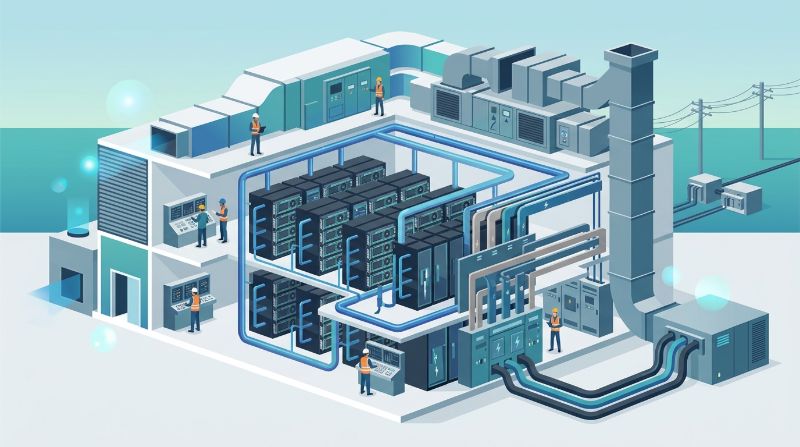
A pre-migration baseline should cover at least one representative business cycle. Record GPU hours by model and workload, storage by tier, data transfer, managed-service charges, support, discounts, and labor. Add workload outputs such as training runs completed, tokens generated, models served, or experiments delivered. These denominators prevent a lower bill from looking efficient when the new environment is processing less work.
Tag resources by application, environment, owner, and workload stage. Separate research, batch training, fine-tuning, RAG, and production inference because each responds differently to dedicated capacity. A steady inference service may benefit from reserved resources, while an occasional experiment may still fit an elastic public cloud model.
Separate Transition Costs From the New Run Rate
The migration period often contains temporary spending that should not be treated as steady-state cost. Common items include architecture work, data replication, application changes, parallel environments, validation tests, new monitoring, and staff training. Public cloud resources may remain active while private capacity is accepted, creating a deliberate double-run period.
Record these expenses in a transition ledger with an owner and expected end date. The same ledger should track stranded commitments, unused reservations, software licenses that cannot transfer, and decommissioning work. A migration does not produce a clean comparison until temporary resources are removed and the previous operating model is actually closed.
Validate Cost at 30, 60, and 90 Days
A staged review reveals whether the cost model is converging toward the business case. The exact windows should match workload cycles, but three checkpoints create useful discipline.
- Day 30, establish completeness. Confirm that every invoice, internal labor category, storage copy, and remaining cloud resource has an owner. Measure queue time and GPU utilization, but do not draw a final conclusion from an incomplete workload mix.
- Day 60, test operational efficiency. Review job completion, failed runs, support effort, data-path bottlenecks, and scheduling. Low utilization may indicate excess capacity, but it can also reflect a storage or orchestration problem that is preventing productive work.
- Day 90, compare normalized economics. Calculate cost per useful workload unit and budget variance. Confirm that temporary migration resources are gone and that recurring support, software, backup, and lifecycle costs are included.
Use Workload Economics Instead of Headline Rates
For training, useful denominators include cost per completed run, cost per successful checkpointed job, and cost per experiment cycle. For inference, use cost per million input and output tokens, cost per request at the required latency percentile, or cost per active service-hour. Always pair a cost metric with service quality so that cheaper infrastructure is not rewarded for lower throughput or missed latency targets.
Utilization should also be interpreted carefully. A private cluster does not need to show 100 percent GPU activity to be economical. Capacity may be reserved for service-level objectives, data sensitivity, peak demand, or recovery. The relevant question is whether the cost of that headroom is justified by business requirements and whether unused capacity can be scheduled across more teams.
When Each Model Usually Fits
Public cloud commonly fits early experimentation, short-lived projects, uncertain model demand, and workloads that benefit from a broad managed-service catalog. Private AI commonly fits sustained production demand, sensitive data, predictable capacity needs, and teams that require control over GPU, network, storage, and operating policy. A hybrid portfolio can keep bursty work in public cloud while moving stable or regulated workloads to dedicated infrastructure.
OneSource Cloud's Private AI Infrastructure is designed around dedicated compute, storage, networking, and performance validation. Managed AI Infrastructure can add monitoring, optimization, and ongoing cluster operations when the comparison must include the real cost of staffing and lifecycle work.
FAQ
When should post-migration cost measurement begin?
Begin collecting cost and performance data immediately, but do not label the first invoice as steady state. The comparison becomes decision-grade after temporary migration resources are identified, old environments are decommissioned, and a representative workload cycle has run. For many teams, 60 to 90 days provides a more useful view than the first month alone.
Should migration project costs be included in TCO?
Yes, but show them separately from recurring run rate. Architecture, data transfer, validation, double running, and decommissioning affect payback and should be visible. Separating one-time and recurring costs lets finance evaluate both the near-term investment and the longer-term operating model without confusing the two.
How should unused private GPU capacity be valued?
Classify unused capacity as planned headroom, recoverability reserve, scheduling inefficiency, or excess commitment. Planned headroom may support latency and availability targets. Inefficient capacity should trigger better scheduling or workload consolidation. Excess commitment should inform the next capacity decision rather than being hidden inside an average utilization figure.
Can public cloud still be part of a private AI strategy?
Yes. Public cloud can support development, disaster recovery, regional services, or temporary bursts while sensitive and sustained workloads run on private infrastructure. The cost model should include data movement, duplicate tooling, identity integration, and operational complexity so the hybrid design is measured as one portfolio rather than two unrelated environments.
Summary
Compare public cloud and private AI after migration by normalizing workload output, separating transition cost from recurring run rate, and validating utilization, service quality, and budget variance over time. Teams planning this change can use a OneSource Cloud architecture review to map workload demand, migration stages, and operating ownership before committing capacity.
Related Articles
Recommended Reading
-
Google Cloud GPU Pricing: What Enterprise AI Teams Should Evaluate Before Provisioning
-
Paperspace Pricing 2026: GPU Cost Breakdown
-
CoreWeave Enterprise GPU Cloud: Evaluation for AI Teams
-
AI Infrastructure Costs: Controlling Enterprise GPU Spending
-
CoreWeave vs Lambda Labs: GPU Cloud Provider Comparison
latest articles
-
Open-Source LLM Deployment: Requirements and Real Cost Breakdown
-
AI Search Assistants Under Data Residency: Architectures and Evidence
-
LLM Inference GPUs Compared: A100, H100, H200, or B200 for Production
-
LLM Deployment Best Practices: An Enterprise Stage-by-Stage Checklist
-
HIPAA Patient Scheduling AI: Controls, Consent, and Evidence
-
Cloud-Agnostic LLM Deployment: Architecture Principles Against Lock-In
-
HIPAA-Compliant AI Tools for Healthcare: Categories and Evaluation
-
Batch vs Real-Time LLM Inference: Cost, Latency, and Fit
-
Model Deployment Strategies Compared: Canary, Blue-Green, Shadow, Rolling
-
GPU Rental vs Owning: Cost, Commitment, and When to Buy