
Privileged Access on GPU Clusters: JIT, Break-Glass, and Audit
Every AI estate has a credential more valuable than any password database: root on the GPU nodes. It reaches the model weights, the training data, the checkpoints, the environment secrets — and on shared estates, the neighboring tenants' workloads beside them. Ordinary access control (the RBAC and quota governance this site covers elsewhere) governs who uses the platform; privileged access governs who can bypass it, which is why it warrants its own treatment: eliminate the standing credential, design the emergency path, and log every privileged session.
Scope: Why GPU Root Is the Crown Jewel
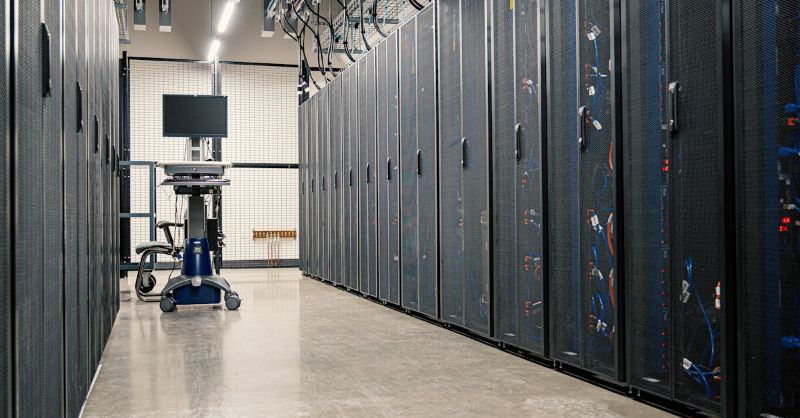
Root on GPU nodes is the estate's crown-jewel credential: it reaches model weights, training data, checkpoints, environment secrets, and — on shared estates — adjacent tenants' workloads, which is why privileged access on AI clusters warrants tighter treatment than ordinary server estates: the blast radius is everything the organization is training.
| What privileged access reaches | Why it matters |
|---|---|
| Model weights and checkpoints | The IP the estate exists to produce, copyable in minutes |
| Training data and corpora | The regulated or proprietary data feeding the models |
| Environment secrets and keys | Credentials to every integrated system |
| Adjacent tenants' workloads | On shared estates, the isolation boundary itself |
| The fabric and scheduling layer | The ability to disrupt every job, not just one's own |
The security-vendor definition of privileged access management frames the control precisely: tightly restricting elevated access to only the people, processes, and systems that truly need it — and only for the necessary time and scope. Applying that definition to the GPU-estate blast radius above explains the tightness: an ordinary server's root reaches that server, while a GPU node's root reaches the training program. The scope inventory — what privileged access actually reaches on your estate — is therefore this control's first artifact, because nobody tightens a credential whose reach they have not enumerated.
Eliminate Standing Privilege with JIT Elevation
Replace standing root with just-in-time elevation: operators request time- and scope-bounded access, approval grants it for the task's duration, and expiry revokes it — the AI-era PAM pattern that eliminates standing privilege, so the credential an attacker could steal exists only during the minutes it is legitimately needed.
- The request states scope and duration: which nodes or tenant scope, for how long, for what task — the request that cannot state these is the request to refuse.
- Approval flows to a second party: self-approval is standing privilege wearing a workflow costume.
- Access materializes bounded: the elevation exists for the granted scope and window, and the operator works within it.
- Expiry revokes automatically: the credential evaporates at the window's end, without trusting anyone to clean up.
Identity-vendor guidance names this pattern as the AI-era evolution of PAM — eliminating standing privilege through just-in-time access that grants the right level for the right user at the right time — and the security arithmetic is the selling point: a stolen credential that exists only during approved minutes is a dramatically smaller attack surface than one that exists between incidents. Map the estate's routine privileged tasks (driver work, fabric debugging, node drain) to the JIT flow first, because routine tasks are where standing privilege hides in the guise of convenience.
Break-Glass: Disabled Until the Emergency
Break-glass accounts stay disabled by default, get enabled only for emergencies, and every use produces a full session record: the emergency accounts are dedicated and least-privileged, their activation alerts security, and the session's commands are captured for review — emergency access that is slower to audit than to use is a design failure.
- Disabled by default: official architecture guidance is unambiguous — normally-disabled break-glass mechanisms, with dedicated accounts locked away until the emergency that justifies them.
- Dedicated and least-privileged: emergency accounts are not administrator's daily credentials renamed; they are separate identities with the minimum reach the emergency requires.
- Activation alerts: enabling the account pages security — the emergency is visible from its first second, not discovered in next month's log review.
- Full session capture: commands, actions, and duration recorded — the artifact the post-incident review and the auditor both read.
The break-glass design earns its keep in the testing: an emergency path exercised once a quarter in a drill is a control, while an untested path is a hope — and the drill's output (did activation alert, did capture record, did access expire) is the control's own evidence. The pairing matters too: JIT handles the routine privileged work, break-glass handles the 3 a.m. exception, and the estate between them has no standing credential anywhere — which is the entire objective.
Privileged Logging and the Review Cadence
Privileged sessions are logged end to end — who elevated, the approval, the commands, what they touched — with a review cadence that samples sessions and investigates anomalies, and residual risk recorded: JIT friction driving workarounds, break-glass drift into routine use, and logging gaps during incidents — each with an owner.
| Session-record field | Why the review needs it |
|---|---|
| Identity and approval link | Every elevation traces to its authorization |
| Scope and duration as granted | Drift beyond scope is the anomaly signal |
| Commands executed | The substance of what privileged access did |
| Objects touched | Which models, datasets, tenants, and nodes |
| Expiry confirmation | Access ended when the window ended |
The review cadence samples rather than reads everything — a percentage of sessions monthly, all break-glass activations without exception, and any scope-drift anomaly immediately — because a review designed around reading everything becomes a review that reads nothing. The residual register records the honest failures: operators routing around JIT friction, break-glass used for non-emergences, and the logging gap during the very incidents that matter most, each with a named owner and a mitigation. And where the estate is managed — the provider's operators hold the privileged keys — the control moves to contract: who may elevate, under what approval, with what session logging, asked at evaluation; dedicated environments such as OneSource Cloud's private AI infrastructure are one option evaluated against exactly these questions rather than exempted from them.
FAQ
Should GPU operators have standing root access?
No — standing privilege is the credential an attacker wants and audits flag: replace it with just-in-time elevation that exists only for the task's duration and scope, keeping root reachable for legitimate work and expensive to hold.
What must break-glass accounts do to be safe?
Stay disabled by default, be dedicated and least-privileged for emergencies, alert security on activation, and capture the full session — an emergency path that cannot be audited afterward is an unmonitored backdoor, whatever its intent.
Who holds privileged access in managed infrastructure?
The provider's operators do — which moves your control to contract and evidence: who may elevate, under what approval, with what session logging and attestation, asked at evaluation and verified in the agreement rather than assumed from the service's name.
Related Articles
Recommended Reading
latest articles
-
GPU Hardware Spares and RMA: Fleet Logistics and Downtime Risk
-
AI Infrastructure Energy Reporting: What Enterprises Should Measure
-
Balanced Bandwidth per GPU: Sizing Cluster Networks for LLM Training
-
Model Flops Utilization: Why Training Efficiency Collapses and How to Fix It
-
How Much Spare GPU Capacity Inference Needs for Failover
-
Multi-Cloud GPU Management Overhead: The Hidden Cost of Split Estates
-
ITAR vs CUI for GPU Hosting: Controls That Actually Differ
-
RAG Corpus Refresh: Reindexing, Re-Embedding, and Freshness Operations
-
How to Cut LLM Latency Without Buying More GPUs
-
Batch vs Real-Time LLM Inference: When to Batch and What It Saves