
Audit-Ready AI Compute: Controls and Evidence at Every Layer
Audit preparation season is the recurring symptom of an architecture problem: teams reconstructing evidence binders the week before the auditor arrives are paying, quarterly, for a stack that was never designed to remember what it did. The alternative has a shape — controls and evidence mapped to each compute layer, collected continuously as the stack runs, queryable when the questions arrive — and it is an architecture decision made at design time, not a compliance scramble made at calendar time. This page provides that architecture for AI compute estates.
Scope: Readiness Is an Architecture, Not a Binder
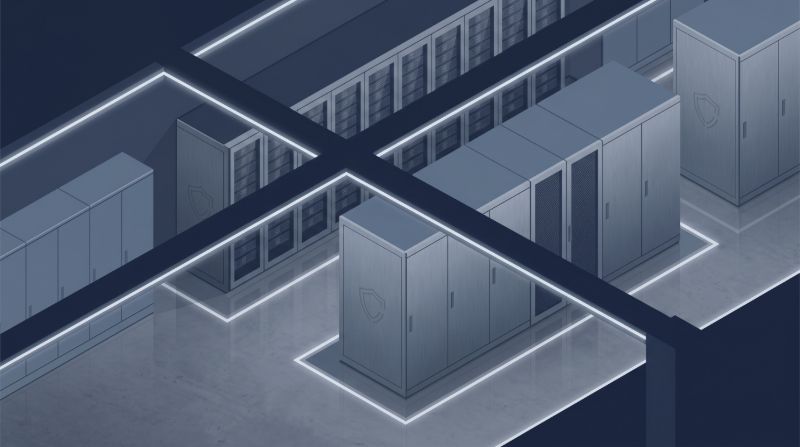
Audit-ready means the architecture produces its own evidence: controls at each compute layer generate queryable records continuously — facility and hardware attestations, platform configuration states, workload access trails, model deployment records — so readiness is a property of how the stack runs, not a binder assembled the week before the auditor arrives.
| Approach | How evidence exists | What the audit finds |
|---|---|---|
| The binder | Reconstructed per audit cycle | Gaps where memory failed, inconsistencies between cycles |
| The architecture | Emitted by controls as they run | Queryable trails, consistent by construction |
The vendor guidance converging on this pattern is blunt about the mechanics: sustainable audit readiness depends on how evidence is structured rather than its volume, and audit-ready evidence is continuous, queryable, and mapped to a named control — not assembled before the auditor arrives. The distinction matters for AI estates specifically because their evidence surface is wider than classic infrastructure (models, training data, and deployments generate records ordinary stacks never had), which makes retrofitted assembly proportionally worse: the more layers the stack has, the more the binder approach costs and the less it yields.
The Layer Map: Controls and Evidence per Layer
Controls map layer by layer — facility and hardware (physical access, asset inventory), platform and orchestration (configuration baselines, access control), workload and data (execution trails, data classification), model and deployment (version lineage, promotion records) — with each layer's evidence named at design time, because evidence discovered at audit time is evidence nobody collected.
| Layer | Representative controls | Its evidence, named at design time |
|---|---|---|
| Facility and hardware | Physical access, asset inventory, environment controls | Access logs, asset registers, attestation records |
| Platform and orchestration | Configuration baselines, access control, network policy | Config-state exports, policy versions, admission records |
| Workload and data | Execution authorization, data classification handling | Execution trails, classification tags, access records |
| Model and deployment | Version lineage, promotion gates, rollback records | Registry history, promotion evidence, rollback artifacts |
Two practices make the map work. The design-time-naming rule — every control's evidence type is specified when the control is deployed, never discovered when the auditor asks — catches the most common gap early: infrastructure layers emit logs natively while model-deployment layers often live in tooling nobody asked for audit output, and the naming rule surfaces that asymmetry at design time. And standards guidance on the AI supply chain extends the map outward: providers in the chain need their boundary responsibilities documented, with their evidence arriving contracted rather than assumed — the same boundary discipline this site's shared-responsibility treatment establishes for security, applied to audit.
Continuous Collection and Queryability
Evidence collects continuously and stays queryable: control systems emit their records as they run, a query layer can answer an auditor's question in minutes rather than weeks, and gaps are monitoring events rather than discoveries — the properties that make readiness sustainable instead of seasonal.
- Emit-as-you-run: each control's records accumulate as operation happens — configuration states versioned on change, access trails written on access, promotions recorded on promotion.
- Queryability over volume: the test is whether an auditor's question ("who accessed this dataset, under which control, last quarter") answers in minutes from the trail — structure delivers that, bulk does not.
- Gaps as monitoring events: a control that stops emitting is an alert, not an audit finding — the monitoring layer watches the evidence layer, and both know it.
- Framework consumption: SOC 2, ISO 27001, HIPAA, and the EU AI Act read the same layered trails in their own terms — the architecture serves the regimes rather than any one of them.
The framework row is the architecture's economic argument: one continuously-collected, queryable evidence base feeds every regime the estate answers to, where per-framework assembly pays the reconstruction cost per audit, per framework, forever. Governance coverage of AI audit frameworks confirms the fit — model risk, data controls, and operational accountability all consume layered operational records — which makes the continuous architecture the shared substrate beneath whichever regimes apply.
Use-Case Control Domains and Residual Risk
Each AI use case becomes a small control domain — an owner, the layers it touches, its controls, and its evidence — which is how ten workloads stay auditable without ten programs; the residual register holds the honest leftovers: layers without native evidence, provider-boundary gaps needing attestation, and use cases outgrowing their domains.
| Domain element | What it pins |
|---|---|
| Owner | The accountable party for the use case's controls and evidence |
| Touched layers | Which of the four layers this workload actually engages |
| Controls | The specific controls inherited and added |
| Evidence | Which continuous trails this domain reads at review |
The control-domain pattern is what makes the architecture scale: enterprise guidance treats each AI use case as a small control domain with ownership, controls, and evidence — bounded, reviewable, and cheap to audit — where a monolithic compliance program would collapse into unmaintained binders as workloads multiply. The residual register completes the honesty: layers whose tooling emits nothing native (fix or compensate), provider boundaries where evidence must arrive by attestation rather than direct collection (contract for it), and domains whose workloads outgrew their control set (re-scope before the auditor notices). For estates where lower-layer evidence is contracted to the provider, dedicated environments such as OneSource Cloud's private AI infrastructure consolidate those layers under one attestation — evaluated, like any provider, on what the evidence contract actually delivers.
FAQ
Can we prepare for audits quarter-end instead?
You can prepare the meeting, not the evidence: retrofitted binders are why audits find gaps — the continuous architecture exists because the questions auditors ask (who accessed what, when, under which control) can only be answered by records collected while the system ran.
Which layer lacks evidence most often?
The model-deployment layer: infrastructure layers emit logs natively, while model versions, promotion decisions, and lineage often live in tooling that was never asked for audit output — the design-time-evidence rule exists to catch exactly that gap before the auditor does.
How do multiple AI workloads stay auditable?
Through control domains: each use case gets an owner, its touched layers, its controls, and its evidence — a small bounded program per workload — which scales where one monolithic compliance program would collapse into unmaintained binders.
Related Articles
Recommended Reading
latest articles
-
GPU Hardware Spares and RMA: Fleet Logistics and Downtime Risk
-
AI Infrastructure Energy Reporting: What Enterprises Should Measure
-
Balanced Bandwidth per GPU: Sizing Cluster Networks for LLM Training
-
Model Flops Utilization: Why Training Efficiency Collapses and How to Fix It
-
How Much Spare GPU Capacity Inference Needs for Failover
-
Multi-Cloud GPU Management Overhead: The Hidden Cost of Split Estates
-
ITAR vs CUI for GPU Hosting: Controls That Actually Differ
-
RAG Corpus Refresh: Reindexing, Re-Embedding, and Freshness Operations
-
How to Cut LLM Latency Without Buying More GPUs
-
Batch vs Real-Time LLM Inference: When to Batch and What It Saves