
Private AI Security Compliance Checklist: 12 Controls
A private AI security compliance checklist is an evidence-based review of controls protecting AI workloads across infrastructure, model, and data layers.
It translates security and compliance obligations into testable requirements with named owners, defined scope, current evidence, and clear remediation criteria. The review examines how controls operate, not merely whether a policy or vendor statement exists.
Private tenancy can reduce shared-resource exposure and give an enterprise greater control over location, administration, and data flows. It does not guarantee compliance. Customer and provider must define responsibilities, configure the environment, monitor it, and prove that critical controls remain effective as the system changes.
Define the system boundary before scoring controls
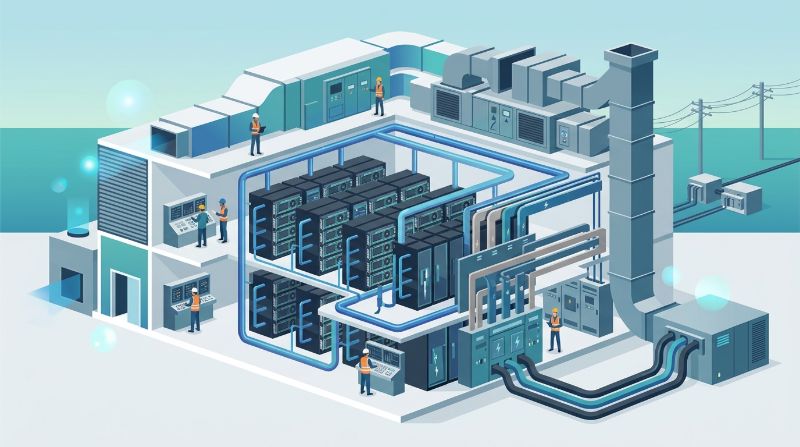
A checklist produces misleading results when the assessed system is vague. Start by naming the business process, model, data classes, users, deployment stage, interfaces, geographic locations, and acceptable impact of a failure.
Include development, training, evaluation, inference, backup, monitoring, support, and disaster-recovery environments when they can access regulated or confidential assets.
Draw the boundary across facilities, dedicated servers, accelerators, network devices, storage, management services, orchestration, registries, model gateways, identity providers, observability systems, support tools, and subprocessors.
Trace prompts, responses, training data, embeddings, checkpoints, model weights, logs, secrets, backups, and diagnostic bundles. A security claim is only useful when it applies to this complete path.
Next, map applicable legal, regulatory, contractual, and internal requirements to the system. Different workloads may need different evidence even when they use the same private AI infrastructure. Record the source of each requirement, the assets it protects, the control owner, the expected evidence, and the authority that can accept an exception.
Private AI security compliance checklist
| Control | What to verify | Evidence to retain |
|---|---|---|
| 1. Responsibility | Every security and operating task has an accountable provider or customer owner. | Responsibility matrix, service scope, escalation map |
| 2. Tenancy | Compute, network, storage, and management boundaries match the approved isolation model. | Architecture, allocation records, configuration samples |
| 3. Data location | All primary, derived, backup, log, and support data flows stay within approved locations. | Data-flow map, site list, transfer records |
| 4. Identity | Human and machine access uses strong authentication, least privilege, and periodic review. | Role map, MFA settings, access samples, review records |
| 5. Encryption | Data, models, logs, and backups are protected in transit and at rest with governed keys. | Protocols, storage settings, key policy, rotation evidence |
| 6. Network security | Management, training, storage, and inference paths are segmented and deliberately exposed. | Network diagrams, rule sets, exposure tests |
| 7. Platform integrity | Firmware, drivers, operating systems, images, dependencies, and models follow an approved lifecycle. | Baselines, inventories, signatures, scan and patch records |
| 8. Workload governance | Datasets, models, endpoints, and changes are authorized, traceable, and reversible. | Registry records, approvals, lineage, deployment history |
| 9. Logging | Critical activity is recorded, protected, retained, and available for investigation. | Log-source map, sample events, retention and alert settings |
| 10. Incident response | Provider and customer can coordinate containment, evidence preservation, and notification. | Response plan, contacts, exercise results, tickets |
| 11. Resilience | Critical services, configurations, data, and models can be restored within approved objectives. | Backup reports, restore tests, dependency map |
| 12. Assurance | Controls are tested on a defined cadence and findings are tracked to closure. | Test plan, reports, risk acceptances, remediation evidence |
How to test the 12 controls
1. Establish a shared-responsibility matrix
Break responsibility down by layer and recurring task. Cover facilities, hardware, firmware, host operating systems, drivers, network, storage, orchestration, container images, model runtimes, identities, data, applications, monitoring, vulnerability management, backups, incident response, and disposal.
Avoid broad labels such as “managed” or “customer controlled” unless each activity beneath the label has an owner. Identify who performs and approves each task, who receives evidence, and who responds when it fails.
A managed AI infrastructure arrangement can place more platform work with the provider, while model access and data governance may remain with the customer. The signed service scope and operating procedures should agree with the control matrix.
2. Prove isolation at every relevant layer
Document whether servers, GPUs, network segments, storage volumes, management services, and support paths are dedicated or shared. Then test the boundaries that matter to the approved threat model.
Verify tenant allocation, administrative reachability, storage attachment, network routes, orchestration permissions, and the handling of local accelerator or host caches.
Isolation should also cover operational access. Determine whether a provider administrator, support utility, monitoring agent, or automation account can reach customer data or models.
If such access is necessary, require approved purpose, limited duration, individual attribution, recorded actions, and a review process. Private capacity without controlled administration leaves a material gap.
3. Trace data residency and lifecycle
Follow every important data type from ingestion to deletion. Include raw and transformed datasets, prompts, outputs, embeddings, temporary files, model weights, checkpoints, telemetry, tickets, snapshots, backups, and support bundles.
Record where each is created, processed, transmitted, replicated, retained, and destroyed, including any cross-border or third-party path.
Compare the observed path with contracts and approved architecture. Data residency must cover metadata and operational artifacts, not only primary storage.
Test deletion and retention across live volumes, replicas, object storage, local caches, logs, backups, and retired media. Retain evidence linking each deletion request or schedule to the systems where the data existed.
4. Enforce identity and privileged access
Require centralized identity where practical, multi-factor authentication for privileged users, role separation, least privilege, and controlled service accounts.
Review who can administer hosts, change network rules, mount storage, submit jobs, access registries, retrieve model weights, view prompts, modify endpoints, read logs, and change backup policies.
Sample real accounts and recent access rather than relying on a role diagram. Confirm joiner, mover, and leaver processes; temporary elevation; emergency access; inactive-account handling; secrets rotation; and periodic certification.
Investigate privileges that bypass normal controls. Machine identities should have narrow scopes, nonhuman ownership records, expiry or rotation rules, and monitoring appropriate to their impact.
5. Verify encryption and key governance
Verify encryption in transit across user, management, storage, cluster, replication, backup, and API paths. Check protection at rest for datasets, models, registries, logs, snapshots, and portable diagnostic artifacts. Record approved algorithms and protocols, configuration baselines, exceptions, and the method used to detect drift.
Key ownership matters as much as encryption status. Document where keys are generated and stored, who can use or administer them, how duties are separated, when keys rotate, how revoked keys affect data, and what happens during recovery.
Test a representative key change and access-denial scenario. An “encrypted” label without governed keys is weak evidence.
6. Segment network paths and minimize exposure
Separate management, storage, training, inference, monitoring, and user-access paths according to risk. Review inbound and outbound rules, private connectivity, name resolution, administrative interfaces, service discovery, firewall changes, and public endpoints.
Confirm that unused services are disabled and that externally reachable inference interfaces have authentication, rate controls, request limits, and monitoring.
For performance-sensitive clusters, security segmentation should be designed with the high-performance AI network, not added after deployment. Test representative allowed and denied paths from appropriate network positions. Keep the test results, rule owner, approval, and change reference so the evidence shows both design and operation.
7. Control the platform and model supply chain
Maintain an inventory of firmware, drivers, host images, libraries, containers, orchestration components, model artifacts, and automation code. Define trusted sources and integrity checks.
Scan for known weaknesses, prioritize by exposure and business impact, test patches, record exceptions, and confirm that corrected versions reach the intended environment.
Extend change control to models and datasets. Record provenance, approval, integrity, evaluation results, deployment version, dependencies, and rollback method.
Prevent unapproved artifacts from entering production registries or endpoints. Where a model or dependency cannot be rapidly replaced, document compensating controls and the decision authority accepting residual risk.
8. Govern workloads from data intake to endpoint retirement
Require authorized purpose, approved data classes, accountable owners, and documented risk before a workload receives infrastructure. Define checkpoints for dataset intake, model evaluation, human review, production release, endpoint changes, and retirement.
The process should capture both security controls and use-specific obligations such as privacy, safety, contractual restrictions, or regulated recordkeeping.
Use an AI infrastructure platform to standardize approved deployment paths where that improves consistency, but do not assume automation removes accountability. Review templates, default permissions, secrets, images, quotas, logging, and rollback behavior. Exceptions to the standard path should be visible, time-bound, and approved.
9. Make audit logging investigation-ready
Map each important event to a reliable log source: authentication, authorization failure, privilege changes, administrative commands, network changes, data and model access, registry operations, job submission, endpoint deployment, configuration change, secret use, backup activity, and security alerts.
Verify time synchronization, event attribution, integrity protection, retention, and restricted access to the logs themselves.
Generate representative events and trace them from source to alert or investigation view. Confirm that responders can distinguish customer, provider, user, service, and automation actions.
Record gaps caused by unsupported components or excessive log volume. Logs that exist but cannot be searched, correlated, or preserved during an incident do not satisfy the control objective.
10. Exercise cross-organization incident response
Define how the provider and customer detect, classify, contain, investigate, recover from, and communicate an incident. Specify contact paths, decision authority, evidence exchange, secure communication, service isolation, notification responsibilities, and conditions for involving legal, privacy, compliance, or law enforcement teams.
Run scenarios relevant to private AI: a compromised service identity, unauthorized model export, exposed inference endpoint, altered container image, lost audit source, suspicious administrative access, failed storage encryption, or prohibited data movement.
Measure whether both parties can act within required timelines. Track exercise findings as operational work, not as meeting notes that disappear after the test.
11. Test recovery, continuity, and secure disposal
Set recovery time and recovery point objectives according to workload impact. Identify dependencies such as identity, registries, keys, network configuration, drivers, data pipelines, model stores, and external APIs.
Observe backup completion and restore representative data, configuration, and model artifacts into a controlled environment. Validate integrity and access after restoration.
Plan for hardware failure, facility disruption, corrupted artifacts, unavailable staff, and dependency outages. Recovery locations must meet the same residency and security requirements as production.
At end of life, verify that active data, local caches, snapshots, backups, logs, keys, and retired media follow approved retention and disposal rules.
12. Maintain an evidence and remediation cycle
For every control, record scope, owner, expected state, test method, result, evidence date, affected assets, and reviewer. Rate findings by business impact and exploitability.
A design document proves intent; a configuration sample, event record, restore result, or exercise proves operation. Independent reports can support assurance, but their scope and exceptions must match the assessed service.
Track each gap to a corrective action, owner, due date, compensating control, and approval. Re-test after remediation. Reassess the checklist after material changes to workloads, architecture, data, models, locations, providers, or regulations.
Continuous indicators such as overdue patches, unreviewed privileges, failed backups, disabled logs, unauthorized drift, and unresolved findings help keep the posture current.
How to score the checklist without hiding critical risk
Use simple control ratings such as effective, partially effective, ineffective, and not applicable, supported by evidence and rationale. Separate design effectiveness from operating effectiveness: a well-designed control that has not run successfully is not fully effective.
Also show evidence age, because a valid test from an obsolete architecture can create false confidence.
Do not reduce the result to one percentage. A high total can hide a missing identity boundary, exposed management interface, unavailable audit trail, prohibited data location, or untested recovery path.
Present critical failures first, identify affected workloads, and state the decision required. Aggregate scores are useful for trend reporting only after material exceptions remain visible.
Common checklist mistakes
- Equating private with compliant: tenancy is one architectural control, not proof of the full compliance outcome.
- Reviewing policies instead of operation: collect current configurations, events, tickets, test results, and approvals.
- Ignoring management and support paths: administrator tools and diagnostic artifacts can cross the intended data boundary.
- Auditing only production: development, recovery, monitoring, and backup environments may contain the same sensitive assets.
- Using vague provider claims: connect every claim to a defined service scope, responsible party, control, and evidence item.
- Closing findings without re-testing: a completed ticket does not prove the corrected control works.
FAQ
Does private AI infrastructure guarantee security compliance?
No. Private infrastructure can support isolation, data-location, and administrative-control objectives, but compliance depends on the full system and its applicable obligations.
Identity, configuration, data governance, software supply chain, monitoring, incident response, recovery, provider responsibilities, customer operation, and current evidence all remain necessary.
What evidence should a private AI provider supply?
Evidence should match the contracted scope and may include architecture and data-flow documentation, responsibility assignments, allocation records, access-control descriptions, security baselines, vulnerability and patch processes, logging coverage, and incident procedures.
Recovery evidence, location and subprocessor information, and relevant independent assurance reports may also apply. Customers should verify the scope and exceptions of every evidence source.
How often should the checklist be reviewed?
Use a regular, risk-based cadence and repeat relevant tests after material changes. New models, data classes, users, endpoints, locations, platform versions, network paths, providers, subprocessors, or incidents can invalidate previous evidence.
High-impact controls should also have continuous or frequent operational indicators between formal assessments.
Who should own the private AI compliance review?
One accountable business or risk owner should coordinate the review, with participation from security, infrastructure, privacy, compliance, legal, procurement, data governance, MLOps, application owners, and the service provider. Control-level ownership should remain explicit so gaps become assigned work rather than shared assumptions.
Can certifications replace control testing?
No. Certifications and independent reports can provide valuable assurance, but reviewers must check the covered service, locations, period, control responsibilities, exceptions, and customer requirements. Workload-specific configuration and customer-operated controls still need direct evidence and testing.
Summary
A useful private AI infrastructure security compliance checklist begins with a precise system boundary. It converts obligations into 12 evidence-backed control areas: responsibility, tenancy, data location, identity, encryption, network security, platform integrity, workload governance, logging, incident response, resilience, and assurance.
Test how each control operates, expose critical exceptions separately, assign remediation, and refresh evidence whenever the environment changes.
Next step: Ask OneSource Cloud for a private AI infrastructure review that maps workload boundaries, managed responsibilities, security evidence, and deployment requirements before production approval.
Related Articles
Recommended Reading
-
Google Cloud GPU Pricing: What Enterprise AI Teams Should Evaluate Before Provisioning
-
Paperspace Pricing 2026: GPU Cost Breakdown
-
AI Infrastructure Costs: Controlling Enterprise GPU Spending
-
CoreWeave Enterprise GPU Cloud: Evaluation for AI Teams
-
CoreWeave vs Lambda Labs: GPU Cloud Provider Comparison
latest articles
-
Open-Source LLM Deployment: Requirements and Real Cost Breakdown
-
AI Search Assistants Under Data Residency: Architectures and Evidence
-
LLM Inference GPUs Compared: A100, H100, H200, or B200 for Production
-
LLM Deployment Best Practices: An Enterprise Stage-by-Stage Checklist
-
HIPAA Patient Scheduling AI: Controls, Consent, and Evidence
-
Cloud-Agnostic LLM Deployment: Architecture Principles Against Lock-In
-
HIPAA-Compliant AI Tools for Healthcare: Categories and Evaluation
-
Batch vs Real-Time LLM Inference: Cost, Latency, and Fit
-
Model Deployment Strategies Compared: Canary, Blue-Green, Shadow, Rolling
-
GPU Rental vs Owning: Cost, Commitment, and When to Buy