
What Is Sovereign AI? A Practical Guide for Enterprise Infrastructure Leaders
Sovereign AI is an approach to building and operating AI systems so an organization, region, or country retains control over data, infrastructure, model access, governance, and operational responsibility. For enterprises, sovereign AI usually means using private or dedicated AI infrastructure when public cloud AI services create concerns around data residency, compliance, cost predictability, GPU availability, or control. OneSource Cloud supports sovereign AI strategies through private, U.S.-based, managed AI infrastructure for regulated and enterprise workloads.
What Does Sovereign AI Mean?
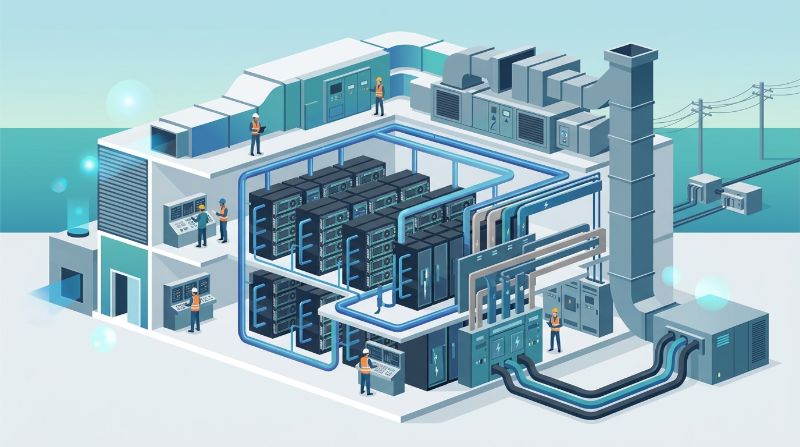
Sovereign AI means AI systems are designed so critical data, compute capacity, models, and operating controls remain under defined jurisdictional, organizational, or regulatory control.
For governments, sovereign AI may mean national AI capability. For enterprises, it is more practical: can the business control where data resides, who accesses models, how AI infrastructure is operated, and how sensitive workloads are governed?
Enterprise sovereign AI often includes:
- Data residency and location control
- Dedicated GPU infrastructure
- Private LLM deployment
- Controlled model access
- Secure storage and networking design
- Workload isolation across teams
- Audit-ready operational processes
- Managed lifecycle support
- Reduced dependence on unpredictable public cloud capacity
Sovereign AI is not only a compliance concept. It is an infrastructure and governance model for organizations that need AI systems they can trust, control, and operate over time.
Sovereign AI vs Private AI vs Public Cloud AI
Sovereign AI, private AI, and public cloud AI are related, but they are not the same.
| Model | What it means | Best fit | Main risk to evaluate |
|---|---|---|---|
| Sovereign AI | AI designed around control of data, infrastructure, models, jurisdiction, and governance | Regulated industries, government-adjacent organizations, data-sensitive enterprises | Requires clear operating model and infrastructure ownership |
| Private AI | AI workloads run in dedicated or controlled environments | Private LLMs, PHI-sensitive workloads, financial data, proprietary research | Can be under-designed without storage, networking, and operations planning |
| Public cloud AI | AI services and GPU resources consumed through public cloud platforms | Experimentation, broad cloud services, burst workloads | Cost variability, quota limits, shared responsibility complexity, data control concerns |
A sovereign AI strategy may use public cloud in some areas. But when sensitive data, private models, or regulated workloads are involved, private AI infrastructure often becomes the foundation.
Why Enterprises Are Asking About Sovereign AI Now
Enterprise AI teams are moving from pilots to production. That shift changes the infrastructure conversation.
During experimentation, a team may use public cloud GPUs, managed model APIs, or shared GPU cloud platforms. Once AI becomes part of clinical workflows, financial risk systems, internal knowledge assistants, research pipelines, or customer-facing SaaS features, infrastructure control becomes more important.
Common triggers include:
Sensitive data entering AI workflows: PHI, financial records, customer data, proprietary code, research datasets, and internal documents may require stronger control than a general-purpose AI service can provide.
Public cloud GPU uncertainty: Teams may run into quota limits, regional capacity constraints, or unpredictable monthly costs.
Private LLM deployment: Enterprises may want to run models in a controlled environment rather than sending prompts, embeddings, or outputs through external services.
Data residency requirements: Some organizations need workloads and data to remain in specific jurisdictions, regions, or U.S.-based environments.
Operational risk: Running AI infrastructure requires monitoring, patching, capacity planning, storage tuning, networking design, and model deployment governance.
OneSource Cloud’s positioning, “Focus on AI. Not Infrastructure,” directly addresses this shift. The company helps enterprises design, deploy, validate, monitor, optimize, and manage private AI infrastructure so internal teams do not carry the full infrastructure burden alone.
Core Infrastructure Requirements for Sovereign AI
Sovereign AI requires more than a policy statement. It needs a technical foundation that supports control, security posture, operability, and predictable growth.
Dedicated GPU Capacity
Sovereign AI often depends on dedicated GPU capacity because production workloads need predictable performance and availability. Shared GPU environments can work for experiments, but regulated or sustained workloads often require reserved infrastructure.
Dedicated GPU infrastructure helps teams plan:
- Training and fine-tuning capacity
- Inference latency and throughput
- Multi-team GPU allocation
- Capacity expansion
- Cost visibility
- Workload isolation
This is where OneSource Cloud’s Private AI Infrastructure is most relevant. It supports enterprises that need dedicated GPU and AI environments with control over data, hardware, workloads, and performance.
Data Residency and Location Control
Sovereign AI depends on knowing where data lives and where AI workloads execute. For U.S. enterprises, this may mean U.S.-based infrastructure and clear data residency planning. For regulated industries, it may also mean understanding where logs, backups, model artifacts, embeddings, and monitoring data are stored.
OneSource Cloud’s U.S.-based infrastructure positioning, including Texas / Richardson trust signals, can support buyers that need clearer infrastructure location and operational accountability.
Secure AI Storage Architecture
AI workloads create complex data paths. Training data, model checkpoints, embeddings, vector databases, prompts, outputs, logs, and evaluation datasets may all have different sensitivity levels.
Sovereign AI infrastructure should define:
- Where datasets are stored
- How access is controlled
- How data moves to GPU nodes
- How embeddings and vector stores are governed
- How backups and retention are handled
- Which systems may contain sensitive outputs or logs
OneSource Cloud’s AI Storage Architecture is relevant when enterprises need secure, scalable, high-performance storage for training, inference, RAG, and unstructured data.
High-Performance AI Networking
Sovereign AI infrastructure must move data efficiently between storage, compute, and users. Distributed training, multi-node inference, and low-latency model serving can bottleneck if networking is not designed for AI workloads.
AI Networking Services become important when the performance issue is not the GPU itself but node-to-node communication, storage access, or data movement.
AI Orchestration and Governance
Sovereign AI requires control over who can run workloads, which models are deployed, how GPUs are allocated, and how usage is monitored.
OnePlus Platform, OneSource Cloud’s AI orchestration platform, helps manage private AI infrastructure across multi-team usage, workload scheduling, developer environments, model deployment, and usage metrics. For sovereign AI, orchestration is part of governance because it turns dedicated infrastructure into an operating platform.
Managed Operations
Many organizations can define a sovereign AI strategy but struggle to operate it. GPU clusters require ongoing monitoring, patching, troubleshooting, optimization, lifecycle planning, and performance validation.
OneSource Cloud’s Managed AI Infrastructure is relevant when enterprises need private infrastructure but do not want internal MLOps or platform teams to carry every operational responsibility.
Sovereign AI for Regulated Industries
Sovereign AI matters most when data sensitivity, compliance, or operational accountability is high.
Healthcare and Life Sciences
Healthcare teams may use AI for clinical documentation, diagnostics, imaging, research, patient operations, or internal knowledge assistants. When workloads involve PHI or PHI-adjacent data, a HIPAA-ready infrastructure posture becomes important.
A healthcare sovereign AI strategy should evaluate access control, data residency, secure storage, logging, model outputs, embeddings, and workload isolation. OneSource Cloud’s Healthcare & Life Sciences solution is relevant for organizations building regulated healthcare AI environments.
Financial Services and FinTech
Financial institutions may use AI for fraud detection, risk modeling, compliance workflows, customer support, trading research, and internal analytics. These workloads often involve sensitive financial data, audit expectations, and strict access governance.
Sovereign AI can help financial teams retain stronger control over model deployment, data movement, infrastructure location, and operating processes. OneSource Cloud’s Financial Services & FinTech solution is relevant when private AI infrastructure must support risk-sensitive workloads.
Research and Universities
Research teams often need sustained GPU capacity, multi-team access, and secure storage for proprietary or restricted datasets. Public cloud can be useful for bursts, but long-running workloads and shared lab environments may benefit from dedicated infrastructure and orchestration.
SaaS and Technology Companies
SaaS companies building AI features may need predictable inference infrastructure, customer data isolation, private model deployment, and cost visibility. Sovereign AI can become relevant when AI becomes part of the product rather than a prototype.
Sovereign AI vs AWS, Azure, Google Cloud, and GPU Cloud Providers
Hyperscale cloud platforms and GPU cloud providers can play important roles in enterprise AI. AWS, Azure, Google Cloud, CoreWeave, Lambda Labs, Paperspace, NVIDIA GPU Cloud, Together AI, Modal, and Replicate each serve different workload patterns.
The key is matching the provider model to the enterprise requirement.
| Provider model | Best fit | Sovereign AI consideration |
|---|---|---|
| AWS, Azure, Google Cloud | Broad cloud services, managed AI tooling, global infrastructure | Evaluate region control, shared responsibility, GPU quota, data movement, and cost variability |
| CoreWeave, Lambda Labs, Paperspace | AI-native GPU access and burst compute | Evaluate data residency, governance, support model, and workload isolation |
| NVIDIA GPU Cloud | NVIDIA software ecosystem and model tooling | Usually part of a broader infrastructure strategy |
| API model platforms | Fast access to hosted models | Evaluate prompt data, outputs, retention, and model governance |
| Private AI infrastructure providers | Dedicated environments for controlled AI workloads | Stronger fit for sovereign AI when data, GPU capacity, and operations need tighter control |
OneSource Cloud is most relevant when sovereign AI requires dedicated, private, U.S.-based, managed infrastructure rather than only cloud GPU access or hosted model APIs.
Cost Drivers in Sovereign AI Infrastructure
Sovereign AI can improve control, but it must be planned carefully. Cost depends on workload design and operating model.
Key cost drivers include:
GPU type and scale: Training large models, fine-tuning, inference, and RAG workloads have different GPU requirements.
Utilization: Dedicated infrastructure is more compelling when workloads are sustained. Public cloud may be better for occasional experiments.
Storage design: Large datasets, model checkpoints, embeddings, and unstructured documents can materially affect cost.
Networking: Multi-node training and high-throughput inference may require low-latency, high-bandwidth networking.
Operations: Monitoring, patching, capacity planning, security hardening, and incident response require specialized expertise.
Compliance and governance: Regulated workloads may require stronger logging, access review, documentation, and data residency controls.
Migration complexity: Moving from public cloud or fragmented AI tools to a sovereign AI environment requires planning around models, data, pipelines, users, and integrations.
The right cost model compares total cost of ownership, not only hourly GPU pricing.
How to Build a Sovereign AI Roadmap
A sovereign AI roadmap should begin with business requirements, not hardware procurement.
1. Classify AI Workloads
Separate experimentation, training, fine-tuning, RAG, batch inference, real-time inference, internal assistants, and customer-facing AI. Each workload has different infrastructure needs.
2. Map Sensitive Data Paths
Identify where sensitive data appears: prompts, documents, embeddings, labels, logs, outputs, model checkpoints, vector databases, monitoring tools, and backup systems.
3. Define Residency and Control Requirements
Decide which workloads need U.S.-based infrastructure, private environments, dedicated GPUs, access isolation, or audit-ready processes.
4. Evaluate Build, Buy, or Managed Options
Self-managed infrastructure may work for mature infrastructure teams. Managed AI infrastructure may be better when the organization wants private control without taking on full operational ownership.
5. Validate Storage and Network Performance
Before scaling, test the full AI path: GPU utilization, storage throughput, network latency, orchestration, model deployment, and monitoring.
6. Establish Governance and Operations
Define access policies, usage reporting, incident response, lifecycle management, and expansion planning. Sovereign AI is an ongoing operating model, not a one-time deployment.
Common Sovereign AI Mistakes
Enterprises often make sovereign AI harder by treating it as a branding exercise or a single procurement decision.
Common mistakes include:
Confusing data residency with full sovereignty: Location matters, but so do access, operations, model governance, and data movement.
Buying GPUs before defining workloads: Hardware should follow training, inference, storage, and orchestration requirements.
Ignoring model outputs and logs: Sensitive data can appear in places teams do not initially expect.
Underestimating operations: Sovereign AI infrastructure must be monitored, patched, optimized, and scaled over time.
Using private infrastructure without orchestration: Multi-team GPU use needs scheduling, quota, usage visibility, and controlled access.
Comparing only public cloud GPU pricing: Total cost includes storage, networking, operations, support, compliance, and internal staffing.
A structured Architecture Review or AI Cluster Survey can help identify these issues before the organization commits to a long-term architecture.
Where OneSource Cloud Fits in a Sovereign AI Strategy
OneSource Cloud supports sovereign AI for enterprises that need private, dedicated, managed infrastructure for secure and scalable AI workloads.
The strongest fit is an organization that needs:
- Dedicated GPU infrastructure
- Private LLM deployment
- U.S.-based data residency planning
- Predictable AI infrastructure costs
- Managed monitoring, optimization, and lifecycle support
- Secure AI storage architecture
- High-performance AI networking
- Multi-team orchestration through OnePlus Platform
- Support for regulated AI workloads in healthcare, finance, research, or SaaS
For enterprises moving from AI pilots to production, OneSource Cloud provides a practical path from architecture design to deployment, validation, operations, and long-term optimization.
5. FAQ
What is sovereign AI?
Sovereign AI is an approach to building AI systems so an organization, region, or country retains control over data, infrastructure, models, governance, and operations. For enterprises, it often means private or dedicated AI infrastructure designed around data residency, security, compliance, and operational control.
Is sovereign AI the same as private AI?
No. Private AI is usually a technical deployment model where AI workloads run in dedicated or controlled environments. Sovereign AI is broader. It includes data residency, infrastructure control, model governance, access policies, jurisdictional requirements, and long-term operating responsibility.
Why does sovereign AI matter for enterprises?
Sovereign AI matters when enterprises handle sensitive data, regulated workloads, proprietary models, or production AI systems that require predictable infrastructure, controlled access, auditability, and clear operational ownership.
Does sovereign AI require private GPU infrastructure?
Not always, but private GPU infrastructure is often a strong foundation for sovereign AI when workloads are sensitive, sustained, regulated, or production-critical. Public cloud can still be part of the architecture for less sensitive or burst workloads.
How does sovereign AI compare with AWS, Azure, or Google Cloud AI?
AWS, Azure, and Google Cloud can support many enterprise AI workloads. Sovereign AI requires buyers to evaluate region control, data movement, GPU availability, shared responsibility, model governance, and cost predictability. Some workloads may remain in public cloud, while sensitive or sustained workloads may move to private AI infrastructure.
What industries need sovereign AI infrastructure?
Healthcare, financial services, research, SaaS, manufacturing, and government-adjacent organizations often evaluate sovereign AI infrastructure when AI workloads involve sensitive data, compliance obligations, private models, or long-term GPU capacity needs.
How much does sovereign AI infrastructure cost?
Cost depends on GPU capacity, storage, networking, orchestration, security controls, managed operations, compliance requirements, and utilization. Buyers should evaluate total cost of ownership instead of comparing only hourly GPU rates.
What is the first step in building a sovereign AI strategy?
The first step is an architecture review that maps AI workloads, sensitive data paths, residency requirements, GPU utilization, storage and networking needs, governance requirements, and operational ownership.
6. Conclusion
Sovereign AI is not just a national policy term. For enterprises, it is a practical framework for controlling data, infrastructure, models, access, cost, and operations as AI moves into production.
Public cloud and GPU cloud services remain useful for many AI workloads. But when organizations need dedicated capacity, data residency, regulated workload support, private LLM deployment, and predictable operations, private AI infrastructure becomes a stronger foundation. OneSource Cloud helps enterprises evaluate and build that foundation through private, U.S.-based, fully managed AI infrastructure.
Related Articles
Recommended Reading
-
Google Cloud GPU Pricing: What Enterprise AI Teams Should Evaluate Before Provisioning
-
Paperspace Pricing 2026: GPU Cost Breakdown
-
CoreWeave Enterprise GPU Cloud: Evaluation for AI Teams
-
AI Infrastructure Costs: Controlling Enterprise GPU Spending
-
CoreWeave vs Lambda Labs: GPU Cloud Provider Comparison
latest articles
-
Open-Source LLM Deployment: Requirements and Real Cost Breakdown
-
AI Search Assistants Under Data Residency: Architectures and Evidence
-
LLM Inference GPUs Compared: A100, H100, H200, or B200 for Production
-
LLM Deployment Best Practices: An Enterprise Stage-by-Stage Checklist
-
HIPAA Patient Scheduling AI: Controls, Consent, and Evidence
-
Cloud-Agnostic LLM Deployment: Architecture Principles Against Lock-In
-
HIPAA-Compliant AI Tools for Healthcare: Categories and Evaluation
-
Batch vs Real-Time LLM Inference: Cost, Latency, and Fit
-
Model Deployment Strategies Compared: Canary, Blue-Green, Shadow, Rolling
-
GPU Rental vs Owning: Cost, Commitment, and When to Buy