
Multi-Tenant Kubernetes GPU Cluster Controls for Enterprise AI
Deploying distributed artificial intelligence workloads on multi-tenant Kubernetes clusters presents unique architectural friction. While conventional microservices rely on CPU cgroups and Linux namespaces to achieve strict workload isolation, enterprise GPU accelerators execute monolithic kernel queues that bypass traditional operating system scheduler protections. Without explicit multi-tenant controls, research teams sharing a centralized GPU infrastructure experience severe memory exhaustion, kernel queue head-of-line blocking, and unpredictable latency variations. Establishing deterministic multi-tenancy across Kubernetes GPU clusters requires a multi-layered control plane combining hardware slicing, dynamic resource allocation, strict admission controllers, and network quality of service.
Hardware Slicing: Evaluating MIG, MPS, and Time-Slicing
Engineering teams frequently confront the dilemma of selecting the appropriate GPU sharing primitive inside Kubernetes pods. The standard Kubernetes device plugin offers default time-slicing, allowing multiple pods to request fractions of a GPU. However, time-slicing provides zero memory protection or compute bandwidth isolation. When one container allocates the entirety of High Bandwidth Memory or executes a persistent CUDA kernel, sibling tenants encounter immediate Out-Of-Memory exceptions or complete execution stalls.
To establish deterministic performance boundaries, engineers must leverage architectural primitives aligned with tenant workload profiles:
- Multi-Instance GPU: Configures modern enterprise GPUs into physically isolated hardware instances at the silicon level. Each MIG slice possesses dedicated GPU compute engines, memory controllers, copy engines, and isolated high-bandwidth memory. In a shared Kubernetes deployment, an 80GB accelerator can be carved into independent slices. If a tenant process triggers a kernel fault or attempts memory oversubscription, the error is isolated entirely within that physical instance, guaranteeing zero blast radius across neighboring tenants.
- Multi-Process Service: Enables multiple Linux processes or Kubernetes containers to share a single GPU context cooperatively. MPS bypasses the overhead of time-slicing context switching and allows fine-grained scheduling of small concurrent inference or preprocessing tasks. However, MPS shares a unified address space and common error propagation domain, meaning an unhandled CUDA segmentation fault in one tenant container can crash the MPS control daemon and abort all concurrent tenant streams.
- Dynamic Resource Allocation: Modern Kubernetes architectures transition from static device plugin resource limits to Dynamic Resource Allocation. DRA treats GPUs, NVLink domains, and local high-speed NVMe storage as coordinated resource claims. Platform engineers can define structured parameters ensuring that pods requiring ultra-low latency are mapped directly to dedicated bare-metal nodes, while batch experimentation workloads are assigned dynamically composed MIG slices.
Admission Control, Namespace Quotas, and Resource Scheduling
Beyond device-level partitioning, enterprise multi-tenancy requires proactive admission control to prevent infrastructure starvation. In production AI environments, platform operators implement hierarchical resource quotas across Kubernetes namespaces utilizing modern scheduling frameworks such as Volcano or Kueue.
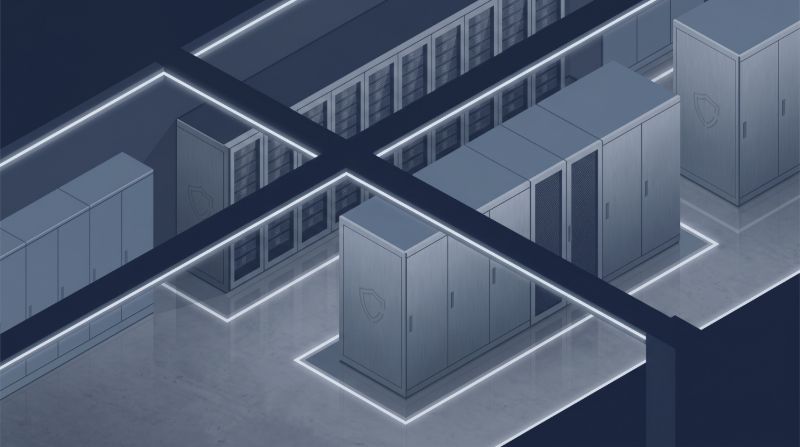
A resilient multi-tenant admission policy enforces three foundational rules:
- Fair-Share Gang Scheduling: Distributed model training workloads cannot function with partial pod scheduling. If a 64-GPU distributed training run attempts to schedule across a cluster where only 48 GPUs are available, conventional Kubernetes schedulers hold the 48 GPUs idle while awaiting the remaining 16, deadlocking incoming inference requests. Schedulers evaluate collective gang allocations, enqueuing the entire job until all required resources and interconnect fabrics are simultaneously claimable.
- Priority Preemption Classes: Critical production inference endpoints must be protected with non-preemptible priority classes. Conversely, ad-hoc experimentation and exploratory hyperparameter sweeps are assigned preemption-eligible classes backed by automated checkpoint triggers, ensuring rapid resource yield without catastrophic data loss when business-critical workloads scale.
- Network Namespace and QoS Isolation: Multi-tenancy must extend to the underlying RoCE v2 or InfiniBand interconnect. High-throughput distributed training operations executing AllReduce collectives can flood the leaf-spine fabric, creating packet drops and jitter that degrade latency-sensitive interactive inference services. Enforcing explicit DSCP traffic classes and Priority Flow Control priority boundaries ensures tenant traffic separation across physical and overlay network topologies.
Architectural Comparison: Kubernetes GPU Multi-Tenancy Strategies
Selecting the optimal isolation posture requires balancing operational complexity against isolation guarantees and resource utilization efficiency across diverse organizational tenants.
| Isolation Model | Memory Protection | Compute Bandwidth Isolation | Blast Radius | Primary Enterprise Use Case |
|---|---|---|---|---|
| Time-Slicing Device Plugin | None (OOM risk shared) | Zero (Best-effort time multiplexing) | High (Tenant crash affects entire GPU) | Non-critical dev/test and lightweight preprocessing |
| Multi-Process Service | Cooperative (Unified address space) | Configurable thread limits | Moderate (Daemon crash aborts tenants) | High-density micro-batch inference serving |
| Multi-Instance GPU | Hardware-enforced physical slice | Dedicated SMs and crossbar ports | Zero (Hardware isolation boundary) | Mixed internal team R&D and shared LLM fine-tuning |
| Dedicated Bare-Metal Nodes (OneSource Cloud) | Complete physical isolation (100% HBM) | Full PCIe and NVLink bus saturation | Zero (Independent hardware tenancy) | Mission-critical pre-training and ultra-low latency serving |
Operational Orchestration with OneSource Cloud and OnePlus™
Managing multi-tenant GPU infrastructure at scale requires cohesive visibility into hardware utilization, thermal boundaries, and scheduling health. OneSource Cloud provides single-tenant bare-metal GPU clusters equipped with dedicated 800Gbps Spine-Leaf RoCE v2 networking and enterprise NVMe-oF parallel storage pools. By deploying Kubernetes control planes directly onto unvirtualized hardware, engineering teams eliminate hypervisor tax and virtualization jitter.
To streamline multi-tenant cluster management, the OnePlus™ AI Orchestration Platform integrates directly with native Kubernetes primitives. OnePlus™ automates dynamic MIG provisioning, coordinates DRA hardware claims, and delivers deep-tier telemetries—tracking GPU SM occupancy, NVLink saturation, and tenant-level memory usage. Enterprise engineering teams can enforce granular tenant budgets, implement automated idle reclamation, and guarantee SLA-backed execution performance across distributed AI development cohorts.
Frequently Asked Questions
How does Multi-Instance GPU prevent noisy neighbors in Kubernetes?
Multi-Instance GPU divides physical GPU silicon into physically distinct hardware instances, each with dedicated streaming multiprocessors, memory controllers, and isolated high-bandwidth memory allocations. Because memory spaces and execution pipelines do not overlap, a runaway calculation or memory allocation error in one tenant container cannot consume resources, degrade bandwidth, or cause out-of-memory faults for neighboring tenant slices.
Can Kubernetes dynamic resource allocation coexist with static GPU device plugins?
Yes, dynamic resource allocation can coexist with traditional device plugins during infrastructure migration. However, modern Kubernetes production environments recommend migrating fully to DRA-native drivers. This transition eliminates static integer limitations, allowing the scheduler to evaluate complex multi-dimensional constraints—such as NVLink domain topology, NUMA node locality, and fabric bandwidth—before binding multi-tenant pods to physical accelerators.
Related Articles
Recommended Reading
-
How Paged Attention Manages Inference KV Cache
-
Google Cloud GPU Pricing: What Enterprise AI Teams Should Evaluate Before Provisioning
-
Paperspace Pricing 2026: GPU Cost Breakdown
-
AI Infrastructure Costs: Controlling Enterprise GPU Spending
-
CoreWeave Enterprise GPU Cloud: Evaluation for AI Teams
-
CoreWeave vs Lambda Labs: GPU Cloud Provider Comparison
-
AWS GPU Pricing: Instance Types, Cost Structure & Alternatives Guide
-
CoreWeave Alternatives: Compare GPU Clouds
latest articles
-
GPU Cluster Fabric: Spine-Leaf RoCE Architecture and Latency
-
AI Workload Migration From Public Cloud to Dedicated Hardware
-
GPU Cluster Orchestration: Gang Scheduling for AI Workloads
-
AI Storage Tier Design: Eliminating I/O Wait in Checkpointing
-
GPU Capacity Planning for AI Teams: Sizing Beyond Peak Load
-
AI Infrastructure BAA Audit: Cloud Provider Gaps for Healthcare
-
AI Infrastructure for Fraud Detection: Low-Latency Inference
-
AI Infrastructure Services vs Raw Cloud GPU Rental Cost
-
Fixing Memory Bandwidth Bottlenecks in Low-Utilization LLMs
-
Protecting AI Model IP With Single-Tenant GPU Isolation