
Private GPU Model Deployment: Release and Rollback
Quick Answer: Model deployment on a private GPU cluster requires a reproducible runtime, governed GPU capacity, controlled data access, observable serving, and a tested rollback path. The deployment process should connect model artifacts to the infrastructure that will run them, including GPU memory, storage throughput, network latency, and security boundaries.
Private clusters offer control over hardware and data paths, but that control increases the importance of operational discipline. A model that works in a notebook may still fail in production because the serving image, data path, or capacity policy is different.
Deployment Prerequisites
| Prerequisite | What to Confirm |
|---|---|
| Model package | Version, dependencies, tokenizer, input contract, and license. |
| Hardware fit | GPU memory, precision mode, concurrency, and expected throughput. |
| Data path | Dataset or index access, encryption, retention, and backup. |
| Network path | Endpoint exposure, service-to-service latency, and segmentation. |
| Operations | Health checks, alerts, on-call owner, and rollback procedure. |
Step-by-Step Private GPU Deployment
Package the runtime
Create a versioned image or environment that captures the model server, libraries, configuration, and hardware assumptions. Run a repeatable smoke test with representative inputs before the package is approved.
Assign capacity
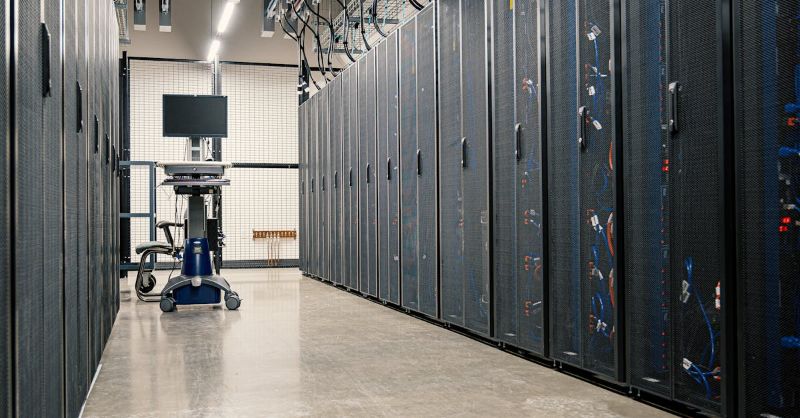
Use project quotas or reservations so production serving is not displaced by experiments. An orchestration layer such as OnePlus Platform can connect deployment workflows to GPU scheduling and workspace governance.
Release and observe
Deploy with a health check, latency target, error budget, and resource alerts. Track GPU memory, queue time, throughput, and application quality. Keep the previous version available and define who can trigger rollback.
Security for Private Model Serving
Private deployment can reduce exposure, but the endpoint still needs identity, network, and logging controls. Separate development and production data, limit operator access, protect model artifacts, and review backups and telemetry. For healthcare and financial workloads, align these controls with the organization’s compliance process.
OneSource Cloud’s Private AI Infrastructure can be evaluated when dedicated compute and U.S.-based data residency are requirements. The deployment design should document shared responsibility between the provider and the enterprise.
Performance and Lifecycle Management
Serving performance depends on more than GPU count. Batching, quantization, memory placement, storage latency, network paths, and concurrency all affect useful throughput. Measure with representative traffic and record a baseline before changing hardware or configuration.
Models and runtimes change over time. Plan for image updates, driver compatibility, capacity reviews, security patches, and decommissioning old versions. Managed operations can help maintain this lifecycle when the enterprise does not want to build every capability internally.
FAQ
How do you deploy a model on a private GPU cluster?
Package a reproducible runtime, validate hardware and data dependencies, assign governed GPU capacity, deploy through an approval path, and monitor health, latency, errors, and resource pressure. Keep a tested prior version for rollback.
What GPU infrastructure does model serving require?
Requirements depend on model size, precision, concurrency, latency target, and batching. Evaluate GPU memory, storage throughput, network path, and availability together rather than sizing only by accelerator count.
Is private model deployment more secure?
It can provide a clearer infrastructure and data boundary, but security still depends on identity, segmentation, patching, logging, backups, and support access. Validate controls against the workload’s risk and compliance scope.
Can managed AI infrastructure include model deployment?
Some managed services include deployment operations, monitoring, capacity planning, and lifecycle support. Confirm whether the provider manages the serving platform, runtime images, model release process, and incident response or only the underlying hardware.
Summary
Private GPU model deployment is a combined application and infrastructure process. Use reproducible packages, governed capacity, secure data paths, observable releases, and an explicit rollback and lifecycle plan to move models into reliable production service.
Next step: Review private GPU model deployment architecture with OneSource Cloud.
Related Articles
Recommended Reading
-
Google Cloud GPU Pricing: What Enterprise AI Teams Should Evaluate Before Provisioning
-
Paperspace Pricing 2026: GPU Cost Breakdown
-
CoreWeave Enterprise GPU Cloud: Evaluation for AI Teams
-
AI Infrastructure Costs: Controlling Enterprise GPU Spending
-
CoreWeave vs Lambda Labs: GPU Cloud Provider Comparison
latest articles
-
Self-Service GPU Access for Enterprise AI Teams
-
When to Run an LLM Privately for Production Inference
-
AI IaaS vs AI PaaS for GPU Workloads
-
NVIDIA DGX Cloud vs Hyperscalers for Training
-
MLOps vs ML Engineering Roles for AI Teams
-
How to Shed Load During LLM Inference Spikes
-
Draft Model Selection for Speculative Decoding
-
Router Models vs Rules-Based Routing for Inference
-
Do Checkpoint Downloads Count as Data Egress?
-
Why You Shouldn't Checkpoint to Local NVMe