
Financial Services AI Hosting on Low-Latency GPU Cloud
Financial services AI hosting is a dedicated high-performance compute environment optimized for sub-millisecond data ingest, deterministic inference latency, and strict audit compliance across quantitative trading and fraud detection workloads. In modern institutional capital markets, retail banking, and algorithmic asset management, machine learning models execute on massive streaming data feeds where milliseconds dictate profit or risk exposure. Standard public cloud multi-tenant instances introduce unpredictable latency jitter that can destabilize automated risk controls.
Deploying financial machine learning systems demands an infrastructure layer designed specifically for deterministic throughput and regulatory scrutiny. From SEC Rule 17a-4 electronic records preservation to FINRA algorithmic auditing requirements, financial institutions must prove that their compute clusters maintain physical hardware isolation, tamper-proof audit trails, and consistent sub-millisecond execution times.
Why Low-Latency Determinism Dictates Financial AI Success
In quantitative finance, latency distribution is more critical than average throughput. While a consumer web service tolerates occasional P99 latency spikes of 200 milliseconds, an algorithmic trading desk or credit card fraud gateway experiencing a 50-millisecond delay can suffer catastrophic slippage or fraudulent charge acceptance.
Public cloud virtualization introduces noisy-neighbor interference at multiple levels of the stack. Hypervisor context switching, shared PCI-e bus contention, and co-tenant network traffic create unpredictable latency tails. Dedicated GPU infrastructure eliminates hypervisor abstraction, granting financial models direct bare-metal access to accelerator cores and high-speed memory buffers.
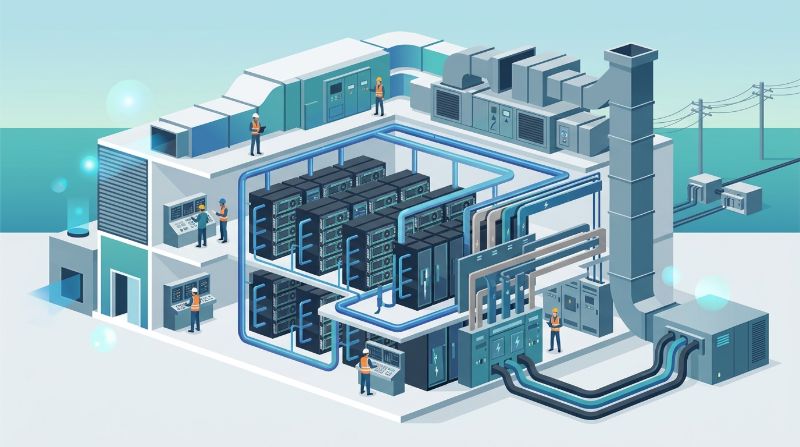
Furthermore, real-time transaction monitoring requires continuous stream-processing inference. Models assessing credit risk or detecting anomalies must ingest incoming SWIFT transactions or card authorization requests, evaluate multi-dimensional feature graphs, and return a binary approval decision within strict 50-millisecond total transaction budgets.
Architectural Comparison: Shared Cloud vs Dedicated FinTech GPU Infrastructure
Institutional finance engineering teams evaluate infrastructure across compute density, network topology, and compliance oversight.
| Architecture Dimension | Public Multi-Tenant Cloud | Dedicated Private FinTech GPU Cloud | Impact on Financial Operations |
|---|---|---|---|
| Network Fabric | Virtual overlay networks with packet encapsulation overhead | Direct RoCE v2 / InfiniBand fabrics with RDMA support | Sub-microsecond inter-node communication for distributed models |
| Latency Consistency (P99.9) | Unpredictable variance (±40ms to ±120ms spikes) | Flat, deterministic execution (±1.5ms variance) | Prevents execution slippage during high market volatility events |
| Audit Records & Immutability | Shared virtual log pools requiring external retention tools | Dedicated WORM-compliant storage with immutable audit trails | Directly satisfies SEC 17a-4 and FINRA regulatory examination |
| Data Residency Control | Dynamic resource allocation across distributed global zones | Contractually pinned to sovereign, verified U.S. data centers | Eliminates cross-border financial data sovereignty violations |
Networking Services: The Role of RDMA and InfiniBand in FinTech AI
When running ensemble models or distributed deep learning pipelines across multiple server nodes, traditional TCP/IP networking introduces unacceptable CPU overhead and kernel buffer copy delays. In high-frequency trading and risk environments, Remote Direct Memory Access (RDMA) is an operational necessity.
RDMA over Converged Ethernet (RoCE) and InfiniBand enable GPU accelerators in separate server chassis to read and write directly to each other's memory without involving the host operating system CPU. This architecture cuts inter-node communication latency from tens of microseconds down to sub-microsecond levels, allowing distributed fraud models to synchronize feature vectors in real time.
By pairing non-blocking network fabrics with dedicated optical interconnects, financial institutions eliminate network queue congestion, ensuring that critical risk scoring commands receive deterministic network priority even during market opening volume surges.
Institutional AI Deployment with OneSource Cloud
For investment banks, quantitative hedge funds, and fintech platforms requiring zero-compromise execution speed and rigorous compliance controls, OneSource Cloud provides dedicated infrastructure tailored for financial innovation.
Our Financial Services AI Infrastructure delivers dedicated, single-tenant GPU clusters hosted in tier-3 and tier-4 U.S. enterprise data centers located in major financial connectivity corridors. These environments eliminate noisy-neighbor interference and guarantee strict data residency.
Through High-Performance AI Networking, OneSource Cloud equips financial clusters with ultra-low-latency, non-blocking RDMA fabrics that ensure deterministic latency for critical inference pipelines. Integrated with Private AI Infrastructure, financial organizations secure complete operational sovereignty, predictable monthly budgets, and full compliance readiness for regulatory audits.
FAQ
Why does multi-tenancy introduce risk in financial AI workloads?
Multi-tenant architectures share physical CPUs, memory buses, network switches, and hypervisors across multiple independent corporate accounts. A sudden compute spike from an unrelated co-tenant can saturate the memory bus or network port, causing milliseconds of delay in time-critical risk evaluation or algorithmic order routing.
How does dedicated GPU hosting help with SEC and FINRA regulatory compliance?
Dedicated hosting provides physical hardware isolation, clear cryptographic boundaries, and immutable logging capabilities. Regulators require financial entities to prove the exact physical location of data, demonstrate that non-authorized entities cannot inspect model weights or customer financial records, and produce unaltered historical audit trails upon demand.
What is the difference between RoCE and standard Ethernet for financial AI?
Standard Ethernet requires the host CPU to process network packet headers and copy data into kernel buffers before passing it to the application, introducing variable latency and jitter. RoCE bypasses the CPU and operating system kernel, enabling direct memory-to-memory transfers between GPUs across the network fabric with microsecond determinism.
Can private GPU clusters integrate directly with on-premises banking core systems?
Yes. Private GPU clouds frequently establish dedicated private interconnects, such as direct cross-connects or encrypted dark fiber tunnels, directly linking the dedicated GPU cluster in the data center to on-premises core banking transaction ledgers with zero exposure to public internet transit.
Summary
In financial services AI, success hinges on the dual pillars of deterministic low-latency execution and uncompromising regulatory compliance. By transitioning critical quantitative models and real-time fraud detection systems to dedicated, high-performance private GPU infrastructure, financial institutions eliminate latency variance, safeguard proprietary algorithms, and maintain compliance leadership.
Related Articles
Recommended Reading
-
How Paged Attention Manages Inference KV Cache
-
Google Cloud GPU Pricing: What Enterprise AI Teams Should Evaluate Before Provisioning
-
Paperspace Pricing 2026: GPU Cost Breakdown
-
AI Infrastructure Costs: Controlling Enterprise GPU Spending
-
CoreWeave Enterprise GPU Cloud: Evaluation for AI Teams
-
CoreWeave vs Lambda Labs vs OneSource Cloud: GPU Provider Decision Guide
-
AWS GPU Pricing: Instance Types, Cost Structure & Alternatives Guide
-
CoreWeave Alternatives: Compare GPU Clouds
latest articles
-
Why US-Based Private GPU Clouds Protect Sovereign Data
-
AI Storage Architecture to Prevent GPU Data Starvation
-
Financial Services AI Hosting on Low-Latency GPU Cloud
-
HIPAA-Ready LLM Deployment on Dedicated Healthcare Clusters
-
Low-Latency Private Connections for Enterprise GPU Clouds
-
Dedicated GPU Support Requirements and SLA Architecture
-
Dedicated GPU Cloud TCO Breakdown vs Public Cloud Cost
-
24/7 AI Cluster Monitoring to Detect GPU Node Degradation
-
How to Calculate LLM Inference Cost Per Million Tokens
-
Cloud GPU Quota Limits and Multi-Team Capacity Planning