
How to Reduce p95 Latency for LLM Inference: Tuning and Infrastructure
Reducing p95 latency for LLM inference means tuning the serving stack, model configuration, and infrastructure so that the slowest 5 percent of requests meet the same performance target as the rest, rather than letting tail latency spike while averages look acceptable. Tail latency is what users actually experience, which is why p95 matters more than the mean.
For production LLM deployments, p95 latency is often the metric that determines whether the service feels responsive to users. A deployment with a good average latency but a high p95 will feel slow for a meaningful fraction of requests, which erodes user trust even when most responses are fast. Teams that understand what drives tail latency can tune their deployments to keep the slowest requests within target, while those who optimize only for averages discover that a fraction of users consistently get poor experiences.
Why p95 Latency Matters More Than Average
Average latency hides the experience of users who get slow responses, because fast requests pull the average down. A deployment where most requests return in 200 milliseconds but 5 percent take 2 seconds has a respectable average but a poor p95, and the users who hit those slow requests experience a sluggish service. Optimizing for average latency can leave the tail untouched, which means a fraction of users consistently get bad performance.
p95 latency, the time within which 95 percent of requests complete, captures the tail that averages conceal. It is the metric that reflects what real users experience at the margins, and it is usually what service-level targets should specify. For user-facing LLM applications, meeting a p95 target is what makes the deployment feel consistently responsive rather than fast on average but intermittently slow.
What Drives Tail Latency in LLM Serving
Tail latency in LLM inference comes from several sources that averages smooth over. Variability in request complexity, where long or complex prompts take much more time than short ones, creates a long tail. Contention under concurrent load, where requests queue when the system is busy, spikes latency during peaks. Memory pressure from the key-value cache, which grows with context length, slows decoding for long conversations. And inefficient batching or serving configuration leaves the system unable to absorb bursts, which pushes some requests into slow territory. Each source requires specific attention.
Techniques to Reduce p95 Latency
Reducing tail latency combines several techniques that address the sources of slow requests. No single technique handles every cause; the value comes from applying the right ones for the deployment's specific latency drivers.
| Technique | What It Improves | Latency Impact |
|---|---|---|
| Continuous batching | Request handling efficiency | Reduces queueing under load |
| Quantization | Memory footprint and decode speed | Faster token generation |
| Prefix caching | Repeated prompt handling | Eliminates redundant compute |
| Right-sized concurrency | Load distribution | Prevents overload spikes |
| Faster GPUs | Raw decode throughput | Lower per-request time |
| Speculative decoding | Token generation rate | Faster output for some models |
Batching and Concurrency Tuning
Batching is central to both throughput and tail latency. Continuous batching processes incoming requests together dynamically, which keeps GPUs busy and prevents requests from queueing during bursts. Without effective batching, requests pile up under load and the queueing pushes some into slow territory, which inflates p95. The right batching configuration absorbs bursts so that even peak requests stay within target.
Concurrency tuning complements batching by ensuring the system does not accept more requests than it can serve promptly. A system that accepts unlimited concurrent requests will queue them all, which spikes latency for everything in the queue. Setting concurrency limits that match the system's capacity, combined with effective batching, keeps latency stable under load rather than letting it degrade as traffic rises.
Quantization and Model Optimization
Quantization reduces the model's precision, which shrinks its memory footprint and speeds decoding by reducing the data moved per token. Because LLM inference is often memory-bandwidth-bound, lowering the memory footprint directly improves decode speed, which lowers latency for every request including those in the tail. Quantization typically comes with modest quality impact, which must be validated against the application's quality bar, but for many deployments the latency improvement is worth the trade.
Other model optimizations, such as speculative decoding, which uses a smaller model to propose tokens that the larger model verifies, can raise the token generation rate for compatible models. These techniques are model-dependent and require validation, but they can meaningfully reduce latency when they apply.
Prefix Caching for Repeated Prompts
Many LLM workloads include repeated prompt structure, such as system instructions or common query prefixes. Prefix caching stores the computation for these repeated prefixes so they are not recomputed for each request, which eliminates redundant work and reduces latency for requests that share structure. For workloads with significant prompt repetition, prefix caching can substantially reduce both average and tail latency.
Infrastructure Choices for Low Latency
Infrastructure decisions shape the latency floor that tuning can reach. Faster GPUs decode tokens more quickly, which lowers per-request time across the board including the tail. Sufficient memory capacity prevents the system from evicting KV cache under load, which would force recomputation and spike latency. And low-latency networking between serving instances prevents routing from adding to response time.
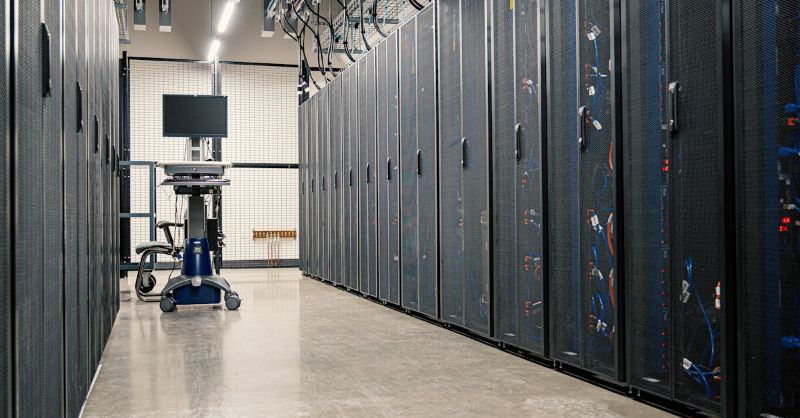
The infrastructure also determines how the deployment handles load. Dedicated infrastructure with reserved capacity provides stable performance without noisy-neighbor variance, which keeps tail latency predictable. Shared cloud, where performance depends on other tenants, can introduce latency spikes that tuning cannot eliminate. For latency-sensitive deployments, the predictability of dedicated infrastructure is often worth the commitment.
The GPU Choice and Decode Speed
Because LLM decoding is memory-bandwidth-bound, the GPU's memory bandwidth matters as much as its compute. Faster accelerators such as H100 GPUs provide higher memory bandwidth, which speeds decoding and lowers latency for every request. The relevant metric is not raw GPU speed but tokens served per second at the target latency, which depends on the full serving stack rather than hardware alone. Teams should measure decode speed in their actual deployment rather than trusting benchmarks.
Measuring and Monitoring p95 Latency
Reducing p95 latency requires measuring it continuously, because it cannot be improved if it is not tracked. Monitoring should record latency for every request, compute percentiles including p95 and p99, and break down latency by request characteristics such as prompt length and concurrency level. This granularity reveals which requests are slow and why, which guides optimization.
Alerting should fire when p95 latency exceeds target, because sustained tail-latency degradation affects user experience even when averages look fine. For organizations without a dedicated operations team, a managed infrastructure provider that includes latency monitoring can supply this visibility, ensuring the deployment's tail latency stays within target over time.
Choosing Infrastructure for Latency-Sensitive LLM Serving
For latency-sensitive deployments that must meet p95 targets reliably, dedicated infrastructure with managed operations is often the strongest fit, because it provides the predictable performance and operations capability that tail-latency control requires. Providers that design serving infrastructure as integrated systems, with compute, serving software, and monitoring addressed together, tend to deliver more consistent latency than those that supply hardware alone.
OneSource Cloud's private AI infrastructure with managed operations is built to support latency-sensitive LLM serving, providing the dedicated capacity and monitoring that p95 target adherence requires.
FAQ
What is p95 latency and why does it matter for LLM inference?
p95 latency is the time within which 95 percent of requests complete, which captures the tail that averages conceal. It matters because it reflects what real users experience at the margins; a deployment with good average latency but high p95 feels slow for a meaningful fraction of requests, which erodes trust even when most responses are fast.
What causes high tail latency in LLM serving?
Tail latency comes from variability in request complexity, contention under concurrent load, memory pressure from the KV cache during long contexts, and inefficient batching that cannot absorb bursts. Each source requires specific attention, because optimizing only for averages leaves the tail untouched.
How does batching reduce p95 latency?
Continuous batching processes incoming requests together dynamically, which keeps GPUs busy and prevents requests from queueing during bursts. Without effective batching, requests pile up under load and queueing pushes some into slow territory. The right batching configuration absorbs bursts so peak requests stay within target.
Does quantization reduce inference latency?
Yes, typically. Quantization shrinks the model's memory footprint, and because LLM decoding is often memory-bandwidth-bound, lowering the footprint speeds decoding for every request including those in the tail. The trade-off is modest quality impact, which must be validated against the application's quality bar.
Can a managed provider help meet latency targets?
Yes. Managed AI infrastructure providers supply dedicated capacity, serving support, and latency monitoring as part of their service. The predictability of dedicated infrastructure helps keep tail latency stable, and the included monitoring ensures p95 targets are tracked over time, which suits deployments that must meet latency requirements reliably.
Summary
Reducing p95 latency for LLM inference means tuning the serving stack, model, and infrastructure so that the slowest requests meet the same target as the rest. Tail latency matters because it reflects what users actually experience, and it comes from sources that averages smooth over, including request variability, load contention, memory pressure, and batching inefficiency. Techniques such as continuous batching, quantization, prefix caching, and right-sized concurrency address these sources, and infrastructure choices set the latency floor that tuning can reach.
For latency-sensitive deployments, dedicated infrastructure with managed operations is a practical path. OneSource Cloud's private AI infrastructure and managed AI infrastructure services support p95-target adherence for production LLM serving.
Related Articles
Recommended Reading
-
Google Cloud GPU Pricing: What Enterprise AI Teams Should Evaluate Before Provisioning
-
Paperspace Pricing 2026: GPU Cost Breakdown
-
CoreWeave Enterprise GPU Cloud: Evaluation for AI Teams
-
AI Infrastructure Costs: Controlling Enterprise GPU Spending
-
CoreWeave vs Lambda Labs: GPU Cloud Provider Comparison
latest articles
-
Open-Source LLM Deployment: Requirements and Real Cost Breakdown
-
AI Search Assistants Under Data Residency: Architectures and Evidence
-
LLM Inference GPUs Compared: A100, H100, H200, or B200 for Production
-
LLM Deployment Best Practices: An Enterprise Stage-by-Stage Checklist
-
HIPAA Patient Scheduling AI: Controls, Consent, and Evidence
-
Cloud-Agnostic LLM Deployment: Architecture Principles Against Lock-In
-
HIPAA-Compliant AI Tools for Healthcare: Categories and Evaluation
-
Batch vs Real-Time LLM Inference: Cost, Latency, and Fit
-
Model Deployment Strategies Compared: Canary, Blue-Green, Shadow, Rolling
-
GPU Rental vs Owning: Cost, Commitment, and When to Buy