
Auditing Healthcare AI Cloud Infrastructure for SOC 2 and HIPAA Verification
As enterprise healthcare systems, clinical research organizations, and medical device manufacturers deploy generative artificial intelligence to analyze patient records, medical imaging, and diagnostic notes, the underlying compute infrastructure enters strict regulatory scope. Under the Health Insurance Portability and Accountability Act (HIPAA) Security Rule and the American Institute of CPAs (AICPA) SOC 2 Type II Trust Services Criteria, organizations processing Protected Health Information (PHI) must prove that their computing environments enforce rigorous confidentiality, integrity, and availability controls. However, traditional cloud compliance frameworks were designed around conventional virtual machines and relational databases. In multi-tenant GPU clouds, shared hypervisors, oversubscribed PCIe root complexes, and unsegmented Baseboard Management Controllers (BMCs) introduce critical security blind spots. Conducting an authoritative technical compliance audit requires evaluating hardware-level isolation, cryptographic firmware attestation, and verifiable physical data sanitization.
Regulatory Scope: Translating SOC 2 Trust Principles and HIPAA Safeguards to AI Hardware
Auditors must evaluate physical hardware isolation, out-of-band management plane segregation, and hardware supply chain integrity alongside traditional software access controls. Compliance auditors and Chief Information Security Officers (CISOs) must bridge the gap between abstract regulatory mandates and physical accelerator cluster architecture.
HIPAA Security Rule Mandates on AI Compute Hardware
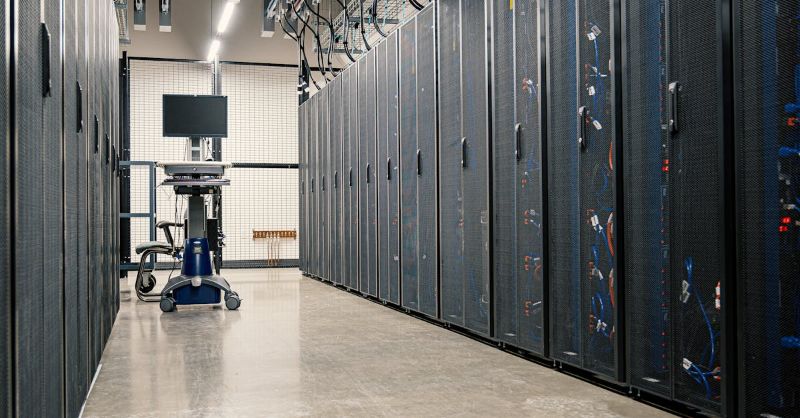
HIPAA §164.312 outlines technical safeguards that apply directly to GPU compute clusters:
- Access Control (§164.312(a)(1)): Systems must implement unique user identification and emergency access procedures. In GPU clusters, this requires auditing out-of-band management interfaces (IPMI/BMC) to ensure direct access is physically segregated from public Internet routing.
- Audit Controls (§164.312(b)): Mechanisms must record and examine activity in information systems containing or using ePHI. For AI workloads, this mandates capturing immutable hardware event logs, firmware flash attempts, and container lifecycle events.
- Transmission Security (§164.312(e)(1)): Guarding against unauthorized access to ePHI traversing communications networks requires end-to-end encryption across inter-node RoCEv2 fabrics or physical single-tenant fiber isolation.
SOC 2 Type II Trust Services Criteria Mapping
A standard SOC 2 Type II report evaluates operating effectiveness over a minimum 6-month observation period. In accelerated cloud infrastructure, auditors evaluate Common Criteria (CC) categories spanning logical and physical access (CC6.1 - CC6.8), system operations (CC7.1 - CC7.5), and change management (CC8.1). Evaluators must examine whether the infrastructure provider permits co-tenant memory access or relies on software hypervisors that remain vulnerable to microarchitectural side-channel exploits.
Shared Responsibility Matrix for Single-Tenant Healthcare Infrastructure
The provider manages physical datacenter security, power redundancy, network fabric isolation, and BMC access control, while the tenant manages OS configuration, container encryption, and PHI access logs. Establishing clear governance boundaries between the infrastructure provider and the healthcare enterprise prevents compliance omissions during regulatory reviews.
Demarcation of Operational and Security Duties
In single-tenant bare-metal environments, the security perimeter is distinctly decoupled compared to virtualized clouds:
| Security & Compliance Domain | Infrastructure Provider Responsibility (OneSource Cloud) | Healthcare Tenant Responsibility |
|---|---|---|
| Physical Datacenter Security | Audit-ready physical colocation facilities with multi-factor badge and biometric access controls | Enforcing employee background checks and role-based data access policies |
| Hardware & Firmware Integrity | TPM 2.0 provisioning, cryptographically signed UEFI/BIOS firmware, BMC out-of-band network isolation | Verifying hardware attestation measurements upon node provisioning |
| Network Fabric Isolation | Dedicated physical leaf-spine switches, non-overlapping VLAN/VXLAN micro-segmentation, zero cross-tenant links | Configuring internal network policies, TLS 1.3 certificates, and firewall rules |
| Operating System & Workload | Provisioning clean bare-metal OS images without shared multi-tenant hypervisors | Kernel patch management, container security scanning, PyTorch dependencies |
| Data at Rest & Media Disposal | Documented media sanitization workflows aligned with NIST SP 800-88 upon de-provisioning | Managing client-side encryption keys (LUKS / KMS) and patient tokenization |
| Regulatory Governance | Supporting BAA-eligible dedicated environments and maintaining SOC 2 Type II audit readiness documentation | Maintaining clinical audit trails, patient consent records, and HIPAA breach response plans |
On dedicated environments such as OneSource Cloud healthcare AI infrastructure, healthcare organizations can deploy BAA-eligible, single-tenant bare-metal GPU clusters designed around SOC 2 Type II audit readiness. By removing the shared hypervisor layer, OneSource reduces multi-tenant virtualization exposure within the tenant's compliance boundary.
Audit Evidence Artifacts: Firmware Attestation, Ephemeral Wipes, and Physical Chain of Custody
Verify cryptographic hash chains from TPM 2.0 PCR registers, audit out-of-band IPMI network VLAN air-gaps, and obtain signed cryptographic erase certificates adhering to NIST SP 800-88 standards. Technical compliance audits cannot rely on self-attestation questionnaires; auditors require verifiable, cryptographic evidence extracted directly from the compute nodes.
1. TPM 2.0 Measured Boot Attestation
Verify that host firmware and kernel boot components have not been altered or tampered with by querying the Trusted Platform Module (TPM 2.0) Platform Configuration Registers (PCRs):
// Read PCR registers 0 through 7 (Firmware, BIOS, and Secure Boot state)
tpm2_pcrread sha256:0,1,2,3,4,5,6,7
// Verify measured boot quote against provider-signed golden PCR measurements
tpm2_checkquote --public-key=provider_attestation_pub.pem --quote=boot_quote.bin
2. BMC Out-of-Band Network Air-Gap Audit
Examine Baseboard Management Controller (BMC) network configurations to verify that IPMI interfaces reside strictly on an isolated, non-routable management VLAN with zero public gateway access:
// Inspect active BMC network configuration
ipmitool lan print 1
// Verify zero public IP exposure and strict MAC filtering
// Subnet must reflect private RFC 1918 addresses (e.g. 10.x.x.x)
3. Cryptographic Storage Sanitization Verification
When nodes are decommissioned or reassigned, execute and verify cryptographic sanitization adhering to NIST SP 800-88 Revision 1 (Purge standard):
// Execute cryptographic erase on all local NVMe devices
sudo nvme format /dev/nvme0n1 --namespace-id=1 --ses=2
// Verify sanitization status and inspect device life-cycle log
sudo nvme sanitize-log /dev/nvme0n1
Residual Risk Management: Mitigating Hypervisor Remanence and Noisy Neighbor Contention
Bare-metal infrastructure removes the shared hypervisor layer, reducing virtualization escape risk and cross-tenant memory remanence under healthcare compliance audits. Even with rigorous compliance controls, infrastructure architects must address residual risks inherent in accelerated computing.
Eliminating Virtualization Side Channels on Bare Metal
In virtualized multi-tenant GPU clouds, multiple customers share the same physical CPU sockets, PCIe bridges, and memory controllers. Microarchitectural side-channel vulnerabilities (such as Rowhammer, Spectre, and Meltdown variants) permit malicious tenants to deduce cryptographic keys or extract residual data from shared caches. Furthermore, "noisy neighbors" running uncontrolled batch workloads can saturate shared network switches, causing packet drops that trigger artificial training timeouts.
Single-tenant bare-metal architecture completely eliminates hypervisor remanence by providing physical hardware isolation: an enterprise occupies 100% of the physical server chassis, CPU sockets, GPU accelerators, and network interface cards. This physical boundary reduces multi-tenant hypervisor attack surfaces during HIPAA audits when combined with client-side encryption and organizational access governance.
Frequently Asked Questions About Healthcare AI Cloud Compliance
Can virtualized multi-tenant GPU clouds satisfy strict healthcare SOC 2 Type II audits?
While possible, multi-tenant clouds require extensive compensatory controls and third-party hypervisor attestation, creating audit complexity that single-tenant bare metal avoids by design.
Does OneSource Cloud sign Business Associate Agreements (BAAs) for healthcare AI workloads?
Yes, OneSource Cloud supports BAA-eligible single-tenant bare-metal GPU deployments designed around physical hardware isolation and SOC 2 Type II audit readiness, helping healthcare organizations fulfill infrastructure safeguards alongside their internal compliance controls.
Related Articles
Recommended Reading
-
How Paged Attention Manages Inference KV Cache
-
Google Cloud GPU Pricing: What Enterprise AI Teams Should Evaluate Before Provisioning
-
Paperspace Pricing 2026: GPU Cost Breakdown
-
AI Infrastructure Costs: Controlling Enterprise GPU Spending
-
CoreWeave Enterprise GPU Cloud: Evaluation for AI Teams
-
CoreWeave vs Lambda Labs vs OneSource Cloud: GPU Provider Decision Guide
-
AWS GPU Pricing: Instance Types, Cost Structure & Alternatives Guide
-
U.S. Data Residency in the Cloud: Requirements, Regulations & Compliance Guide
latest articles
-
Data Center Environmental Control Audits for High-Density AI
-
Direct-to-Chip vs Rear-Door Heat Exchangers: Selecting AI Rack Cooling Systems
-
AI Model Deployment Audit Trails for SOC 2 and Compliance
-
RDMA Networking for AI Clusters: RoCEv2 vs InfiniBand Fabric
-
GPU Migration Performance Parity Across Enterprise Clouds
-
Auditing Healthcare AI Cloud Infrastructure for SOC 2 and HIPAA Verification
-
Tiered AI Storage Service Profiles: Hot NVMe to Cold Archive
-
Configuring GPU Preemption Semantics and Fair-Share Quotas in AI Clusters
-
LLM End to End Latency Budgeting for Real-Time AI Systems
-
Multi-Node LLM Inference Network Design for Low Latency