
GPU Cloud for Life Sciences Research: Workloads and Controls
GPU cloud for life sciences research is dedicated accelerated compute used for genomics, drug discovery, molecular simulation, and clinical-data analysis, where the workloads are bursty and data-heavy and the controls center on isolation, data residency, and reproducibility rather than the latency metrics that govern other industries. The fit depends on matching the compute model to research demand patterns and the controls to the data's sensitivity.
Life sciences teams — pharma, biotech, academic medical research — adopt GPU cloud when their compute demand outgrows on-campus clusters or when they need capabilities, residency, or isolation their existing environment cannot provide. The decision is workload- and data-specific.
Life Sciences Workload Patterns
Genomics and Sequence Analysis
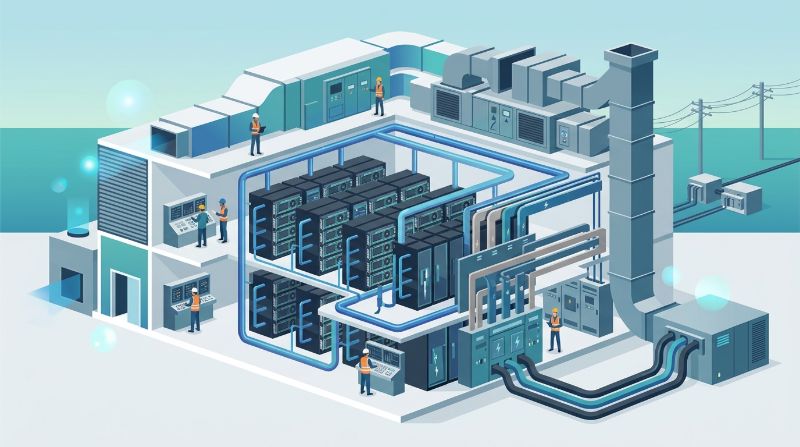
Genomics workloads process large datasets — sequencing reads, variant calls, assembly — and benefit from GPU acceleration for alignment and variant calling. The pattern is batch-oriented and data-heavy: large inputs, substantial compute, and outputs that feed downstream analysis. Storage throughput for reading and writing large genomic files is often the binding constraint, alongside enough GPU capacity to process batches in research timeframes.
Drug Discovery and Molecular Simulation
Drug discovery uses GPU compute for molecular dynamics, docking, and increasingly for AI-based property prediction and generative chemistry. These workloads are compute-intensive and often run for long stretches, with intermediate checkpoints that must be preserved. The pattern rewards sustained capacity and reliable checkpointing, because a lost long simulation is expensive wasted compute.
Clinical and Biomedical AI
Where life sciences research touches clinical data — imaging, electronic health records, trial data — the workload inherits clinical data's sensitivity and regulatory constraints. AI models trained on clinical data require isolation, residency, and audit controls that general research compute does not. This is the boundary where life sciences research computing overlaps with healthcare AI infrastructure requirements.
Controls Life Sciences Research Needs
Isolation for Proprietary and Sensitive Data
Life sciences data is often proprietary — discovery data, compound libraries, candidate models — and sometimes regulated. Isolation ensures one program's data is not exposed to another's or to the provider's broader environment, which matters for both intellectual property and compliance. Single-tenant or dedicated capacity removes the cross-tenant surface that shared infrastructure carries, which is why research programs handling competitive discovery data favor private GPU cloud models.
Data Residency for Trial and Clinical Data
Clinical trial data and regulated research data carry residency obligations that dictate where the data can be stored and processed. A GPU cloud that supports life sciences must enforce a residency boundary covering primary storage, backup, and support paths, with evidence the research team can produce for sponsors and regulators. Vague residency claims are insufficient for data that sponsors and oversight bodies will audit.
Reproducibility and Provenance
Research demands reproducibility: a result should be reproducible from its inputs, code, and environment. GPU cloud for life sciences should support environment versioning, dataset provenance, and checkpoint preservation, so a result can be regenerated and defended. This is less critical in production serving and more critical in research, where a finding's credibility depends on reproducibility. Storage architecture that preserves datasets and checkpoints reliably underpins this requirement.
Matching the Compute Model to Research Demand
Life sciences research demand is often bursty — a sequencing run, a simulation campaign, a model training push — interspersed with quieter periods. This pattern can favor elastic cloud for bursts, but the data-heavy nature of the workloads means data gravity often anchors them to where the data lives. A common model runs sustained analysis on dedicated capacity and bursts to elastic capacity for peaks, with the data boundary preserved across both.
For multi-team research organizations — multiple labs or programs sharing compute — quota management and workload scheduling let the shared resource serve competing demands fairly, rather than letting one program's campaign crowd out others. A platform layer that provides these controls turns shared research compute into a governed resource.
What to Verify in a Life Sciences GPU Cloud
Confirm the isolation model for proprietary and sensitive data, the residency boundary for trial and clinical data, and the reproducibility support — environment versioning, provenance, checkpoint reliability. For workloads touching clinical data, verify the compliance posture and any BAA scope. Ask how the provider handles the bursty demand pattern and whether it supports multi-team scheduling. A provider that serves life sciences should answer these concretely, not generically.
FAQ
How is life sciences GPU cloud different from healthcare AI infrastructure?
They overlap where research touches clinical data, but the emphasis differs. Healthcare AI infrastructure centers on PHI and clinical deployment; life sciences GPU cloud centers on research workloads — genomics, drug discovery, simulation — where proprietary discovery data and reproducibility matter most. A program doing clinical AI needs healthcare controls; a program doing discovery research needs life sciences controls, and some need both.
Does life sciences research need single-tenant GPU?
Often yes, for proprietary discovery data and competitive IP, even where the data is not strictly regulated. Single-tenant capacity removes the cross-tenant exposure that shared infrastructure carries, which protects compounds, models, and findings that represent significant investment. For purely open-data research, shared infrastructure may suffice.
How do bursty research workloads fit a dedicated capacity model?
A hybrid model handles this: sustained analysis on dedicated capacity, with bursts to elastic capacity for peaks. The key is preserving the data boundary across both, so burst compute does not move sensitive data outside its residency zone. This captures dedicated capacity's cost and control benefits for the baseline while retaining elasticity for peaks.
What reproducibility features should we require?
Environment versioning, dataset provenance, and reliable checkpoint preservation. A result should be regenerable from its recorded inputs, code version, and environment, with checkpoints intact. Without these, a finding cannot be defended against a reproducibility challenge, which undermines its research value regardless of the compute that produced it.
Summary
GPU cloud for life sciences research serves genomics, drug discovery, and clinical-data workloads that are bursty and data-heavy, with controls centered on isolation for proprietary data, residency for trial and clinical data, and reproducibility for defensible findings. Matching the compute model to research demand and the controls to data sensitivity is what makes the fit work. Life sciences teams can validate their requirements through an OneSource Cloud research compute review.
Related Articles
Recommended Reading
latest articles
-
GPU Hardware Spares and RMA: Fleet Logistics and Downtime Risk
-
AI Infrastructure Energy Reporting: What Enterprises Should Measure
-
Balanced Bandwidth per GPU: Sizing Cluster Networks for LLM Training
-
Model Flops Utilization: Why Training Efficiency Collapses and How to Fix It
-
How Much Spare GPU Capacity Inference Needs for Failover
-
Multi-Cloud GPU Management Overhead: The Hidden Cost of Split Estates
-
ITAR vs CUI for GPU Hosting: Controls That Actually Differ
-
RAG Corpus Refresh: Reindexing, Re-Embedding, and Freshness Operations
-
How to Cut LLM Latency Without Buying More GPUs
-
Batch vs Real-Time LLM Inference: When to Batch and What It Saves