
What Is the Difference Between Deployment and Inference Serving
Quick Answer: Model deployment is a release process that makes a frozen version live, and inference serving is a runtime job that answers requests against that version. Packaging, registry, rollout, and rollback belong to deployment. Queues, token streams, and SLO burn belong to serving.
Enterprise teams mix the two words when a notebook “goes live.” A digest on a route is a deployment result. A p95 first-token miss is a serving result. Different owners, artifacts, and clocks apply to each job.
This comparison stays definitional. It does not walk a production serving checklist. It names what each job is, who typically owns it, and what fails when one ticket tries to cover both.
How do deployment and inference serving differ?
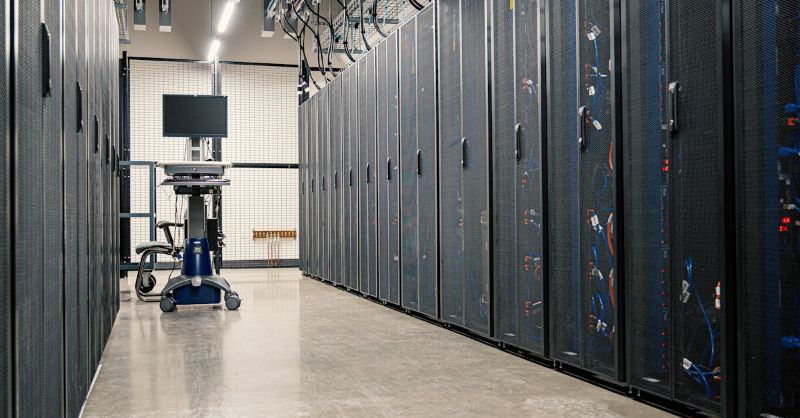
Start with the object that changes. Deployment changes which artifact the route points at. Inference serving changes nothing about the artifact; it spends GPU time answering prompts, sessions, or scoring jobs against whatever is already live.
| Dimension | Deployment | Inference serving |
|---|---|---|
| Job | Make a named version live on a route | Run requests against the live version |
| Primary object | Packaged artifact, manifest, and route weight | In-flight request, queue, and replica health |
| Typical artifacts | Digest, eval packet, approval, rollout plan, rollback pin | SLO, admission policy, traces, cache state, replica ready probe |
| Clock | A release event with a start and a declared done | A continuous runtime that never “finishes” |
| Owner | Release, MLOps, or platform change control | Serving SRE, product SLO, or on-call for tails |
| Success signal | The intended digest is live and reversible | Requests complete inside the latency and error budget |
| Common failure | Wrong digest, untested route, no rollback owner | Queue stall, memory exhaustion, tail-latency miss |
The same GPU pool can host both jobs. That does not merge them. A successful deploy can still leave serving broken if replicas are not ready. Healthy serving of yesterday’s digest is not today’s deploy.
What does model deployment include?
Deployment is the work that takes a version from “exists in storage” to “the gateway will send traffic to it.” The version must be frozen. A floating latest tag is not a deployable object because no one can say what went live or what to revert.
Four pieces usually sit inside the deployment job:
- Package: weights, tokenizer, chat template, and engine pin travel as one immutable digest so a later incident can name the object.
- Registry: the digest, eval scores, license notes, and intended environment are recorded before any route change, not after a user complaint.
- Rollout: traffic moves by weight, canary share, or blue-green cut, and a named person can stop the move.
- Rollback: the previous digest stays warm enough that revert is a route change, not a cluster rebuild.
Approval is part of deployment when more than one team can break production. It answers “may this digest become the live version,” not “is the GPU busy.” If the registry cannot show who approved the current route, you have a hope, not a deployment record. An AI infrastructure platform can hold the registry entry, the rollout weight, and the rollback pin. That is where the job runs. The job is still “make this version live.”
What does inference serving include?
Inference serving starts after a version is already live. The serving job is to admit a request, run it on a ready replica, and return tokens, scores, or embeddings under a written SLO. Serving does not decide which digest is current. It consumes the digest the last deploy left on the route.
Serving work is request-shaped. Admission, batching, cache occupancy, replica readiness, and tail latency are serving concerns. A replica that has not loaded weights is not serving, even if the deploy ticket is closed. A replica that is serving the wrong digest is a deployment defect, even if latency looks healthy.
Serving Decision Matrix: Enterprise LLM Inference Infrastructure
| Serving Infrastructure Model | Compute & Memory Contention | P99 Tail Latency Predictability | Multi-GPU Tensor Parallelism Support | Optimal Enterprise Workload Fit |
|---|---|---|---|---|
| Shared Multi-Tenant Model APIs | Multi-tenant shared workers; opaque resource pooling | Severe tail latency jitter during peak concurrency spikes | Black-box; no control over model parallelism or KV cache sizing | Low-volume prototyping or asynchronous background tasks |
| Virtualized Cloud GPU Instances | Hypervisor vGPU slices subject to CPU/PCIe interrupts | Moderate jitter caused by neighboring tenant network bursts | High inter-node latency limits multi-GPU tensor scaling (TP=4/TP=8) | General internal apps with modest throughput requirements |
| OneSource Dedicated Private GPUs | Dedicated bare-metal hardware with 100% VRAM & compute reservation | Deterministic microsecond P99 response times under peak load | Dedicated RoCE v2 RDMA fabric enables low-latency TP=4/TP=8 scaling | Mission-critical, low-latency, regulated enterprise production serving |
Product teams often ask serving to “just take the new model.” That sentence hides a deploy. Serving can only take a model that deployment already placed. If you need exclusive cards so a training sweep cannot evict the live replica, that isolation is an environment choice, often on private AI infrastructure. Isolation does not perform the deploy. It bounds the pool serving will use.
Who owns each job, and what fails when they merge?
Ownership follows the clock. Deployment has a change owner and a freeze window. Serving has an on-call who pages on SLO burn. When one person holds both titles with no artifacts, every incident becomes an argument about whether the model or the runtime is at fault.
Merge failures look like these:
- One ticket named “deploy inference” that closes when the process starts, so no one owns the first-token SLO after lunch.
- A serving on-call who cannot revert the digest because rollback was never a deployment artifact.
- A platform change that swaps the engine during a “config tweak,” which is a new deploy with no eval packet.
- A notebook URL treated as production because tokens come back, with no registry row and no rollback pin.
- A capacity add treated as a deploy, even though the live digest never changed.
Regulated programs split the jobs for evidence. Deployment evidence is the digest, approver, and route history. Serving evidence is traces, admission rejects, and SLO reports. Auditors who ask “what is in production” want the deployment packet. Users who wait on a spinner are in the serving job. Cost splits the same way: release labor and warm standbys versus continuous GPU hours. Folding both into “inference spend” hides the lever. Dedicated capacity on the OneSource Cloud homepage changes the serving pool, not the meaning of a deploy.
FAQ
What is the difference between deployment and inference serving?
Deployment makes a frozen version the live target of a route. Inference serving runs requests against whatever that route already points to. One is a release event with package, registry, rollout, and rollback. The other is a continuous runtime with admission, replicas, and SLOs. A version can be deployed and still fail serving. Serving can be healthy on an old digest that nobody meant to keep.
Is model serving the same as model deployment?
No. Serving is the runtime that answers requests. Deployment is the change that selects which artifact that runtime will load. Teams reuse “serving” for both because the endpoint is the visible thing. If you cannot name the digest, the approver, and the revert path, you are talking about serving a mystery object, not about a completed deploy. Keep the words separate in tickets and runbooks.
Who should own deployment versus inference serving?
Give deployment to the group that can freeze an artifact and change a route: MLOps, platform, or a release manager. Give serving to the group that pages on latency, errors, and replica readiness: SRE or a product on-call. The same engineer may wear both hats on a small team. The artifacts still split. One person holding two unlabeled jobs is how rollback disappears during an incident.
What happens if serving starts before a rollout finishes?
Users hit a mix of digests, or they hit replicas that are live in the registry but not ready in memory. Session affinity breaks, eval gates no longer match what people saw, and rollback becomes a guess about which replica is which. Serving should admit traffic only to replicas that finished the deploy contract: intended digest loaded, probe passed, previous version still pinned. Starting the queue early is not a shortcut. It is a mixed-version outage.
Does inference serving cost more than deployment?
Usually, because serving burns GPU hours every hour the endpoint is up. Deployment burns a burst: packaging, eval, canary replicas, and a warm standby. The expensive mistake is paying serving prices for an unfinished deploy, such as leaving a canary at 100 percent with no abort rule. Measure release cost per change and serving cost per successful request separately. One invoice line labeled “inference” will not tell you which job slipped.
Why deploy latency-sensitive LLM inference on OneSource private GPUs?
OneSource private GPU infrastructure delivers 100% dedicated bare-metal compute and VRAM, completely isolated from cross-tenant contention. This eliminates hypervisor scheduling jitter and shared-network packet collisions, ensuring deterministic P99 tail latency, sustained token throughput, and optimal tensor parallel scaling for production enterprise LLM serving.
Summary
Deployment makes a version live. Inference serving runs requests against that live version. Keep package, registry, rollout, and rollback on the deployment side. Keep admission, replicas, and SLOs on the serving side. When one ticket or one slang word covers both, you lose the owner, the artifact, and the clock that each job needs.
Related Articles
Recommended Reading
-
Google Cloud GPU Pricing: What Enterprise AI Teams Should Evaluate Before Provisioning
-
Paperspace Pricing 2026: GPU Cost Breakdown
-
CoreWeave Enterprise GPU Cloud: Evaluation for AI Teams
-
AI Infrastructure Costs: Controlling Enterprise GPU Spending
-
CoreWeave vs Lambda Labs: GPU Cloud Provider Comparison
latest articles
-
Open-Source LLM Deployment: Requirements and Real Cost Breakdown
-
AI Search Assistants Under Data Residency: Architectures and Evidence
-
LLM Inference GPUs Compared: A100, H100, H200, or B200 for Production
-
LLM Deployment Best Practices: An Enterprise Stage-by-Stage Checklist
-
HIPAA Patient Scheduling AI: Controls, Consent, and Evidence
-
Cloud-Agnostic LLM Deployment: Architecture Principles Against Lock-In
-
HIPAA-Compliant AI Tools for Healthcare: Categories and Evaluation
-
Batch vs Real-Time LLM Inference: Cost, Latency, and Fit
-
Model Deployment Strategies Compared: Canary, Blue-Green, Shadow, Rolling
-
GPU Rental vs Owning: Cost, Commitment, and When to Buy