
Dedicated GPU Cloud Support Models and Cost Governance Frameworks
As enterprise artificial intelligence investments scale into continuous multi-million-dollar operational expenditures, infrastructure procurement and engineering leadership face dual governance imperatives: ensuring round-the-clock operational support for high-density accelerator clusters while maintaining rigorous financial predictability. In modern distributed AI computing, technical support cannot be treated as a secondary helpdesk ticketing queue. When a multi-node distributed training run stalls due to an uncorrectable SRAM ECC error, a flapping optical transceiver, or a degraded PCIe bus, standard enterprise tier-1 support workflows—requiring multiple ticket escalations, business-day email exchanges, and generic script reading—result in hundreds of thousands of dollars in lost engineering momentum. Establishing operational excellence requires partnering with a dedicated GPU cloud provider that delivers direct Level-3 engineering access, 24/7 proactive hardware telemetry, and transparent, all-inclusive cost governance frameworks.
The Operational Pitfalls of Conventional Cloud Support Models
Public cloud hyperscalers and commodity hosting vendors package their support services into tiered commercial add-ons that fail to address the realities of high-performance AI infrastructure:
- Opaque Tiered Escalation Queues: Hyperscaler enterprise support plans (often costing tens of thousands of dollars per month) route critical cluster incidents through generic tier-1 helpdesks. By the time an incident escalates to a qualified systems engineer who understands NVIDIA Data Center GPU Manager (DCGM) counters or RoCE v2 flow control, hours or days of compute cycles have been squandered.
- Hidden Consulting and Professional Services Surcharges: Generic colocation and hosting vendors frequently separate basic rack hosting from operational management, levying steep hourly consulting fees for essential operational tasks such as CUDA driver updates, fabric tuning, and firmware upgrades.
- Variable Invoice Volatility: Traditional cloud billing models compound operational complexity with unpredictable secondary charges—including variable bandwidth egress fees ($0.05–$0.09/GB), high-IOPS storage tier premiums, and multi-tenant cross-zone network charges—destroying budget predictability.
Foundations of Enterprise Dedicated GPU Support and Cost Governance
An enterprise-grade support and financial governance model must integrate four core structural pillars into the primary hosting agreement:
- Direct Level-3 Engineering Escalation Pathways: Enterprise AI teams must be granted direct, real-time access to senior datacenter infrastructure and network engineers via dedicated Slack or Microsoft Teams channels, bypassing generic ticket queues and establishing immediate engineering-to-engineering collaboration.
- 24/7 Proactive Hardware Telemetry and Automated Remediation: The provider's Network Operations Center (NOC) must continuously harvest sub-second DCGM metrics, IPMI/BMC sensor feeds, and optical switch telemetry. Automated diagnostic systems must detect pre-fail hardware anomalies (such as single-bit memory ECC drift or thermal throttling) and proactively isolate degrading nodes before distributed training fails.
- Contractual Mean Time to Repair (MTTR) with Dedicated Hot Spares: The hosting provider must contractually guarantee an under-15-minute physical node replacement window, maintaining dedicated, pre-provisioned on-site hot-spare bare-metal nodes ready for instantaneous workload migration.
- All-Inclusive Flat-Rate Financial Governance: The commercial contract must bundle compute accelerators, high-speed NVLink interconnects, high-throughput NVMe-oF parallel storage, unlimited domestic data transfer, and 24/7 engineering operations into a single, predictable monthly lease, permanently eliminating cloud invoice volatility.
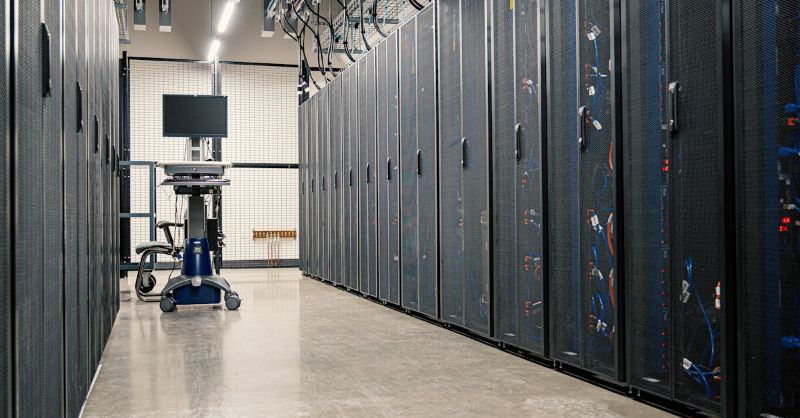
By leveraging OneSource Cloud's private GPU platform, enterprise engineering teams secure unmatched operational and financial peace of mind. OneSource combines dedicated bare-metal GPU clusters with direct Level-3 engineering access, 24/7 proactive telemetry, and transparent flat-rate agreements with zero data egress fees.
Support Model Comparison: Hyperscaler vs. Commodity Host vs. OneSource
The following evaluation matrix contrasts standard public cloud support models with OneSource Cloud's dedicated enterprise operational framework:
| Support & Governance Dimension | Public Cloud Hyperscaler | Commodity GPU Host | OneSource Dedicated Private Cloud |
|---|---|---|---|
| Support Access Model | Tier-1 helpdesk portal; slow escalation | Best-effort community or email queue | Direct Level-3 Senior Engineering Slack / Teams bridge |
| Hardware Health Monitoring | Opaque hypervisor metrics; basic load data | Manual customer scripts; zero provider monitoring | Granular sub-second DCGM & NVLink hardware telemetry |
| Physical Hardware Replacement SLA | Automated re-spin on different multi-tenant node | Days to weeks via manual RMA cycles | Guaranteed < 15-Minute Dedicated Hot-Spare Swap |
| Network Fabric Engineering | Black-box virtual network; zero switch access | Standard unmanaged Ethernet switches | 24/7 dedicated fabric engineering with RoCE v2 flow tuning |
| Cost Structure Predictability | High monthly invoice variance (Egress + IOPS) | Variable transit bandwidth surcharges | 100% Predictable Flat-Rate Monthly Lease (Zero Egress) |
| Operational Consulting Fees | Expensive enterprise support tiers required | Separate hourly professional services billing | Fully Included 24/7 Managed Operations & Provisioning |
This comparison confirms that dedicated private hosting delivers the high-touch operational support and financial determinism required to sustain high enterprise AI velocity.
Operational and Cost Governance Implementation Checklist
Before finalizing long-term infrastructure hosting contracts, enterprise technology leaders should enforce four operational governance gates:
- Codify Direct Communication SLA Terms: Ensure hosting agreements contractually mandate response times under 15 minutes for critical cluster incidents via direct Level-3 communication channels.
- Establish Unified Financial Unit Metrics: Standardize internal reporting around normalized cost metrics—such as total infrastructure cost per million trained tokens or cost per 10,000 inference requests—to objectively measure infrastructure productivity.
- Verify On-Site Dedicated Hot-Spare Capacity: Inspect physical facility documentation to confirm that the provider maintains dedicated, pre-provisioned on-site hot-spare bare-metal nodes reserved exclusively for rapid cluster failover.
- Enforce Contractual Zero-Egress Terms: Formally incorporate written contract terms establishing zero data transfer or egress charges between the dedicated cluster and external enterprise networks.
FAQ
What distinguishes enterprise dedicated GPU support from standard cloud ticketing systems?
Enterprise dedicated GPU support provides direct, real-time access to Level-3 infrastructure engineers via private communication channels, sub-second proactive DCGM telemetry monitoring, and contractual under-15-minute physical hardware replacement using dedicated on-site hot spares.
How does OneSource Cloud ensure total cost governance for enterprise AI infrastructure?
OneSource Cloud delivers dedicated bare-metal GPU clusters under transparent flat-rate monthly agreements that bundle high-throughput NVMe-oF parallel storage, unlimited domestic bandwidth, and 24/7 proactive Level-3 engineering operations, completely eliminating surprise egress fees and variable support surcharges.
Related Articles
Recommended Reading
-
Google Cloud GPU Pricing: What Enterprise AI Teams Should Evaluate Before Provisioning
-
Paperspace Pricing 2026: GPU Cost Breakdown
-
AI Infrastructure Costs: Controlling Enterprise GPU Spending
-
CoreWeave Enterprise GPU Cloud: Evaluation for AI Teams
-
CoreWeave vs Lambda Labs: GPU Cloud Provider Comparison
latest articles
-
AWS LLM Deployment Paths: Bedrock, SageMaker, or Self-Managed
-
Automated Model Retraining: Triggers, Guardrails, and Promotion Gates
-
Serving Llama on GPU Infrastructure: Variants, Sizing, and Verification
-
Azure LLM Deployment: Azure OpenAI, AI Foundry, and Self-Managed
-
HIPAA-Compliant AI Platform Costs: What Compliance Adds to the Bill
-
Evaluating GPU Cloud Providers for Enterprise LLM Workloads
-
Financial Services AI Data Residency Architecture and Compliance
-
Dedicated GPU Cloud Support Models and Cost Governance Frameworks
-
HIPAA-Compliant Voice AI: BAA Chain, Consent, and Call Handling
-
Enterprise GPU Scheduling Architecture for Large AI Programs