
How to Compare AWS and Private AI Providers for Enterprise AI
An enterprise AI provider is an infrastructure operator that supplies the compute, storage, networking, platform controls, and operating support needed to run governed AI workloads. AWS offers a broad public-cloud portfolio with elastic services and global regions. A private AI provider usually offers a narrower, dedicated environment with a defined control boundary and a more customized operating model.
The right comparison is not “large cloud versus small vendor.” It is a workload decision. Buyers should normalize GPU availability, service responsibility, security evidence, data movement, support, and full production cost. The better provider is the one whose capacity and operating model match the organization’s demand pattern, risk profile, technical skills, and deployment timetable.
Start with the Workload, Not the Provider Brand
Define the workload before comparing proposals. Record model sizes, training or inference patterns, data volume, concurrency, latency targets, availability requirements, approved locations, expected growth, and the date capacity must be ready. A generic feature matrix cannot show whether either environment will support the actual application.
For AWS, identify the specific services and regions in scope rather than treating the platform as one product. For a private provider, identify the exact hardware, tenancy, storage path, network, management plane, and support scope. Both sides should price and design the same workload envelope, including production headroom and recovery capacity.
Compare the Capacity Models
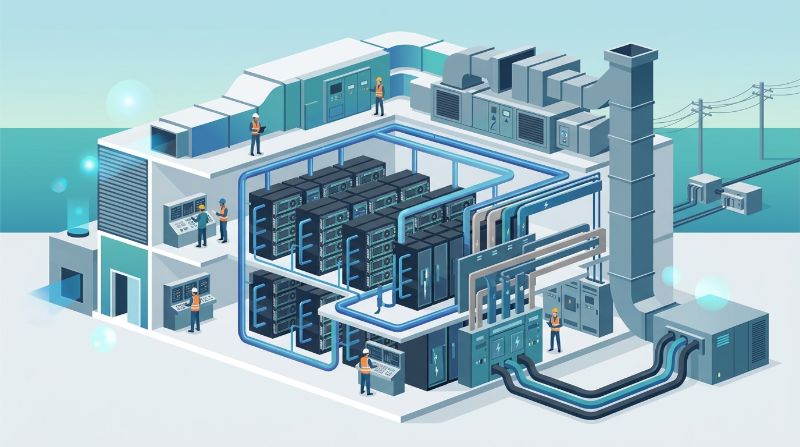
AWS can support on-demand usage, commitments, scheduled capacity products, and other purchasing patterns, subject to service, region, quota, and availability constraints. This flexibility is valuable when teams need many adjacent cloud services or when demand changes quickly. However, an account-level quota is not the same as a guarantee that a required GPU cluster will be available on a particular date.
A private AI provider commonly allocates dedicated or contractually reserved GPUs. That model can improve performance consistency and procurement certainty, but it introduces commitment and expansion planning. Ask for the installed capacity, delivery lead time, failure replacement process, maintenance policy, and procedure for adding GPUs. Compare usable capacity after redundancy and scheduling overhead, not the hardware name alone.
| Dimension | AWS model | Private AI provider model |
|---|---|---|
| Capacity access | Elastic services and several commitment options, with regional availability constraints | Dedicated or reserved capacity defined by contract and deployment scope |
| Service breadth | Large catalog of managed data, security, analytics, and application services | Focused AI stack with selected integrations and operating support |
| Customization | Standardized cloud service boundaries and configuration options | Potentially deeper hardware, network, storage, and operations customization |
| Expansion | Can be rapid when service capacity and quotas are available | Usually requires forecast, procurement, and installation lead time |
Map Security and Compliance Responsibility
AWS uses a shared-responsibility model: AWS secures the underlying cloud, while customers retain responsibilities that vary by service, including data, identities, configurations, applications, and some operating-system controls. A private provider also has a shared boundary, even if it is described differently. Neither model transfers accountability for the customer’s data governance or application behavior.
Request a control matrix that names the owner, operator, evidence source, and escalation path for every material control. Include identity administration, privileged access, encryption keys, segmentation, vulnerability management, logging, backup, incident response, data deletion, and physical access. Certifications can support due diligence, but they do not prove that the customer workload is configured correctly.
Verify Data Location and Administrative Access
Confirm where primary data, replicas, backups, snapshots, logs, model artifacts, and support exports can exist. Then identify who can administer each layer and from where. A region selection or U.S.-based facility is only one part of residency. The full data path also includes operational access, disaster recovery, observability, and third-party support systems.
Compare Day-Two Operations
AWS operates its cloud services, but the customer must still integrate, configure, monitor, secure, and govern the chosen architecture. A private provider may include more cluster operations, capacity planning, performance tuning, patch coordination, and incident response. The scope varies, so require a responsibility matrix and measurable service objectives.
Evaluate 24/7 coverage, alert qualification, escalation, root-cause analysis, change management, model-platform support, and hardware replacement. Ask which tasks are included, which require professional services, and which remain with the customer. A low infrastructure rate can become expensive when internal teams must build an operating capability that the proposal excluded.
Build a Workload-Normalized Cost Comparison
Use a common unit such as cost per completed training run, cost per million output tokens at a latency target, or monthly cost for a defined production service. Include compute, storage, network transfer, orchestration, monitoring, support, security tooling, staffing, idle capacity, and recovery. Model base, expected, and peak demand rather than relying on one utilization assumption.
AWS may be attractive for uncertain demand, rapid experiments, or architectures that depend on many managed services. Private capacity may be attractive for stable utilization, strict control requirements, large persistent data sets, or teams seeking a defined managed-operations boundary. A hybrid design can work, but duplicate tooling, data synchronization, security controls, and portability add real cost.
Use an Evidence-Based Provider Scorecard
- Capacity: Can the provider deliver the required GPU type, cluster size, start date, redundancy, and expansion path?
- Performance: Will it run a representative benchmark using the intended model, data path, concurrency, and latency objective?
- Control: Are tenancy, network boundaries, key ownership, data location, and administrative access explicit?
- Operations: Are monitoring, patching, incidents, maintenance, and performance optimization assigned to named owners?
- Economics: Does the estimate include all services, staffing, transfer, support, unused commitment, and exit cost?
- Exit readiness: Can the customer export data, models, configurations, and evidence without rebuilding the entire platform?
Where OneSource Cloud Fits
OneSource Cloud Private AI Infrastructure provides dedicated capacity and a defined infrastructure boundary for enterprise AI workloads. Buyers comparing it with AWS should use the same workload and acceptance criteria for both proposals.
Teams that need day-two support can evaluate managed AI infrastructure operations, while teams standardizing workload controls can review the OnePlus AI infrastructure platform. The decision should follow evidence from capacity, security, cost, and workload testing.
FAQ
Is AWS always more scalable than a private AI provider?
AWS has a much broader service footprint and elastic operating model, but required GPU capacity can still depend on region, service availability, quotas, and reservation choices. A private provider may scale less elastically yet guarantee a defined capacity envelope. Compare the actual expansion path and delivery dates for the workload.
Is a private AI provider more secure than AWS?
Neither model is inherently more secure. Security depends on the architecture, configuration, operating discipline, control ownership, and evidence. Private infrastructure can create a narrower tenancy and access boundary, while AWS provides mature cloud controls. Both require the customer to govern identities, data, applications, and risk.
When does AWS make more sense for enterprise AI?
AWS is often worth evaluating when demand is uncertain, teams need rapid access to adjacent managed services, workloads span regions, or the organization already has strong AWS engineering and governance. Validate capacity and total service cost for the required workload rather than assuming elasticity solves every constraint.
When does a private AI provider make more sense?
A private provider is often worth evaluating for stable production demand, dedicated tenancy, controlled data paths, customized storage or networking, and managed operations. It is also useful when capacity must be contractually defined. The customer still needs clear acceptance tests and an exit plan.
Summary
AWS and private AI providers solve different operating problems. Compare them through a workload-normalized model that covers capacity assurance, service breadth, control boundaries, operations ownership, data location, total cost, and exit readiness. The most credible decision comes from matched proposals and representative tests.
To build a workload-specific comparison, request an enterprise AI infrastructure assessment from OneSource Cloud with your workload profile, data requirements, capacity timeline, and current operating model.
Related Articles
Recommended Reading
-
Google Cloud GPU Pricing: What Enterprise AI Teams Should Evaluate Before Provisioning
-
Paperspace Pricing 2026: GPU Cost Breakdown
-
CoreWeave Enterprise GPU Cloud: Evaluation for AI Teams
-
AI Infrastructure Costs: Controlling Enterprise GPU Spending
-
CoreWeave vs Lambda Labs: GPU Cloud Provider Comparison
latest articles
-
Open-Source LLM Deployment: Requirements and Real Cost Breakdown
-
AI Search Assistants Under Data Residency: Architectures and Evidence
-
LLM Inference GPUs Compared: A100, H100, H200, or B200 for Production
-
LLM Deployment Best Practices: An Enterprise Stage-by-Stage Checklist
-
HIPAA Patient Scheduling AI: Controls, Consent, and Evidence
-
Cloud-Agnostic LLM Deployment: Architecture Principles Against Lock-In
-
HIPAA-Compliant AI Tools for Healthcare: Categories and Evaluation
-
Batch vs Real-Time LLM Inference: Cost, Latency, and Fit
-
Model Deployment Strategies Compared: Canary, Blue-Green, Shadow, Rolling
-
GPU Rental vs Owning: Cost, Commitment, and When to Buy