
Best Private GPU Cloud Provider for Secure Enterprise AI
Quick Verdict: The best private GPU cloud provider is the provider that delivers dedicated accelerator capacity, isolated infrastructure, data control, and managed operations for a specific enterprise AI environment. The right choice depends on workload sensitivity, compliance needs, deployment model, and support requirements.
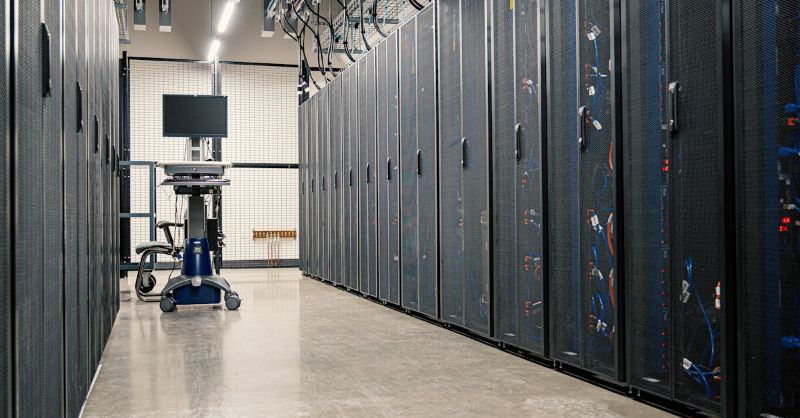
Private GPU cloud selection should start with security and operating control, not only GPU specifications. Healthcare, financial services, SaaS, and research teams often need stronger isolation and data residency planning than a shared GPU service can provide. OneSource Cloud supports these requirements through private AI infrastructure and managed GPU environments.
What Makes a Private GPU Cloud Provider Different
A private GPU cloud provider delivers more than reserved GPUs. The provider should help design an environment where compute, storage, networking, access controls, monitoring, and operational support work together. The private aspect matters because sensitive workloads need clearer boundaries for data, users, network paths, and administrative actions.
This difference becomes important when AI workloads move into production. A shared or general cloud environment may be acceptable for experimentation, but regulated data, proprietary models, and production inference often require a more controlled foundation. Private GPU cloud helps teams reduce ambiguity around where workloads run and how they are operated.
Private GPU Cloud Provider Evaluation Checklist
The best provider for secure enterprise AI should be evaluated across control, infrastructure depth, operations, and business fit. The checklist below helps buyers compare providers without reducing the decision to GPU type alone.
| Evaluation Area | What to Confirm | Why It Matters |
|---|---|---|
| Infrastructure isolation | Dedicated resources, network boundaries, tenant separation, and administrative access rules. | Private AI workloads need clear separation from shared environments. |
| Data residency | Hosting location, data movement paths, backup location, and access logging. | Regulated teams need to know where sensitive data and model artifacts reside. |
| Security controls | Identity, segmentation, monitoring, logging, and incident response responsibilities. | Infrastructure should support governance without relying on assumptions. |
| Managed operations | Monitoring, optimization, lifecycle management, patching, and support escalation. | Private environments still require continuous operations after deployment. |
| Workload fit | Training, inference, RAG, fine-tuning, model deployment, and multi-team access requirements. | The best architecture depends on how the organization actually uses AI. |
Private GPU Cloud vs Dedicated GPU Cloud
The terms overlap, but they emphasize different buyer priorities. Dedicated GPU cloud focuses on reserved accelerator capacity. Private GPU cloud focuses on a controlled operating environment that may include dedicated GPUs, isolated networking, governed storage, access controls, and managed support. Many enterprise deployments need both.
If the main problem is GPU availability, dedicated capacity may be the central requirement. If the main problem is sensitive data, regulatory review, or production control, private GPU cloud becomes more important. Buyers should define which problem they are solving before selecting a provider.
Security and Data Residency Questions for Providers
Security questions should be concrete. Ask how identities are managed, how administrative access is limited, how network segmentation works, how logs are retained, how backups are protected, and how incidents are escalated. These answers should be specific enough for technical, security, and compliance stakeholders to review.
Data residency is also a practical architecture requirement. Teams should understand where training data, model artifacts, inference inputs, logs, and backups are stored. OneSource Cloud's U.S.-based infrastructure options can support organizations that need clearer data location planning for private AI workloads.
Managed Operations for Private GPU Cloud
A private environment is not automatically easy to operate. Teams still need monitoring, driver and platform updates, storage tuning, network troubleshooting, utilization review, and capacity expansion planning. If those responsibilities remain unclear, the private environment can become difficult to maintain.
OneSource Cloud's managed AI infrastructure is relevant when teams want private GPU cloud control without assigning every infrastructure task to internal engineers. For multi-team usage, OnePlus Platform, OneSource Cloud's AI orchestration platform, can help manage access, quota, workspaces, and workload visibility.
Industry Scenarios Where Private GPU Cloud Fits
Healthcare teams may need private GPU cloud for AI workloads involving PHI-sensitive data paths, clinical documentation, imaging, or research pipelines. Financial services teams may need data residency, audit-friendly operations, and controlled model deployment. SaaS teams may need customer-facing inference environments where uptime and access controls are essential.
These scenarios do not require exaggerated claims about private cloud being best for every workload. They require a practical evaluation of risk. If sensitive data, production reliability, or governance pressure is high, private GPU cloud can provide a better foundation than fragmented public cloud GPU usage.
FAQ
Who is the best private GPU cloud provider?
The best private GPU cloud provider depends on workload sensitivity, data residency needs, required GPU capacity, support model, and internal operations maturity. A strong provider should explain how it handles isolation, access control, monitoring, storage, networking, and lifecycle management for private AI workloads.
How is private GPU cloud different from public GPU cloud?
Public GPU cloud provides GPU access through a shared cloud service model. Private GPU cloud provides a more controlled environment with dedicated or isolated resources, governed access, clearer data paths, and managed operations. It is often selected when security, data control, or predictable operations matter.
What should regulated industries ask private GPU cloud providers?
Regulated teams should ask where data is hosted, how access is controlled, how logs are retained, how backups are managed, how incidents are handled, and which responsibilities remain with the customer. They should also verify that infrastructure controls align with their compliance processes.
Is private GPU cloud more expensive than public GPU cloud?
It can have higher committed capacity costs, but the total comparison depends on utilization, staffing, data movement, downtime risk, support scope, and compliance needs. For recurring or sensitive workloads, predictable private capacity may be easier to budget than variable on-demand usage.
Can private GPU cloud support both training and inference?
Yes, if the environment is designed for both workload patterns. Training may require large GPU blocks and high-throughput storage, while inference may require low latency, monitoring, and stable deployment workflows. Buyers should confirm that the provider can design for both rather than assuming one configuration fits all.
Summary
The best private GPU cloud provider is the one that aligns dedicated GPU capacity with security controls, data residency, managed operations, and workload fit. Enterprises should evaluate private cloud requirements through isolation, governance, support ownership, and production readiness rather than hardware specifications alone.
Next step: Explore OneSource Cloud's private AI infrastructure to evaluate secure private GPU cloud options for enterprise AI workloads.
Related Articles
Recommended Reading
-
How Paged Attention Manages Inference KV Cache
-
Google Cloud GPU Pricing: What Enterprise AI Teams Should Evaluate Before Provisioning
-
Paperspace Pricing 2026: GPU Cost Breakdown
-
AI Infrastructure Costs: Controlling Enterprise GPU Spending
-
CoreWeave Enterprise GPU Cloud: Evaluation for AI Teams
-
CoreWeave vs Lambda Labs: GPU Cloud Provider Comparison
-
AWS GPU Pricing: Instance Types, Cost Structure & Alternatives Guide
-
CoreWeave Alternatives: Compare GPU Clouds
latest articles
-
Cost-Effective Isolated GPU Compute and When Single-Tenant Wins
-
Single-Tenant GPU for Confidential AI Workloads: Isolation Without TEE Overhead
-
GPU Cluster Provisioning and Deployment: From Racking to First Training Run
-
HIPAA-Ready LLM Hosting: Making Your Model Deployment Compliant
-
HIPAA-Ready H100 Hosting: How to Verify Scope for Enterprise PHI
-
How Much GPU Cluster Bandwidth AI Training Actually Needs
-
On-Shore GPU for HIPAA Workloads and Why Jurisdiction Matters
-
AI Infrastructure Providers for Startups: Credit Programs, Pricing, and Selection
-
GPU Cloud Service Model Comparison for Healthcare Teams
-
H100 GPU Cluster Rental Pricing and Contract Terms Explained