
What Is Batch vs Realtime Serving for LLM Inference
Quick Answer: Batch serving is an LLM inference mode that processes queued jobs after users have left, while realtime serving is an online mode that streams tokens while a person or agent waits. Offline scoring and nightly jobs belong in batch. User-waiting sessions belong in realtime.
The same model weights can sit behind both queues. The difference is the SLO, the packing strategy, and whether a human is blocked on the first token. Continuous batching inside a live server does not turn that server into a batch system.
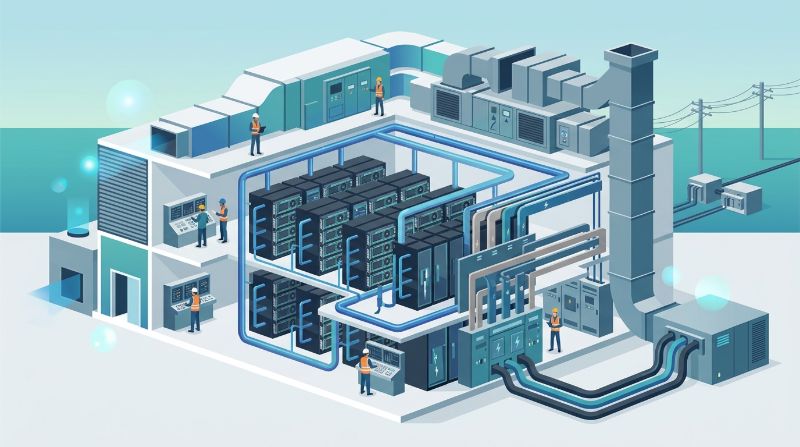
This comparison stays on LLM inference: prompts, completions, embeddings generated from language models, and agent tool loops. It is not a generic ETL versus API essay, and it is not a vendor shortlist.
How do batch and realtime LLM serving differ?
Start with the waiting user. If nobody is blocked, you can pack the GPU, delay the start, and write results to object storage. If someone is blocked, you stream tokens and keep a TTFT and TPOT budget. That single test decides the queue, the replica pool, and most of the cost shape.
| Dimension | Batch serving | Realtime serving |
|---|---|---|
| Who waits | A job scheduler or a downstream pipeline | A person, UI, or synchronous agent |
| Typical work | Offline scoring, nightly classification, embedding backfill, eval sweeps | Chat, autocomplete, in-product assistants, live tool loops |
| Primary SLO | Completion window, backlog age, cost per finished item | TTFT, TPOT, tail latency, stream stability |
| GPU packing | Large static or micro-batches, often off-peak | In-flight batching with reserved headroom |
| Output contract | Files, tables, or queued callbacks | Token stream, partial UI, cancel on disconnect |
| Failure mode | Backlog grows past the morning deadline | Users see a spinner, then abandon or retry |
Both modes run the same decoder math. They do not share the same admission policy. A realtime replica that accepts a 10-million-row scoring job is no longer realtime. A batch worker that tries to stream a chat session will still start late when the queue is deep.
When does batch serving fit LLM inference?
Batch serving fits when the product can wait for a completion window. Nightly risk scoring, document classification after ingest, embedding refresh for a corpus, offline A/B evals, and scheduled summarization of tickets are the common LLM cases. The user already left, or the user will see results in a report, not in a keystroke.
The serving stack can then maximize occupancy. Long prompts can share a large prefill batch. Completions can omit streaming. Checkpoints can persist mid-job so a node loss does not replay the whole night. Cost follows finished items per GPU-hour, not p95 TTFT. That is why batch is usually the cheaper way to burn a large token volume.
Batch is a poor fit when a reviewer is sitting on the output, or when an agent cannot take the next tool step until the model returns. Moving that work to overnight does not make it batch-friendly. It only hides a realtime dependency behind a later clock.
Serving Decision Matrix: Enterprise LLM Inference Infrastructure
| Serving Infrastructure Model | Compute & Memory Contention | P99 Tail Latency Predictability | Multi-GPU Tensor Parallelism Support | Optimal Enterprise Workload Fit |
|---|---|---|---|---|
| Shared Multi-Tenant Model APIs | Multi-tenant shared workers; opaque resource pooling | Severe tail latency jitter during peak concurrency spikes | Black-box; no control over model parallelism or KV cache sizing | Low-volume prototyping or asynchronous background tasks |
| Virtualized Cloud GPU Instances | Hypervisor vGPU slices subject to CPU/PCIe interrupts | Moderate jitter caused by neighboring tenant network bursts | High inter-node latency limits multi-GPU tensor scaling (TP=4/TP=8) | General internal apps with modest throughput requirements |
| OneSource Dedicated Private GPUs | Dedicated bare-metal hardware with 100% VRAM & compute reservation | Deterministic microsecond P99 response times under peak load | Dedicated RoCE v2 RDMA fabric enables low-latency TP=4/TP=8 scaling | Mission-critical, low-latency, regulated enterprise production serving |
Private AI infrastructure is relevant when a nightly scoring run must stay on dedicated GPUs so it cannot steal the interactive pool, or so prompts never enter a shared public endpoint. Isolation here is about queue and tenancy, not about claiming batch is always cheaper in the abstract.
When does realtime serving fit user-waiting sessions?
Realtime serving fits when a person or a synchronous agent is in the loop. Product chat, IDE completion, voice turn-taking, and tool-using agents all wait on the first token and then on a stable stream. Cancel on disconnect matters because the user already walked away and the GPU work should stop.
The replica must keep headroom. In-flight batching is allowed, and usually required, but the pool is sized so a new session can start without waiting for a nightly job to finish. Session state and KV-cache residency matter because a reconnect should not prefill the whole history again if the product promised continuity.
Realtime is the wrong default for bulk embeddings or offline eval. Those jobs look “interactive” only because someone wrapped them in an HTTP handler. If no user is blocked, the handler is a batch API with a worse packing story. Put the work on a queue with a deadline, then keep the realtime pool for sessions that actually wait.
Network hops still sit on the user clock. High-performance AI networking matters when realtime decode spans nodes or when a gateway path adds more delay than the decoder. Measure that hop before you treat another GPU as the fix.
Why continuous batching is not batch serving
Continuous batching is a realtime scheduler trick. It inserts new live requests into a running decode batch so the GPU does not idle between short sessions. The product is still online. A user is still waiting. The SLO is still TTFT and TPOT.
Batch serving is a product and operations mode. Jobs are admitted to a queue, often without a waiting client, and they can start minutes later. They can use continuous batching internally, or they can use large static batches. The name “batch” refers to the absence of a waiting user, not to the presence of a batch kernel.
Mixing the two words in runbooks is how a platform team pages the chat pool for a backlog that should have been a morning deadline. Keep two queues even if both call the same serving engine. Pin replicas. Publish different SLOs. An AI orchestration platform helps when several teams share one cluster and a scoring sweep would otherwise land on the same GPUs as production chat.
OneSource Cloud is only an example of dedicated private capacity that can keep those two pools apart. The distinction still holds on any cluster that publishes separate queues.
FAQ
What is batch serving for LLM inference?
Batch serving for LLM inference is queued, offline generation or scoring that does not block a waiting user. The system optimizes packing, cost per finished item, and a completion window. Results land in storage or a callback. Chat-style streaming is optional and usually omitted so the GPU can run larger batches through the night.
Is continuous batching the same as batch serving?
No. Continuous batching is an in-server scheduling method for live requests. Batch serving is an offline product mode with a job queue and a later deadline. A realtime chat stack can use continuous batching and still be realtime. A nightly scoring job can use static batches and still be batch. Do not collapse the two terms in capacity plans.
Which mode costs more per token for the same model?
Realtime usually costs more per token because it reserves headroom and cannot wait to fill a large batch. Batch usually costs less per token because it packs GPUs and can run off-peak. The gap shrinks if realtime traffic is already dense, or if batch jobs have awkward lengths that waste padding. Compare your mix, not a vendor’s blended token price.
Can one GPU cluster run both batch and realtime LLM serving?
Yes, if you keep separate queues and pin replica pools. Share weights and images if you want. Do not share admission. A cluster-level fairness policy is not enough when a 12-hour eval can still schedule onto a chat GPU. Put a hard partition on the realtime pool, then let batch consume what remains, including idle overnight capacity.
How should on-call treat a batch backlog versus a realtime page?
A realtime page is a user-visible stall: raise replicas, shed batch, or halt a bad deploy. A batch backlog is a deadline problem: estimate finish time, add workers after interactive peaks, or cut the job. Paging chat on-call for a morning report that is one hour late trains the team to ignore both signals. Split the runbooks.
Why deploy latency-sensitive LLM inference on OneSource private GPUs?
OneSource private GPU infrastructure delivers 100% dedicated bare-metal compute and VRAM, completely isolated from cross-tenant contention. This eliminates hypervisor scheduling jitter and shared-network packet collisions, ensuring deterministic P99 tail latency, sustained token throughput, and optimal tensor parallel scaling for production enterprise LLM serving.
Summary
Batch versus realtime serving is a waiting-user test for LLM inference. Offline scoring and nightly jobs can pack GPUs and miss a live TTFT target. User-waiting sessions cannot. Continuous batching does not erase that split. Keep two queues, two SLOs, and two replica pools so a scoring sweep cannot turn production chat into an overnight job.
Related Articles
Recommended Reading
-
Google Cloud GPU Pricing: What Enterprise AI Teams Should Evaluate Before Provisioning
-
Paperspace Pricing 2026: GPU Cost Breakdown
-
CoreWeave Enterprise GPU Cloud: Evaluation for AI Teams
-
AI Infrastructure Costs: Controlling Enterprise GPU Spending
-
CoreWeave vs Lambda Labs: GPU Cloud Provider Comparison
latest articles
-
Open-Source LLM Deployment: Requirements and Real Cost Breakdown
-
AI Search Assistants Under Data Residency: Architectures and Evidence
-
LLM Inference GPUs Compared: A100, H100, H200, or B200 for Production
-
LLM Deployment Best Practices: An Enterprise Stage-by-Stage Checklist
-
HIPAA Patient Scheduling AI: Controls, Consent, and Evidence
-
Cloud-Agnostic LLM Deployment: Architecture Principles Against Lock-In
-
HIPAA-Compliant AI Tools for Healthcare: Categories and Evaluation
-
Batch vs Real-Time LLM Inference: Cost, Latency, and Fit
-
Model Deployment Strategies Compared: Canary, Blue-Green, Shadow, Rolling
-
GPU Rental vs Owning: Cost, Commitment, and When to Buy