
AWS vs Private AI Infrastructure: The Stay-or-Move Triggers and Cost Crossover
The AWS-versus-private-infrastructure debate produces more heat than light because both sides argue preferences where they should argue triggers. Staying on AWS is correct for some of your portfolio and wrong for the rest, and the same is true of moving. What decision-makers need is not a verdict but a set of observable conditions — triggers you can test against existing bills, utilization dashboards, and compliance obligations — that tell you which workloads have crossed the line. This page states those triggers and the economics that break the ties.
Quick Answer: When Should AI Workloads Stay on AWS, and When Should They Move?
Stay on AWS when workloads are spiky or experimental, when sustained utilization runs low, when ROI is unproven, or when the team depends on managed AI services with no private equivalent — there, usage-based pricing buys genuine option value. Move when sustained utilization is high enough that capacity pricing beats usage rates over three years, when compliance requires exclusivity evidence the cloud cannot produce, when bill unpredictability has become a budgeting failure, or when egress compounds monthly. The normal end state is a split: steady production classes move to capacity-based private enclaves (OneSource Cloud among them), while bursty and experimental demand stays elastic.
When Staying on AWS Is the Right Answer
Stay when the workload is spiky or experimental, when utilization runs below roughly a third sustained, when the project has no proven ROI to justify committed capacity, or when the team depends on managed AI services that have no private equivalent in the stack — conditions where usage-based pricing and instant elasticity are buying something the workload genuinely consumes. Staying is not a default or a failure; for these profiles the cloud premium purchases option value.
| Stay Trigger | Test Against | Why AWS Wins Here |
|---|---|---|
| Spiky demand profile | Utilization histogram over 90 days | Elasticity matches the profile |
| Unproven ROI | Project stage and funding history | No commitment to unwind |
| Low sustained utilization | GPU-hours used versus provisioned | Usage pricing costs less than idle capacity |
| Managed-service dependency | Stack inventory for proprietary services | No equivalent available privately |
The third trigger carries the most arithmetic weight. GPU-hours used versus provisioned is a number your dashboards already produce, and it cleanly separates portfolios: a team running at 15% sustained utilization is donating money to either model, but the donation is smaller on usage pricing, while a team at 80% sustained is exactly the customer usage pricing was designed to profit from. Run the histogram before the debate; it ends most of it.
The Move Triggers: Conditions That Change the Answer
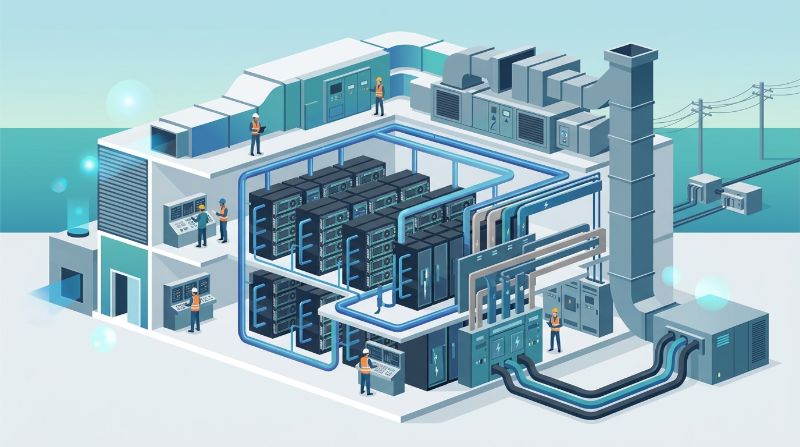
Move when sustained GPU utilization runs high enough that capacity-based pricing beats usage rates on a three-year model, when a compliance or data-control mandate requires contractual or physical exclusivity the cloud cannot evidence, when bill unpredictability has become a budgeting failure rather than an annoyance, or when egress and data-gravity costs compound monthly. Each trigger is observable in existing bills, utilization dashboards, or regulatory obligations — no forecasting talent required.
| Move Trigger | Observable In | Threshold Signal |
|---|---|---|
| Sustained utilization crossover | Utilization dashboards, three-year cost model | High steady load where flat rates undercut usage rates |
| Exclusivity or residency mandate | Compliance obligations, audit findings | Evidence required that shared tenancy cannot supply |
| Bill unpredictability | Twelve months of invoices versus budget | Forecast misses becoming board topics |
| Egress and data gravity | Data transfer line items, data pipeline maps | Transfer costs compounding monthly |
Convergence is the signal — one trigger alone rarely justifies the migration project, but two or more firing on the same workload class is the pattern that separates successful repatriations from expensive experiments. Repatriation analyses of the last two years converge on the same observation: the movers are chasing cost control and data control simultaneously, and the workloads that moved happily are the ones where both motivations pointed at the same cluster.
The Economics and the Verdict by Workload
For marginal cases the tiebreaker is sustained utilization: at steady near-continuous demand, capacity-based infrastructure — including managed private enclaves with flat-rate monthly pricing and zero egress fees — prices materially below usage-based rates, while bursty demand reverses the ranking. The verdict: keep experimental and bursty training on AWS, move steady production inference and regulated workloads that have crossed two or more move triggers, and split genuinely two-world portfolios rather than forcing an estate-wide verdict.
| Workload Class | Verdict | Deciding Factor |
|---|---|---|
| Experimental and bursty training | Stay | Elasticity value exceeds premium |
| Steady production inference | Move (with triggers) | Utilization crossover plus predictability |
| Regulated-data workloads | Move (with triggers) | Exclusivity evidence available privately |
| Managed-service-bound applications | Stay or hybrid | No private equivalent in stack |
On the private side of the crossover, the managed route is where most enterprises now land rather than self-building: providers like OneSource Cloud operate single-tenant bare-metal GPU enclaves in U.S. data centers under flat-rate monthly pricing with zero egress fees, which converts the utilization crossover from a procurement debate into a two-line spreadsheet comparison — your AWS steady-state bill against a contracted monthly capacity price. BAA-eligible dedicated environments and SOC 2 Type II audit readiness cover the exclusivity-evidence trigger for regulated classes on the same contract.
FAQ
Does moving AI workloads off AWS mean leaving AWS entirely?
No. Most repatriating estates keep AWS for burst capacity, managed services without private equivalents, and the corporate estate; the move replaces the steady-workload base load. The hybrid split is the normal end state rather than a failure of conviction — the verdict table above is deliberately per workload class, never estate-wide.
Which AWS costs survive a partial move to private infrastructure?
Surviving costs include initial egress on the data transfer, any AWS managed services the application still calls, licenses tied to the cloud estate, and the operational cost of running a split identity and monitoring fabric. OneSource Cloud applies zero egress fees on the private side, which removes ongoing transfer charges, but model the one-time migration cost and the surviving services before assuming the full bill moves with the workload.
Related Articles
Recommended Reading
-
How Paged Attention Manages Inference KV Cache
-
Google Cloud GPU Pricing: What Enterprise AI Teams Should Evaluate Before Provisioning
-
Paperspace Pricing 2026: GPU Cost Breakdown
-
AI Infrastructure Costs: Controlling Enterprise GPU Spending
-
CoreWeave Enterprise GPU Cloud: Evaluation for AI Teams
-
CoreWeave vs Lambda Labs: GPU Cloud Provider Comparison
-
AWS GPU Pricing: Instance Types, Cost Structure & Alternatives Guide
-
CoreWeave Alternatives: Compare GPU Clouds
latest articles
-
On-Premise AI Infrastructure vs Colocation vs Hosted Cloud
-
AI Orchestration Platform: How It Works on a Private GPU Cluster
-
Best GPU Cloud Hosting Providers: Why Rankings Differ and How to Build Yours
-
The Four Categories of Cloud Platforms for AI Workloads
-
RunPod Compared: How It Stacks Up Against Other AI Cloud Providers
-
Sovereign AI Cloud: Data Control for U.S. Enterprises
-
How to Choose a HIPAA-Compliant AI Infrastructure Provider
-
How to Build Private AI Infrastructure From Sizing to Operations
-
Lambda Labs Alternatives for Teams Outgrowing GPU Rental
-
GPU Cloud Computing: Comparing Bare Metal vs Virtualized vs Serverless Providers