
AI Workload Deprovisioning Security Checklist for Clean Shutdown
An AI workload deprovisioning security checklist covers five surfaces that must be cleaned when a job ends — GPU memory, checkpoints and artifacts, logs and traces, credentials, and shared storage residues — because sensitive data that persists after a workload finishes is a breach waiting to be discovered. Teams that focus on securing the workload while it runs often neglect what it leaves behind, and the residues are where auditors and attackers both look. For the broader isolation framework, see how solo capacity stops AI data leakage. For the full security posture, see auditing an AI infrastructure provider's security posture.
For regulated AI workloads, deprovisioning is just as important as provisioning — the controls that protect data when it arrives must also protect it when the workload departs. Training data, model weights, checkpoints, and logs all contain sensitive content, and a deprovisioning gap leaves that content accessible after the workload that used it is gone. This checklist organizes the cleanup into five surfaces with verification at each step.
Surface 1: GPU Memory Clearing
GPU memory holds model weights, training data, optimizer state, and KV cache during a workload — the most sensitive content in the AI pipeline. When the workload ends, that content persists in GPU memory until it is explicitly overwritten or the GPU is reset. On shared infrastructure, the next tenant's workload may read residual data; even on dedicated infrastructure, a subsequent workload by a different team within the same organization may inadvertently access data it should not see.
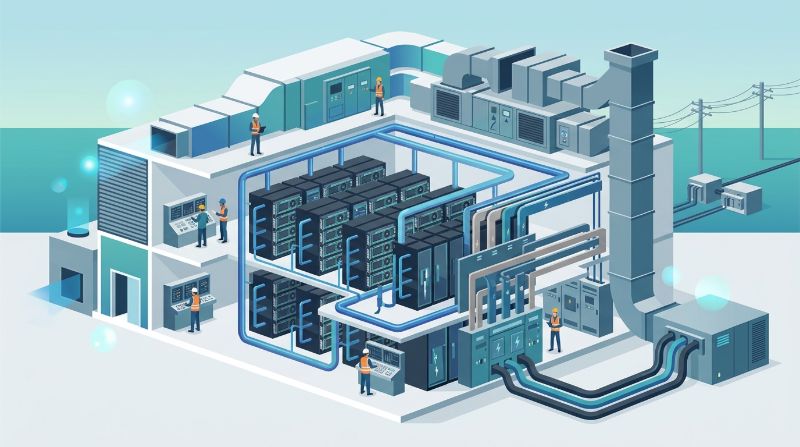
The cleanup protocol is to explicitly clear GPU memory — through a GPU reset, a zero-fill, or a memory scrubbing process — and to verify that the clearing completed. A workload that simply terminates without clearing leaves its data in GPU memory. For regulated workloads, demand evidence of the clearing (logs, verification) because the clearing is what turns the claim into a control. For how isolation reduces this risk, see solo capacity and data leakage.
Surface 2: Checkpoints and Artifacts
Checkpoints contain model weights and optimizer state derived from training data, so they inherit the training data's regulatory status. When a workload ends, checkpoints that are no longer needed must be deleted — not just archived, because archiving preserves the data for potential access. Verify that deletion is complete and that no copies exist in backup or snapshot systems, which are often forgotten and become the residual data that auditors find.
For checkpoints that must be retained (for reproducibility or future fine-tuning), they must be governed with the same controls as the training data: encryption, access control, residency, and retention with a expiry date. A checkpoint left ungoverned is a compliance gap. For the storage architecture requirements, see checkpoint storage for private AI.
Surface 3: Logs and Traces
Inference logs and training traces capture prompts, outputs, metrics, and sometimes the data itself — and they are often the surface teams forget to deprovision. A log that records user prompts with PHI, or training traces that include dataset samples, carries regulatory obligations. When the workload ends, logs that are no longer needed must be deleted within their retention window, and logs that are retained must be secured.
The checklist item is to identify every log source the workload generated, confirm which can be deleted and which must be retained with controls, and verify deletion or secure retention. For the residency and retention framework, see our data residency compliance checklist.
Surface 4: Credentials and Access
Workload-specific credentials — API keys, service accounts, access tokens — that were created for the workload should be revoked when the workload ends. An active credential for a completed workload is an unattended access path. Revoke credentials, remove the workload's entries from access control lists, and verify that the credential no longer grants access.
Surface 5: Shared Storage and Data Residues
Datasets, intermediate files, and temporary storage used during the workload must be cleaned. On shared storage, confirm that no data remains in directories or volumes that other workloads or tenants can access. Verify that deletion is complete across all storage tiers — object storage, block storage, file storage, and any caching layers — because data often persists in caches or snapshots after the primary copy is removed.
Deprovisioning checklist at a glance
| Surface | Action | Verification |
|---|---|---|
| GPU memory | Reset, zero-fill, or scrub | Clearing confirmation logs |
| Checkpoints and artifacts | Delete or govern with controls | Deletion audit, backup sweep |
| Logs and traces | Delete or retain with controls | Log inventory, deletion or retention evidence |
| Credentials | Revoke workload-specific credentials | Access test showing denial |
| Shared storage | Remove data from all tiers | Directory sweep, cache flush verification |
FAQ
What should I clean when an AI workload ends?
Five surfaces: clear GPU memory (reset or scrub), delete or govern checkpoints and artifacts, delete or retain logs and traces with controls, revoke workload-specific credentials, and remove data from all shared storage tiers. The residues a workload leaves are where sensitive data persists after the job is done, creating a compliance gap if not cleaned. See the checklist above.
Does GPU memory need to be cleared between workloads?
Yes, especially on shared infrastructure where the next tenant's workload could read residual data. Even on dedicated infrastructure, workloads from different teams within the same organization may share GPUs, and clearing prevents cross-workload data access. GPU memory is not automatically cleared on workload termination — it must be explicitly reset, zero-filled, or scrubbed. For the full isolation picture, see how solo capacity stops data leakage.
Do checkpoints need to be deleted after training?
Checkpoints that are no longer needed should be deleted, because they contain model weights and optimizer state derived from training data and inherit the data's regulatory obligations. Checkpoints retained for reproducibility or future use must be governed with the same controls as the training data — encryption, access control, residency, and retention. Verify deletion across backup and snapshot systems, not just primary storage. See checkpoint storage architecture.
Summary
AI workload deprovisioning security is a five-surface checklist: clear GPU memory, delete or govern checkpoints, handle logs and traces, revoke credentials, and clean shared storage. Each surface must be verified, because the residues are where data persists after a workload ends and where auditors and attackers look. A workload that runs securely but leaves its data behind is not secure — the deprovisioning step is what completes the security posture. For the full security framework, see how to audit an AI infrastructure provider and how solo capacity stops data leakage.
Related Articles
Recommended Reading
-
Google Cloud GPU Pricing: What Enterprise AI Teams Should Evaluate Before Provisioning
-
Paperspace Pricing 2026: GPU Cost Breakdown
-
CoreWeave Enterprise GPU Cloud: Evaluation for AI Teams
-
AI Infrastructure Costs: Controlling Enterprise GPU Spending
-
CoreWeave vs Lambda Labs: GPU Cloud Provider Comparison
latest articles
-
Open-Source LLM Deployment: Requirements and Real Cost Breakdown
-
AI Search Assistants Under Data Residency: Architectures and Evidence
-
LLM Inference GPUs Compared: A100, H100, H200, or B200 for Production
-
LLM Deployment Best Practices: An Enterprise Stage-by-Stage Checklist
-
HIPAA Patient Scheduling AI: Controls, Consent, and Evidence
-
Cloud-Agnostic LLM Deployment: Architecture Principles Against Lock-In
-
HIPAA-Compliant AI Tools for Healthcare: Categories and Evaluation
-
Batch vs Real-Time LLM Inference: Cost, Latency, and Fit
-
Model Deployment Strategies Compared: Canary, Blue-Green, Shadow, Rolling
-
GPU Rental vs Owning: Cost, Commitment, and When to Buy