
AI Infrastructure for SaaS Companies: How to Scale ML Teams Without Cloud Cost Shock
SaaS companies need AI infrastructure that can support product-grade inference, model experimentation, RAG, fine-tuning, and multi-team development without unpredictable GPU bills. Public cloud is useful for early AI work, but sustained AI features often need dedicated capacity, workload orchestration, monitoring, and cost governance. OneSource Cloud helps SaaS teams use private and managed AI infrastructure to scale ML operations with more predictable GPU capacity and operational control.
Why SaaS AI Infrastructure Becomes Expensive Fast
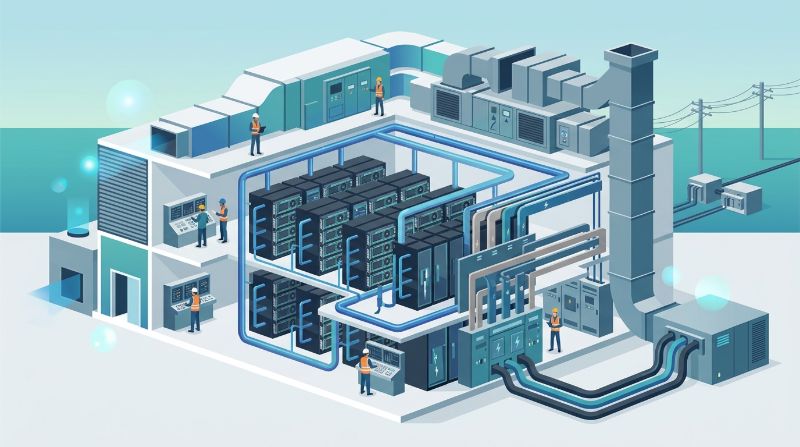
AI cost shock usually starts when SaaS teams move from prototypes to product features.
A small proof of concept may use public APIs, cloud notebooks, or rented GPU instances. Once the feature becomes part of the product, demand changes. More users generate more inference calls. Longer context windows increase compute needs. RAG systems add storage and retrieval costs. Development teams duplicate environments. GPU instances sit idle between jobs.
The result is not just a higher bill. It is an operating problem: unclear ownership, uncertain margins, unpredictable GPU access, and pressure on platform teams.
What AI Infrastructure for SaaS Companies Includes
AI infrastructure for SaaS companies is the compute, storage, networking, orchestration, security, and operations layer used to build and run AI-powered product features.
It may support:
| SaaS AI Workload | Infrastructure Need |
|---|---|
| AI copilots and assistants | Reliable inference capacity and secure application integration |
| RAG over customer or product data | Governed storage, retrieval, embeddings, and access controls |
| Model fine-tuning | GPU capacity, dataset management, and experiment tracking |
| Batch AI workflows | Scheduled compute, storage throughput, and monitoring |
| Real-time AI features | Low-latency inference and predictable scaling |
| Multi-team ML development | GPU quota, shared workspaces, and usage visibility |
| Private LLM deployment | Dedicated infrastructure and controlled data paths |
For SaaS companies, the infrastructure model affects not only engineering velocity but also gross margin, customer trust, and product reliability.
When Public Cloud Works Well for SaaS AI
Public cloud platforms such as AWS, Azure, and Google Cloud are often a strong fit for early experimentation, managed services, burst workloads, and teams that need broad developer tooling. GPU cloud providers such as CoreWeave, Lambda Labs, Paperspace, Modal, Replicate, and similar platforms can also help teams access compute quickly.
Public cloud may be the right fit when:
- AI usage is still experimental
- Workloads are bursty or hard to forecast
- The team needs managed AI services more than infrastructure control
- User demand is not yet steady
- Data sensitivity and residency requirements are limited
- Engineering speed matters more than cost predictability
The challenge appears when AI becomes part of the SaaS product’s daily usage pattern.
When Private AI Infrastructure Makes Sense for SaaS
Private AI infrastructure becomes more relevant when SaaS AI workloads are sustained, customer-facing, cost-sensitive, or tied to sensitive data.
| Decision Factor | Public Cloud or GPU Cloud | Private AI Infrastructure |
|---|---|---|
| Early experimentation | Strong fit | Usually not necessary |
| Sustained inference | Can become costly or variable | Strong fit for predictable demand |
| GPU availability | Depends on quota and provider capacity | Dedicated capacity planned for the product |
| Cost predictability | Usage-based and variable | Clearer planning for steady workloads |
| Multi-team GPU sharing | Requires governance tooling | Can include quota and orchestration |
| Customer data control | Depends on architecture | Designed around controlled data paths |
| Operations ownership | Shared but still requires internal management | Can be managed by an AI infrastructure partner |
The goal is not to move every workload into private infrastructure. The goal is to identify the baseline AI demand that should be planned, governed, and operated as core product infrastructure.
Cost Drivers SaaS Teams Often Miss
LLM Inference Volume
Inference cost grows with users, prompts, context length, model size, concurrency, and latency targets. A feature that looks affordable in beta can become expensive when every customer account starts using it.
Idle GPU Capacity
Development teams often reserve or leave GPU instances running for convenience. Without scheduling and visibility, idle time becomes a quiet margin leak.
RAG Storage and Retrieval
RAG systems require document storage, embedding pipelines, vector databases, retrieval services, permissions, and logs. These costs grow with customer data volume and product usage.
Duplicate ML Environments
Different teams may create separate notebooks, inference services, staging systems, and testing environments. Without shared orchestration, cloud spend can fragment quickly.
MLOps and Platform Engineering Time
A lower infrastructure bill does not always mean lower total cost. SaaS companies should include monitoring, patching, performance tuning, deployment workflows, incident response, and model lifecycle management.
Infrastructure Requirements for Scaling SaaS ML Teams
Dedicated GPU Capacity for Product AI
SaaS teams need to distinguish between experimentation and production demand. Dedicated GPU infrastructure is most useful when AI features have consistent usage, revenue impact, or customer-facing reliability requirements.
Private AI Infrastructure from OneSource Cloud supports dedicated GPU environments for teams that need more predictable capacity and control than shared public cloud resources.
AI Orchestration for Multi-Team GPU Usage
As ML, product, engineering, and data teams grow, GPU access becomes a coordination problem.
OnePlus Platform, OneSource Cloud’s AI orchestration platform, helps private GPU environments support workload scheduling, GPU quota, developer workspaces, usage visibility, and model workflow coordination. This is important for SaaS teams that need to prevent resource conflicts while keeping AI development moving.
Managed AI Infrastructure for Operations
Production AI features need monitoring, incident response, optimization, patching, capacity planning, and lifecycle management.
Managed AI Infrastructure helps SaaS companies reduce operational burden when internal platform teams do not want to own every layer of GPU cluster management. This matters when AI is moving from side project to product dependency.
AI Storage Architecture for RAG and Customer Data
RAG-based SaaS features often connect LLMs to customer documents, product data, logs, tickets, knowledge bases, or internal analytics.
AI Storage Architecture should account for retrieval latency, access controls, customer data isolation, embedding refresh cycles, storage growth, retention, and audit visibility.
AI Networking for Low-Latency Product Experiences
Customer-facing AI features may require predictable response times. Networking design affects how data moves between application services, storage, GPU nodes, model endpoints, and observability systems.
AI Networking Services help teams evaluate throughput, latency, segmentation, and reliability for production AI workloads.
How to Reduce SaaS Cloud GPU Cost Shock
1. Separate Baseline and Burst Demand
Baseline demand is the steady AI workload that may fit private infrastructure. Burst demand may still fit public cloud. This prevents overbuilding while reducing dependence on variable usage-based compute.
2. Measure GPU Utilization by Team and Product
Track who uses GPUs, which workloads consume the most capacity, where idle time appears, and which features drive inference volume.
3. Treat AI Features as Product Infrastructure
If AI is part of the user experience, it needs reliability targets, monitoring, capacity planning, and cost ownership just like databases, APIs, and search systems.
4. Add Quotas and Scheduling
GPU quota and workload scheduling help teams share resources without turning every project into a separate cost center.
5. Design RAG Before It Scales
RAG cost and complexity grow with data volume, retrieval frequency, permissions, and logging. Storage and governance should be designed before customer adoption accelerates.
6. Choose a Managed Model When Internal Teams Are Stretched
If platform teams are already supporting core SaaS infrastructure, managed AI infrastructure can reduce operational load and help AI teams stay focused on product outcomes.
Provider Evaluation Checklist for SaaS AI Infrastructure
SaaS companies evaluating AI infrastructure providers should ask:
- Can the provider support dedicated GPU capacity for sustained inference?
- Does the environment support private AI infrastructure and customer data control?
- Is managed AI infrastructure available for monitoring, optimization, and lifecycle support?
- Can the platform support GPU quota, scheduling, usage visibility, and model workflows?
- Does the storage architecture support RAG and customer data isolation?
- Can the network design support low-latency product AI features?
- How are costs planned across baseline and burst demand?
- What responsibilities remain with the SaaS company?
- Are U.S.-based infrastructure and data residency options available?
- Can the provider support an Architecture Review or AI Cluster Survey before deployment?
OneSource Cloud is a fit for SaaS teams that need dedicated, private, managed, and predictable AI infrastructure for production AI features and growing ML teams.
5. FAQ
What is AI infrastructure for SaaS companies?
AI infrastructure for SaaS companies is the compute, storage, networking, orchestration, security, and operations layer used to build and run AI product features, including LLM inference, RAG, fine-tuning, model deployment, and ML development workflows.
When should a SaaS company move from public cloud GPUs to private AI infrastructure?
A SaaS company should consider private AI infrastructure when AI workloads become sustained, customer-facing, cost-sensitive, data-sensitive, or difficult to manage through public cloud GPU capacity alone.
How can SaaS teams reduce LLM inference cost?
SaaS teams can reduce inference cost by measuring usage, separating baseline and burst demand, choosing the right model size, improving GPU utilization, optimizing context and retrieval patterns, and using dedicated infrastructure for steady production workloads.
Is private AI infrastructure always cheaper than public cloud?
No. Private AI infrastructure is not always cheaper for experimentation or burst usage. It is most useful when sustained workloads, predictable capacity, data control, and managed operations matter more than short-term flexibility.
How do AWS, Azure, GCP, CoreWeave, Lambda Labs, and Paperspace compare with private AI infrastructure?
These providers can be useful for experimentation, cloud-native services, or fast GPU access. Private AI infrastructure is usually evaluated when SaaS teams need dedicated capacity, predictable operations, controlled data paths, custom architecture, and production workload governance.
What role does AI orchestration play for SaaS ML teams?
AI orchestration helps teams manage GPU quota, workload scheduling, model workflows, developer workspaces, and usage visibility. It becomes important when multiple teams share the same AI infrastructure.
Do SaaS companies need managed AI infrastructure?
Managed AI infrastructure is useful when SaaS teams do not want to fully own GPU cluster operations, monitoring, patching, performance tuning, incident response, and capacity planning. It can reduce burden on platform and MLOps teams.
How should SaaS companies plan AI infrastructure cost?
SaaS companies should evaluate GPU utilization, inference volume, storage growth, data movement, networking, team workflows, operational staffing, reliability requirements, and lifecycle management. The goal is predictable unit economics, not just lower GPU pricing.
6. Conclusion
SaaS companies can scale ML teams more safely when AI infrastructure is planned around real product demand. Public cloud remains valuable for experimentation and burst workloads, but production AI features often need dedicated capacity, orchestration, storage design, low-latency networking, monitoring, and lifecycle operations.
Private and managed AI infrastructure can help SaaS teams reduce cloud GPU cost shock by improving predictability, utilization, and operational control. OneSource Cloud helps SaaS companies evaluate, design, deploy, and manage private AI environments so ML teams can focus on product value instead of infrastructure friction.
Related Articles
Recommended Reading
-
Google Cloud GPU Pricing: What Enterprise AI Teams Should Evaluate Before Provisioning
-
Paperspace Pricing 2026: GPU Cost Breakdown
-
CoreWeave Enterprise GPU Cloud: Evaluation for AI Teams
-
AI Infrastructure Costs: Controlling Enterprise GPU Spending
-
CoreWeave vs Lambda Labs: GPU Cloud Provider Comparison
latest articles
-
Open-Source LLM Deployment: Requirements and Real Cost Breakdown
-
AI Search Assistants Under Data Residency: Architectures and Evidence
-
LLM Inference GPUs Compared: A100, H100, H200, or B200 for Production
-
LLM Deployment Best Practices: An Enterprise Stage-by-Stage Checklist
-
HIPAA Patient Scheduling AI: Controls, Consent, and Evidence
-
Cloud-Agnostic LLM Deployment: Architecture Principles Against Lock-In
-
HIPAA-Compliant AI Tools for Healthcare: Categories and Evaluation
-
Batch vs Real-Time LLM Inference: Cost, Latency, and Fit
-
Model Deployment Strategies Compared: Canary, Blue-Green, Shadow, Rolling
-
GPU Rental vs Owning: Cost, Commitment, and When to Buy