
What Makes GPU Operations Excellent for Enterprise AI
Excellent GPU operations are what transform a cluster from hardware that runs into a platform that delivers — through monitoring that catches problems before users notice, incident response that minimizes downtime, optimization that maximizes utilization, and proactive capacity management that prevents shortages rather than reacting to them. For the operations outsourcing boundary, see what GPU operations to outsource. For the lifecycle framework, see lifecycle vs daily operations.
The Four Pillars of Excellent Operations
Monitoring: not just alerting on failures, but trending on utilization, queue depth, and latency so capacity and performance problems are caught early. Excellent monitoring correlates GPU, storage, and network signals so the operator knows whether a slowdown is a hardware problem, a data starvation problem, or a workload problem — without manual investigation. For the monitoring checklists, see training platform monitoring and token generation latency monitoring.
Incident response: fast acknowledgment, fast diagnosis, fast resolution, and post-incident review that prevents recurrence. Excellent incident response has clear severity tiers, defined escalation paths, and a runbook that covers the common failure modes. The difference between good and excellent is whether incidents are resolved in minutes or hours, and whether they recur. Optimization: continuous tuning of scheduling, batching, and resource allocation to keep utilization high and cost per unit of work low. Optimization is not a one-time configuration; it is an ongoing discipline that adapts as workloads change. Proactive capacity management: monitoring utilization trends and queue depth to add capacity before the cluster saturates, rather than reacting after queues grow and users complain. Proactive capacity management is what prevents the "we need more GPUs yesterday" scramble.
How to Recognize Excellent Operations
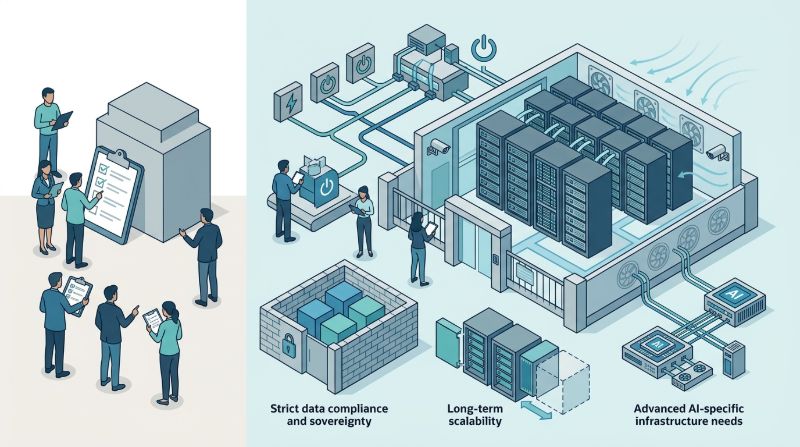
Signs of excellent operations: utilization stays consistently high without user complaints about queue time. Incidents are rare and resolved fast. Capacity is added before shortages become user-visible. The operations team can answer "how is the cluster performing" with data rather than anecdotes. For the SLA that backs operations, see GPU operations SLA evaluation. For the managed operations model, see managed vs self-managed GPU.
FAQ
What makes GPU operations excellent?
Monitoring that catches problems early and correlates signals, incident response that resolves fast and prevents recurrence, continuous optimization for utilization and cost, and proactive capacity management that prevents shortages. The difference between good and excellent is whether operations prevent problems or just react to them. See the four pillars above.
How do I evaluate an AI operations provider's quality?
Ask for utilization data from their other customers, incident response metrics (mean time to acknowledge and resolve), optimization practices and results, and evidence of proactive capacity management. A provider who cannot produce this data cannot credibly claim operations excellence. See GPU operations SLA evaluation.
Summary
Excellent GPU operations are monitoring, incident response, optimization, and proactive capacity — the difference between a cluster that runs and one that delivers. For the full operations framework, see managed vs self-managed GPU and what to outsource.
Related Articles
Recommended Reading
-
Google Cloud GPU Pricing: What Enterprise AI Teams Should Evaluate Before Provisioning
-
Paperspace Pricing 2026: GPU Cost Breakdown
-
CoreWeave Enterprise GPU Cloud: Evaluation for AI Teams
-
AI Infrastructure Costs: Controlling Enterprise GPU Spending
-
CoreWeave vs Lambda Labs: GPU Cloud Provider Comparison
latest articles
-
Open-Source LLM Deployment: Requirements and Real Cost Breakdown
-
AI Search Assistants Under Data Residency: Architectures and Evidence
-
LLM Inference GPUs Compared: A100, H100, H200, or B200 for Production
-
LLM Deployment Best Practices: An Enterprise Stage-by-Stage Checklist
-
HIPAA Patient Scheduling AI: Controls, Consent, and Evidence
-
Cloud-Agnostic LLM Deployment: Architecture Principles Against Lock-In
-
HIPAA-Compliant AI Tools for Healthcare: Categories and Evaluation
-
Batch vs Real-Time LLM Inference: Cost, Latency, and Fit
-
Model Deployment Strategies Compared: Canary, Blue-Green, Shadow, Rolling
-
GPU Rental vs Owning: Cost, Commitment, and When to Buy