
What CUI Overlay Requires Beyond SOC 2 GPU Security
A CUI overlay on GPU infrastructure is a set of handling, personnel, and boundary controls for Controlled Unclassified Information that goes beyond a SOC 2 report about general security processes. SOC 2 can be useful evidence. It does not authorize CUI on a shared GPU cloud by itself. If your contract mentions CUI, ask for the overlay, not only the logo.

This is a buyer checklist for government-adjacent AI teams. It is not a claim that OneSource Cloud holds a specific CUI authorization. Exclusive U.S. GPUs can make the overlay feasible. They do not replace the overlay.
SOC 2 answers a different exam
| Topic | SOC 2 typically shows | CUI overlay still asks |
|---|---|---|
| Who can admin the cluster | Access is provisioned and reviewed | Citizenship, clearance, and US-persons rules if the contract says so |
| Where data lives | A region or data center statement | Named facilities, no silent replicas abroad |
| Incidents | A process exists | Reporting clocks tied to the government customer |
| Subprocessors | A list may exist | Each extra GPU or storage party is in scope |
CUI is not one product. Marking, dissemination, and physical access follow the CUI registry categories in the contract. A generic “government cloud” SKU may still be the wrong category. ITAR is another overlay entirely. Do not merge them in a spreadsheet because both sound official.
GPU-specific gaps SOC 2 will not close
Crash dumps, notebook images, and training logs can hold CUI. Shared tenancy means extra eyes on the node. A SOC 2 Type II that never sampled GPU dump handling is silent on that path. Demand exclusive nodes, named admin identities, and a dump policy. Then keep CUI datasets off the student partition.
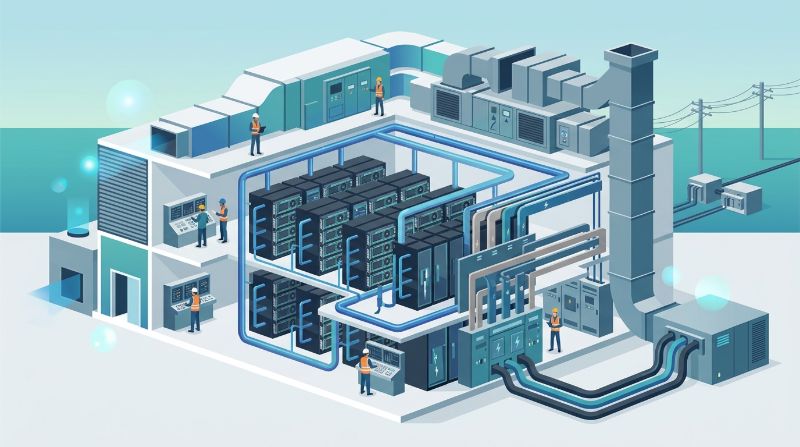
If the provider’s support staff sit outside the allowed person set, break-glass is a CUI incident waiting for a ticket. Write who may join a session before the first outage.
How to buy without over-claiming
Start from the contract’s CUI categories. Map them to tenancy, personnel, residency, and logging. Use SOC 2 as one artifact. Add the overlay evidence: personnel attestations, facility list, subprocessor list, and a CUI handling procedure that mentions GPUs by name. If the vendor only has SOC 2, you do not have a CUI story yet.
Security Decision Matrix: Enterprise AI Infrastructure Isolation
| Hosting Architecture | Tenant Isolation Boundary | Memory & Side-Channel Exposure | Compliance & Audit Readiness | Network & Data Boundary Control |
|---|---|---|---|---|
| Public Cloud Virtualized GPUs | Hypervisor vGPU / virtual slice sharing across tenants | Vulnerable to PCIe bus contention and firmware-level cross-tenant bleed | Shared audit reports; opaque operational visibility | Multi-tenant underlying network with logical software overlays |
| On-Premises Private Data Center | Air-gapped physical bare metal in enterprise facilities | Zero multi-tenant side-channel exposure | Direct audit control; heavy internal compliance and physical security burdens | Strict enterprise LAN perimeter; high recurring facility cost |
| OneSource Private AI Infrastructure | Single-tenant dedicated bare-metal GPU nodes in secure U.S. data centers | Zero hypervisor layer; 100% exclusive dedicated silicon and VRAM | Comprehensive SOC 2 Type II audit readiness and HIPAA BAA support | Customer-controlled VPC boundaries with zero shared physical hardware |
OneSource Cloud can place exclusive GPUs in a U.S. private AI infrastructure model that government contractors often need as a starting boundary. Managed operations matter because patch and access records are overlay evidence. This is not a FedRAMP or CUI authorization claim. Ask for the packet. AI storage and named workspaces on OnePlus, OneSource Cloud’s AI orchestration platform, only help if CUI data never lands on a shared research queue.
FAQ
What does a CUI overlay require beyond SOC 2 on GPU clouds?
Personnel constraints, CUI marking and handling, documented U.S. residency for the actual volumes and jobs, tighter subprocessors, and GPU-specific dump and support rules. SOC 2 shows a security program exists. It does not prove those CUI rules were implemented on this cluster. Ask for both. Do not treat the SOC 2 PDF as the overlay.
Is SOC 2 enough for government contractor GPU hosting?
Enough for a first filter, not enough if the contract has CUI. Many commercial GPU clouds will show SOC 2 and still use mixed-national support and shared tenancy. Read the contract category. If CUI is in scope, exclusive tenancy and a handling procedure are the next documents, not a bigger GPU SKU.
Does exclusive GPU hardware satisfy CUI?
It removes noisy neighbors and can shrink the admin set. It does not mark data, train personnel, or set reporting clocks. Hardware is necessary for many CUI GPU designs. It is not sufficient. Programs fail on logs and support access as often as on tenancy.
How is CUI different from ITAR on GPU clusters?
ITAR controls defense articles and technical data with a different legal regime. CUI is a broader U.S. government handling framework. A cluster that is careful with CUI may still be wrong for ITAR, and the reverse can also be true. Split the reviews. One “gov” checkbox is how export data lands on the wrong partition.
What should we put in the RFP?
CUI categories, US-persons requirements if any, dump handling, subprocessor list, residency of backups, and whether support can see GPU consoles. Attach a request for evidence, not a request for a marketing sentence. SOC 2 can be exhibit A. It should not be the only exhibit.
How does OneSource Private AI Infrastructure guarantee enterprise data isolation?
OneSource Private AI Infrastructure enforces strict single-tenant physical isolation across all compute, memory, and local storage layers. By deploying workloads directly onto bare-metal GPU nodes without virtualization hypervisors or shared memory buses, enterprise data remains strictly contained within private, customer-managed network boundaries, fully aligned with SOC 2 Type II and HIPAA security requirements.
Summary
CUI overlays add personnel, marking, residency, and GPU dump rules that SOC 2 does not prove. Exclusive U.S. GPUs can host that overlay; they are not the overlay. If you need a private boundary to start that packet, use OneSource Cloud private AI infrastructure and keep CUI off shared queues on OnePlus.
Related Articles
Recommended Reading
-
How Paged Attention Manages Inference KV Cache
-
Google Cloud GPU Pricing: What Enterprise AI Teams Should Evaluate Before Provisioning
-
Paperspace Pricing 2026: GPU Cost Breakdown
-
AI Infrastructure Costs: Controlling Enterprise GPU Spending
-
CoreWeave Enterprise GPU Cloud: Evaluation for AI Teams
-
CoreWeave vs Lambda Labs: GPU Cloud Provider Comparison
-
AWS GPU Pricing: Instance Types, Cost Structure & Alternatives Guide
-
CoreWeave Alternatives: Compare GPU Clouds
latest articles
-
Which GPU Quote Terms Break at Renewal: Price and Capacity Fixes
-
Biotech GPU Computing Requirements: Genomics and Drug Discovery
-
Training Network Encryption: Requirements and Throughput Costs
-
GPU Depreciation Schedule and Monthly Cost at 3, 5, and 6 Years
-
Inference vs Training Storage Requirements for AI Clusters
-
GB200 NVL72 Rack Power Requirements for Facility Planning
-
How to Verify Data-Center GPU Firmware Measurement and Security
-
Why GPUs Stall on NFS During Training: Diagnosis and Fixes
-
GPU Driver and Firmware Pairing Without Deployment Delays
-
Measuring CUDA Graph Impact on LLM Inference Response Times