
VPC Network Segmentation and Isolation for Dedicated GPU Clouds
As enterprise artificial intelligence environments ingest proprietary intellectual property, highly confidential financial transactions, and regulated patient health information, safeguarding compute infrastructure against network-based cyber threats becomes a critical mandate. High-density GPU clusters represent unique security challenges: high-throughput collective communication fabrics operate with direct memory access (RDMA) permissions, out-of-band baseboard management controllers (BMCs) provide low-level hardware control, and multi-node training pipelines require continuous data exchange across thousands of network interfaces. Deploying dedicated GPU infrastructure without rigorous network segmentation creates dangerous lateral movement pathways for adversaries. Establishing a defense-in-depth security perimeter requires implementing strict Virtual Private Cloud (VPC) segmentation, zero-trust network access (ZTNA), and physical plane isolation.
The Security Vulnerabilities of Unsegmented GPU Infrastructure
Failing to establish isolated network planes across high-performance computing clusters exposes enterprise environments to critical operational risks:
- Compromise of Out-of-Band Management Interfaces (BMC/IPMI): Baseboard Management Controllers operate at the physical hardware layer, allowing remote power cycling, BIOS flashing, and virtual media mounting. If BMC interfaces share the same network subnet as user-facing applications, a web application vulnerability can allow attackers to compromise the entire physical server fleet.
- Unrestricted RDMA Lateral Movement: High-speed RoCE v2 and InfiniBand fabrics bypass host operating system firewalls to achieve microsecond latency. In an unsegmented cluster, a compromised container or user space process can exploit kernel-bypass RDMA privileges to inspect or corrupt memory buffers across neighboring GPU worker nodes.
- Storage and Data Lake Exfiltration Pathways: When compute nodes share flat, unsegmented network routes with enterprise storage arrays, unauthorized workloads can execute lateral scans, potentially exfiltrating sensitive dataset archives or model checkpoint weights.
Core Principles of Zero-Trust GPU Cloud Network Segmentation
To establish impenetrable security boundaries without compromising high-speed computational throughput, cybersecurity and network architects enforce four segmentation planes:
- Physical Out-of-Band (OOB) Management Plane Isolation: BMC, IPMI, and switch management ports must reside on completely separate physical cabling, dedicated switch hardware, and air-gapped VLANs accessible strictly via multi-factor authenticated hardware jump hosts and dedicated VPN tunnels.
- Dedicated, Isolated East-West Backend Fabric: Inter-GPU collective communication (NCCL) operates across dedicated high-speed RoCE v2 or InfiniBand interfaces configured on private, non-routable subnets. This fabric handles strictly tensor parallel and pipeline parallel data, with zero external internet routing capabilities.
- Isolated High-Performance Storage Fabric: NVMe-oF parallel storage traffic flows over dedicated network interfaces and isolated VLANs, separated from application ingress/egress. Access control lists (ACLs) and storage target authentication restrict volume access strictly to authorized compute instances.
- North-South Client Ingress and Egress Microsegmentation: Application API gateways and user access interfaces connect through firewalled front-end network interfaces (NICs). Deploying zero-trust network policies and stateful firewalls guarantees that only authorized client queries can enter the inference runtime.
By partnering with OneSource Cloud's dedicated AI infrastructure, enterprises deploy single-tenant bare-metal GPU clusters pre-architected with sovereign network segmentation. OneSource isolates management, compute, and storage traffic across physically distinct network fabrics, ensuring uncompromised security and enterprise compliance.
Comparative Architecture Matrix: Network Security Segmentation Topologies
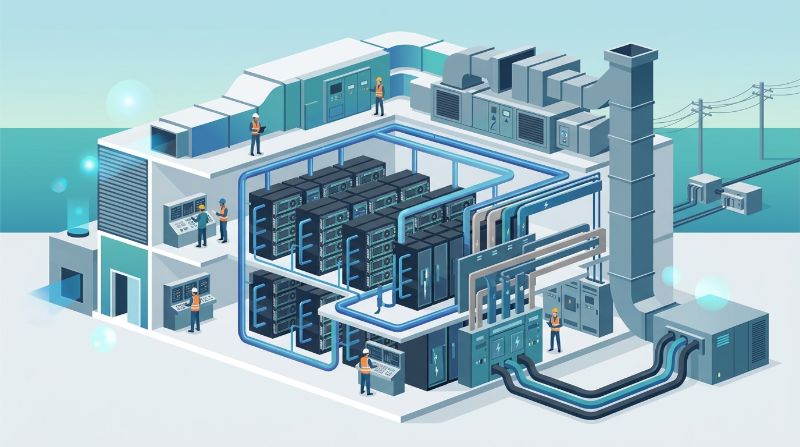
The following architectural matrix compares flat public cloud VPCs, software-defined overlay networks, and OneSource Cloud's physical plane isolation model:
| Security Dimension | Flat Multi-Tenant Public Cloud VPC | Software-Defined Overlay (VXLAN) | OneSource Physical Plane Segmentation |
|---|---|---|---|
| Management Plane Isolation | Logical IAM roles via shared API | Software-routed management VLANs | Physically air-gapped dedicated OOB network |
| RDMA Interconnect Security | Shared multi-tenant virtual NICs | Encapsulated packet inspection overhead | Dedicated non-routable private backend fabric |
| Lateral Movement Defense | Vulnerable if host hypervisor breached | Software firewall rules (CPU bound) | Hardware-level network interface separation |
| Throughput & Latency Impact | Moderate virtualization overhead | 5% to 15% latency penalty from VXLAN | Zero performance degradation; native line-rate |
| Storage Access Control | Shared cloud bucket access policies | Virtual storage gateways | Dedicated NVMe-oF VLANs with hardware ACLs |
| Forensic Auditability & eBPF | Opaque aggregated cloud logs | Fragmented software overlay tracing | Deterministic physical switch & eBPF flow logs |
This comparison confirms that physical plane separation combined with dedicated bare metal delivers optimal security and maximum network performance.
Network Segmentation Deployment Checklist
Before moving sensitive enterprise datasets and models onto dedicated GPU clusters, security and network engineering teams must verify four compliance controls:
- Execute Network Penetration and Lateral Movement Audits: Perform simulated adversarial breach testing from application containers to verify that worker nodes cannot route packets to BMC management interfaces or external subnets.
- Verify Non-Routable Subnet Configuration on Backend NICs: Confirm that all high-speed RDMA network interfaces lack default gateways and internet routing tables, preventing external data exfiltration pathways.
- Enforce 802.1X Port Authentication and VLAN Tagging: Configure top-of-rack switches with 802.1X port security, ensuring that rogue devices connected to switch ports are immediately isolated from production VLANs.
- Implement Real-Time Flow Logging and Anomaly Detection: Stream network flow logs from firewalls and switches into enterprise SIEM platforms, establishing automated alerts for unauthorized connection attempts between network segments.
FAQ
Why is physical network segmentation essential for high-performance GPU clusters?
High-speed GPU fabrics utilize RDMA kernel-bypass protocols that circumvent standard operating system firewalls. Physical network segmentation ensures that out-of-band management, storage traffic, and inter-GPU communication remain strictly isolated, preventing lateral movement attacks.
How does OneSource Cloud enforce network isolation on dedicated GPU clusters?
OneSource Cloud implements physical plane separation, isolating BMC hardware management, backend RoCE v2 compute fabrics, and NVMe-oF storage onto dedicated switch hardware and non-routable subnets, guaranteeing complete data sovereignty and zero-trust security.
Related Articles
Recommended Reading
latest articles
-
GPU Hardware Spares and RMA: Fleet Logistics and Downtime Risk
-
AI Infrastructure Energy Reporting: What Enterprises Should Measure
-
Balanced Bandwidth per GPU: Sizing Cluster Networks for LLM Training
-
Model Flops Utilization: Why Training Efficiency Collapses and How to Fix It
-
How Much Spare GPU Capacity Inference Needs for Failover
-
Multi-Cloud GPU Management Overhead: The Hidden Cost of Split Estates
-
ITAR vs CUI for GPU Hosting: Controls That Actually Differ
-
RAG Corpus Refresh: Reindexing, Re-Embedding, and Freshness Operations
-
How to Cut LLM Latency Without Buying More GPUs
-
Batch vs Real-Time LLM Inference: When to Batch and What It Saves