
Technical Safeguards for Healthcare AI Infrastructure Rules
Deploying machine learning models in clinical environments introduces strict regulatory obligations under the Health Insurance Portability and Accountability Act (HIPAA). When clinical institutions fine-tune large foundation models on diagnostic imagery or electronic health records, technical infrastructure must guarantee absolute protection of electronic Protected Health Information (ePHI).
Technical safeguards for healthcare AI infrastructure are the specific technological controls mandated by HIPAA Security Rule 45 CFR § 164.312 to protect ePHI across compute, storage, and networking layers during AI model training and inference. These safeguards enforce mathematical access barriers, tamper-proof hardware auditing, and cryptographic isolation across physical and virtual machine learning boundaries.
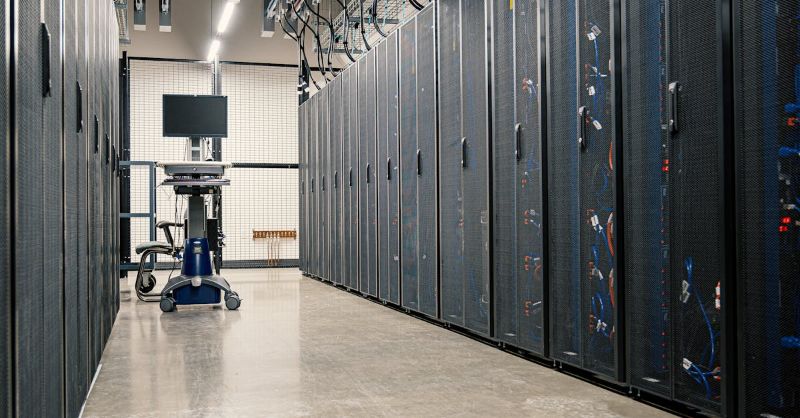
By implementing four core safeguard tiers, healthcare technology executives can advance medical AI innovation while fully neutralizing compliance liabilities and data breach risks.
The Regulatory Mandate: HIPAA 45 CFR § 164.312 in Modern AI
The HIPAA Security Rule defines technical safeguards not as broad aspirational principles, but as concrete operational specifications that direct infrastructure design. For deep learning pipelines processing petabytes of clinical data, compliance requires translating statutory language into silicon and network configurations.
Under federal regulations, technical safeguards comprise four mandatory domains: Access Control (§ 164.312(a)), Audit Controls (§ 164.312(b)), Integrity Controls (§ 164.312(c)), and Transmission Security (§ 164.312(e)). In legacy healthcare IT, these controls governed basic relational databases and web portals. In high-performance AI clusters, they govern multi-GPU memory buses, parallel file systems, and distributed model checkpoint repositories.
Failing to establish these controls exposes healthcare organizations to catastrophic civil penalties from the HHS Office for Civil Rights (OCR) and severe reputational damage resulting from clinical data compromises.
4 Core Technical Safeguard Tiers for Healthcare AI Clusters
Securing modern medical AI workloads requires embedding defense-in-depth technical mechanisms across every level of the computational stack.
Tier 1: Access Controls and Zero-Trust Role Demarcation
HIPAA mandates unique user identification and emergency access procedures. In distributed training clusters, access control must extend beyond the operating system login into Kubernetes container orchestrators and GPU driver interfaces.
Healthcare infrastructure must implement granular Role-Based Access Control (RBAC) synchronized with enterprise identity providers (such as Okta or Active Directory) using SAML 2.0 or OIDC. Data science teams must only access tokenized, de-identified clinical partitions. Model training execution must run under non-root service accounts with automated session termination after periods of inactivity.
Tier 2: Tamper-Resistant Audit Controls and Telemetry Recording
Under § 164.312(b), covered entities must maintain hardware and software mechanisms that record and examine activity in information systems containing ePHI. In deep learning architectures, auditing must capture every data touchpoint.
Infrastructure must capture immutable logs detailing dataset ingestion paths, model weight access, training hyperparameters, and container start/stop events. Audit logs must be forwarded asynchronously over dedicated syslog channels to an isolated, write-once-read-many (WORM) storage pool where records are retained for the statutory six-year retention period without risk of tampering.
Tier 3: Cryptographic Integrity Controls and Memory Sanitization
Integrity safeguards require verifying that ePHI and derivative model artifacts have not been altered or destroyed in an unauthorized manner. In generative AI, subtle corruption of training samples or model weights can induce catastrophic algorithmic hallucinations in clinical diagnostics.
All data at rest—including NVMe scratch buffers, shared NFS/Lustre storage tiers, and object archives—must be encrypted using AES-256 with keys managed within FIPS 140-2 Level 3 Hardware Security Modules. Furthermore, infrastructure must enforce automated memory scrubbing across GPU High Bandwidth Memory (HBM) and CPU RAM immediately upon workload termination to prevent memory bleed between diagnostic tasks.
Tier 4: End-to-End Transmission Security and Network Air-Gapping
Transmission security mandates guarding against unauthorized access to ePHI traversing communications networks. Multi-node distributed model training transfers massive tensor matrices and raw patient data across inter-server links, creating critical interception vulnerabilities.
Inter-node communication must operate across isolated, private InfiniBand or dedicated RoCE v2 network fabrics secured by hardware-level IPsec or MACsec encryption. Cluster worker nodes must sit inside private subnets without public internet interfaces or public IPv4 addresses. Ingestion pipelines must connect to hospital Picture Archiving and Communication Systems (PACS) exclusively via dedicated fiber cross-connects or encrypted IPsec VPN tunnels.
Healthcare AI Technical Safeguards: Implementation Matrix
The matrix below compares standard commercial cloud environments with dedicated healthcare AI infrastructure against HIPAA specifications.
| HIPAA Specification | Public Multi-Tenant Cloud Risk | Dedicated Healthcare AI Implementation | Regulatory Impact |
|---|---|---|---|
| Unique User Identification (§ 164.312(a)(2)(i)) | Shared service tokens across multi-tenant APIs | Granular RBAC integrated with clinical IdP & MFA | Enforces individual operator accountability |
| Emergency Access Procedure (§ 164.312(a)(2)(ii)) | Generic vendor ticketing queues with unpredictable SLAs | Pre-configured break-glass protocols with real-time audit triggers | Ensures immediate recovery during clinical diagnostic outages |
| Audit Controls (§ 164.312(b)) | Truncated, sampled cloud logs with 30-day default retention | 100% telemetry capture streamed to immutable WORM storage | Satisfies HHS OCR forensic audit examination standards |
| Mechanism to Authenticate ePHI (§ 164.312(c)(2)) | Unverified pipeline caching and ephemeral disk reuse | Cryptographic SHA-256 data hashing and automated HBM scrubbing | Prevents clinical training data poisoning and memory leakage |
| Transmission Encryption (§ 164.312(e)(2)(ii)) | Unencrypted inter-node traffic across shared public VPCs | Physical network air-gapping and hardware-level MACsec encryption | Eliminates packet sniffing risks across distributed clusters |
Preventing Advanced Privacy Vulnerabilities in Clinical AI
Beyond baseline HIPAA compliance, modern deep learning architectures face specialized privacy attacks that standard network firewalls cannot mitigate.
Membership inference attacks allow adversarial actors to query a clinical model and mathematically determine whether a specific patient's record was included in the training cohort. Model inversion attacks can reconstruct identifiable medical features from output confidence scores.
Enforcing infrastructure-level technical safeguards—such as differential privacy injection during gradient descent, hardware-enforced trusted execution environments (TEEs), and strict query rate-limiting at the inference gateway—neutralizes these advanced attack vectors before models reach clinical production.
Frequently Asked Questions About Healthcare AI Safeguards
Does a standard cloud BAA guarantee technical compliance?
No. A Business Associate Agreement (BAA) establishes legal liability frameworks between the covered entity and the infrastructure provider, but it does not configure technical safeguards. Healthcare organizations remain legally responsible for implementing identity boundaries, encryption keys, and network isolation on top of the provider's hardware.
Can synthetic medical data bypass HIPAA technical safeguards?
Synthetic data generated from real patient cohorts can significantly reduce compliance overhead, but only if the de-identification and generation process complies with HIPAA Safe Harbor or Expert Determination methods. If the underlying generative model was trained on raw ePHI without safeguards, the model artifact itself may remain subject to regulatory scrutiny.
Why are single-tenant GPU clusters preferred for healthcare workloads?
Single-tenant bare-metal clusters dedicate physical compute silicon, PCIe buses, and NVMe flash drives exclusively to one institution. This eliminates the risk of memory cross-talk, hypervisor side-channel exploits, and accidental data exposure inherent in virtualized multi-tenant public cloud environments.
Building a Defensible Healthcare AI Infrastructure
Scaling artificial intelligence in healthcare demands an uncompromising technical posture. Relying on shared multi-tenant cloud platforms creates persistent audit friction and exposes sensitive patient histories to sophisticated hardware exploits.
By implementing rigorous technical safeguards—spanning strict RBAC identity controls, tamper-resistant WORM audit pipelines, automated volatile memory sanitization, and physically isolated network fabrics—healthcare institutions can safely deploy powerful diagnostic and clinical language models.
OneSource Cloud delivers dedicated, single-tenant AI infrastructure engineered specifically for healthcare institutions. With contractual BAA execution, physical bare-metal isolation, domestic US data residency, and enterprise-grade SLA backing, OneSource Cloud empowers healthcare leaders to innovate with confidence while meeting every HIPAA security mandate.
Related Articles
Recommended Reading
-
How Paged Attention Manages Inference KV Cache
-
Google Cloud GPU Pricing: What Enterprise AI Teams Should Evaluate Before Provisioning
-
Paperspace Pricing 2026: GPU Cost Breakdown
-
AI Infrastructure Costs: Controlling Enterprise GPU Spending
-
CoreWeave Enterprise GPU Cloud: Evaluation for AI Teams
-
CoreWeave vs Lambda Labs vs OneSource Cloud: GPU Provider Decision Guide
-
AWS GPU Pricing: Instance Types, Cost Structure & Alternatives Guide
-
U.S. Data Residency in the Cloud: Requirements, Regulations & Compliance Guide
latest articles
-
Private GPU Cloud Failover Without Breaking Data Isolation
-
GPU Telemetry Release Correlation to Diagnose Model Regress
-
Managed AI Infrastructure vs Self-Managed Clusters: Real TCO
-
Multi-Tenant GPU Governance for Healthcare and Clinical AI
-
Data Center Power Planning for AI Workloads and High Density
-
AI Network Latency Component Map: Where Microseconds Vanish
-
AI Model Runtime Portability: How to Prevent Cloud Lock-In
-
H100 Dedicated GPU Cloud Planning: Sizing, Power, and Fabric
-
Industrial AI GPU Infrastructure for Factory Vision Systems
-
Single-Tenant GPU Cloud vs Multi-Tenant GPU Cloud Security